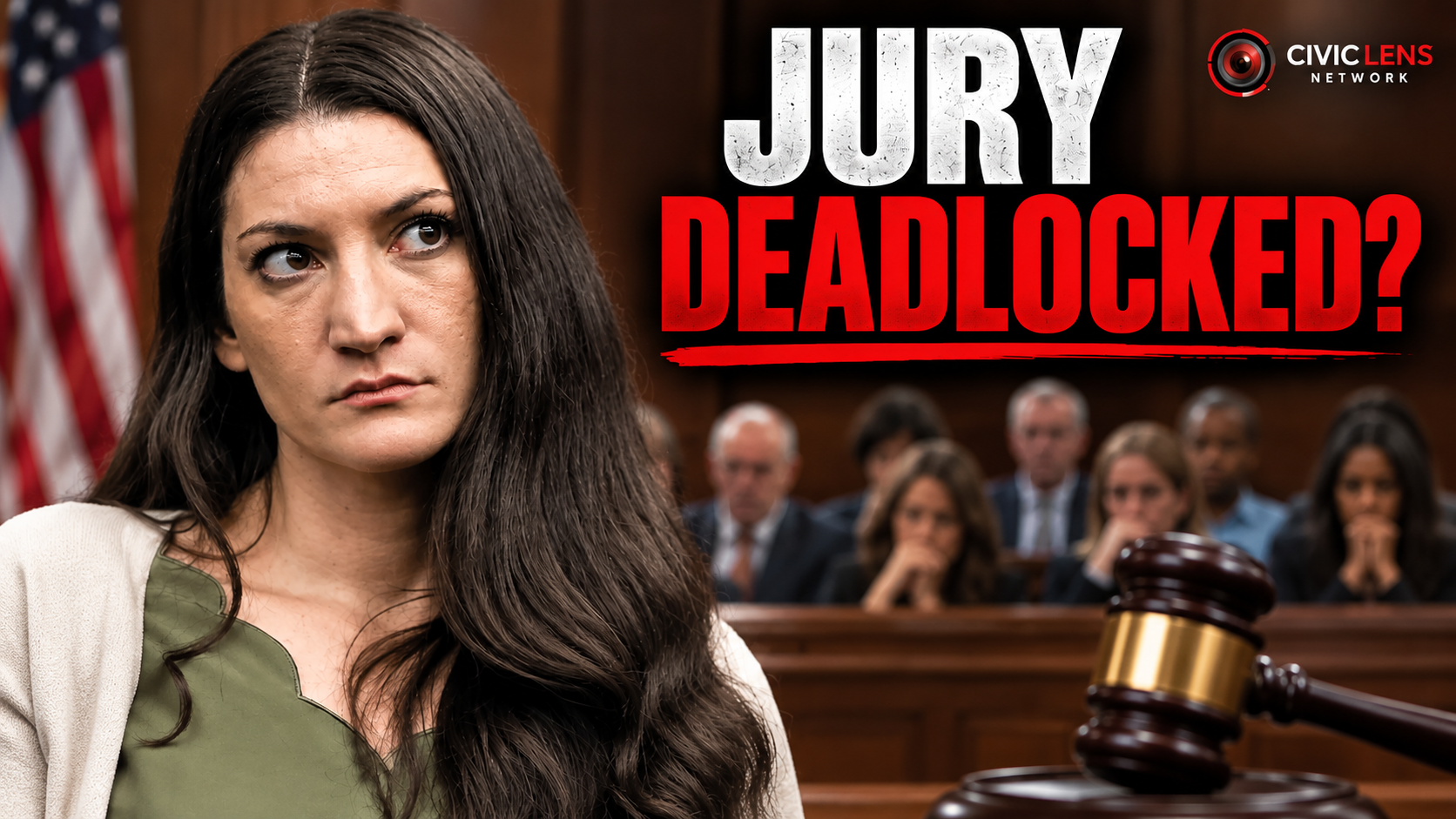
In a Plymouth courtroom, a Massachusetts jury has spent more than six days and more than thirty five hours trying to answer a question that will not settle. Lindsay Clancy, thirty six, is charged with three counts of first degree murder in the deaths of her children. Cora was five. Dawson was three.
Callan was eight months old. They died on January 24, 2023, in the family home. Clancy does not deny that she killed them. The fight is over what that fact means in law.
Prosecutors say the killings were murder. They asked jurors to find that she acted with the mental state the statute requires and that she understood the nature of what she was doing. The defense, led by attorney Kevin Reddington, says she was in the grip of postpartum psychosis. In that account she could not distinguish right from wrong.
If the jury accepts that claim, the law can treat her as not criminally responsible even if the acts themselves are not in dispute. That is why the case has lasted so long and why the public has split so sharply. One side hears three dead children and wants a verdict that names the crime without excuse. The other side hears a collapse after childbirth and wants the court to treat illness as the cause rather than as a story invented after the fact.
Both sides are looking at the same deaths. They are not looking at the same person. The trial that produced this deadlock was large. More than eighty witnesses testified.
More than three hundred exhibits went to the jury. Doctors, family members, investigators, and mental health experts filled days of testimony. Jurors were asked to weigh medical records against the sequence of events in the house. They were asked to decide whether psychosis can erase criminal responsibility when the victims are a defendant’s own children.
Judge William Sullivan has reminded them more than once that they must follow the law as he gives it, not the law as they wish it were. By early September the jury had already told the court twice that it could not agree. Notes from the deliberation room described an impasse. Reddington said one juror was refusing to listen to the law on reasonable doubt and asked that the holdout be removed.
The judge declined. Each juror was brought to the bench. The atmosphere in the room grew tense. Clancy, who has been held without bail and treated in a locked hospital setting, was wheeled forward while her lawyer spoke with the court.
Outside, people argued about whether a single juror was protecting a principle or blocking justice. A hung jury is not a finding of innocence and it is not a finding of guilt. It is a failure of twelve people to speak with one voice. If Sullivan declares a mistrial, prosecutors can try the case again with a new jury.
They do not have to announce that choice in the same hour. Clancy would return to Tewksbury Hospital. A second trial would mean another selection of jurors, another retelling of the same night, and another attempt to turn medical testimony into a unanimous verdict. Reddington has said, in essence, that he is ready if they come again.
The legal options inside the present trial are stark. Jurors can convict of murder. They can convict of a lesser homicide charge if the instructions allow it. They can acquit on the ground that mental disease or defect left her unable to know the wrongfulness of her conduct.
Even an acquittal on criminal responsibility would not automatically send her home. A judge can still order confinement if evaluators find she remains a danger. The courtroom is therefore not only deciding punishment. It is deciding which system will hold her: prison or a hospital under court control.
The case landed in a country already uneasy about mothers, medicine, and blame. Postpartum psychosis is rare. When it appears, it can be sudden, severe, and disconnected from the person family members thought they knew. Skeptics say rarity is not a defense and that three deaths demand a criminal answer.
Supporters of the defense say the criminal law is a blunt tool for a psychiatric emergency and that locking a sick woman in prison will not restore the children. Neither argument brings Cora, Dawson, or Callan back. That absence sits at the center of every hour the jury has spent behind closed doors. The children cannot testify.
They cannot say what happened in the last minutes of their lives. The adults in the room are left with records, opinions, and a statute written for a world that still struggles to draw a line between madness and choice. After weeks of evidence, the line is still not clear to all twelve. By Friday the jury was entering a seventh day.
The judge had already pushed them past earlier claims of deadlock. He can keep pushing. He can also accept that further time will only harden the split. Court watchers spoke of a possible mistrial as something no longer distant.
Families of victims in other cases often say delay is its own injury. Here the delay is happening in real time, in front of a community that has already waited years for an ending. Whatever the next note from the jury says, the facts that opened the case will remain. Three children are dead.
Their mother is the person who killed them. Twelve citizens have been asked to say whether that is murder in the eyes of Massachusetts law. So far they cannot say it together. The courtroom can demand another day.
It cannot demand agreement. That is the hard remainder of the Clancy trial: a legal machine built for verdicts, running at full power, and still unable to produce one.