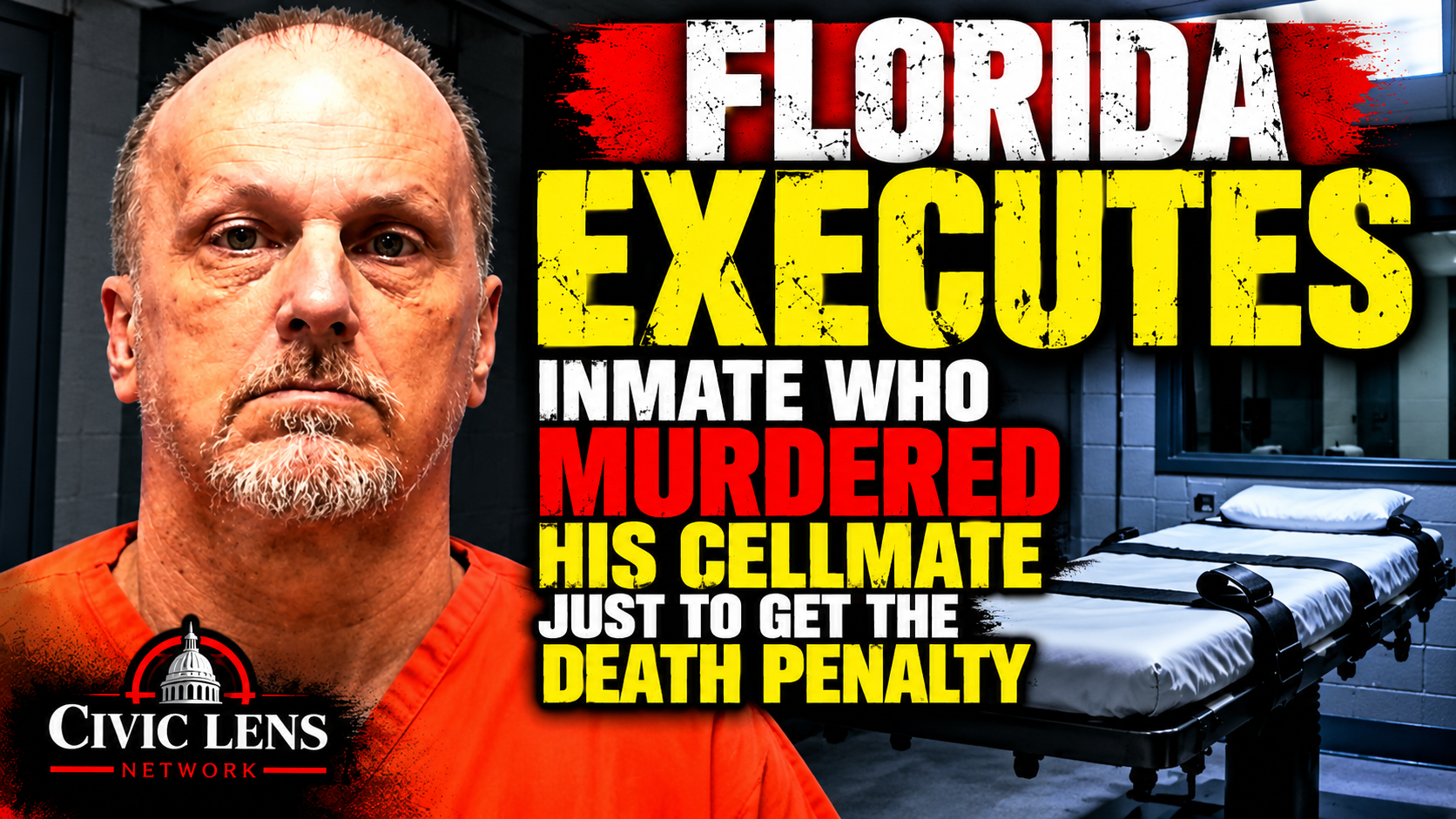
STARKE, Fla. — Florida executed James “Chicken Head” Robertson, 63, by lethal injection at Florida State Prison near Starke on Tuesday, pronouncing him dead at 12:32 p.m. Eastern after a three-drug protocol. The execution, the state’s 17th of 2026, carried out a sentence Robertson had actively sought for nearly 18 years. Robertson strangled his sleeping cellmate, Frank Hart, on December 10, 2008, at Charlotte Correctional Institution north of Fort Myers.
He fashioned a garrote from tied socks and attacked Hart after guards completed checks. Robertson later told investigators the killing was unprovoked and premeditated: he wanted to be charged with first-degree murder and sentenced to death so he could leave restrictive Close Management conditions for what he viewed as better circumstances on death row, including single cells and more privileges. He described prior confinement as “torture,” noting loss of personal items like a TV, near-constant lockdown, and limited outdoor time.
Robertson entered Florida’s prison system in 1980 at age 17 following convictions for burglary and assault. Subsequent in-prison offenses—including escape, battery, and weapons possession—extended his sentence; under original terms he was not due for release until around 2038. He spent years in Close Management and appeared in the 2018 Netflix series I Am a Killer, where he discussed his desire for death row. Hart, imprisoned since 2003 on a sexual battery conviction, was the victim of the calculated attack.
Robertson pleaded guilty to first-degree murder, waived a jury penalty phase, declined to present mitigating evidence, and was sentenced to death in December 2012. He waived all post-conviction appeals, fired counsel, and in a 2023 letter to then-Attorney General Ashley Moody asked why the process was taking so long. In an October 2026 hearing he reaffirmed that he wanted the sentence carried out and waived further review by the Florida Supreme Court or U.S. Supreme Court.
Gov. Ron DeSantis signed the death warrant on October 1. A second execution planned for the same day—William Lee Thompson—was withdrawn days earlier amid mental-health concerns including dementia. On Tuesday Robertson woke at 5:45 a.m.
His last meal was steak, potatoes, fried eggs, toast, and milk. He received two visitors—a cousin and a pen pal—and declined a spiritual advisor. Asked for last words, he replied, “Nah, I’m straight.” Media witnesses reported he raised his head and smiled at the 18 people present before the process began.
The execution used Florida’s standard three-drug combination. Hart’s daughter told Gulf Coast News the nearly two-decade wait had weighed on the family. “It’s been almost two decades. ... I think honestly, after this, the closure will be there,” she said.
She added she was “just praying that it does bring our entire family at least a sense of that. He’s gone. He’s no longer there. He’s not.
He’s not a looming dark cloud over our head anymore.” Death-penalty opponents, including Maria DeLiberato of Floridians for Alternatives to the Death Penalty, said Hart “deserved to be safe in state custody” and argued that the existence of capital punishment may have encouraged the very violence it is intended to deter, citing cases of “homicide as suicide.” Advocacy groups held vigils; the state proceeded as Robertson had requested.
The case has drawn attention amid Florida’s accelerated pace of executions under DeSantis and broader national discussion of capital punishment following a recent botched attempt in Tennessee.