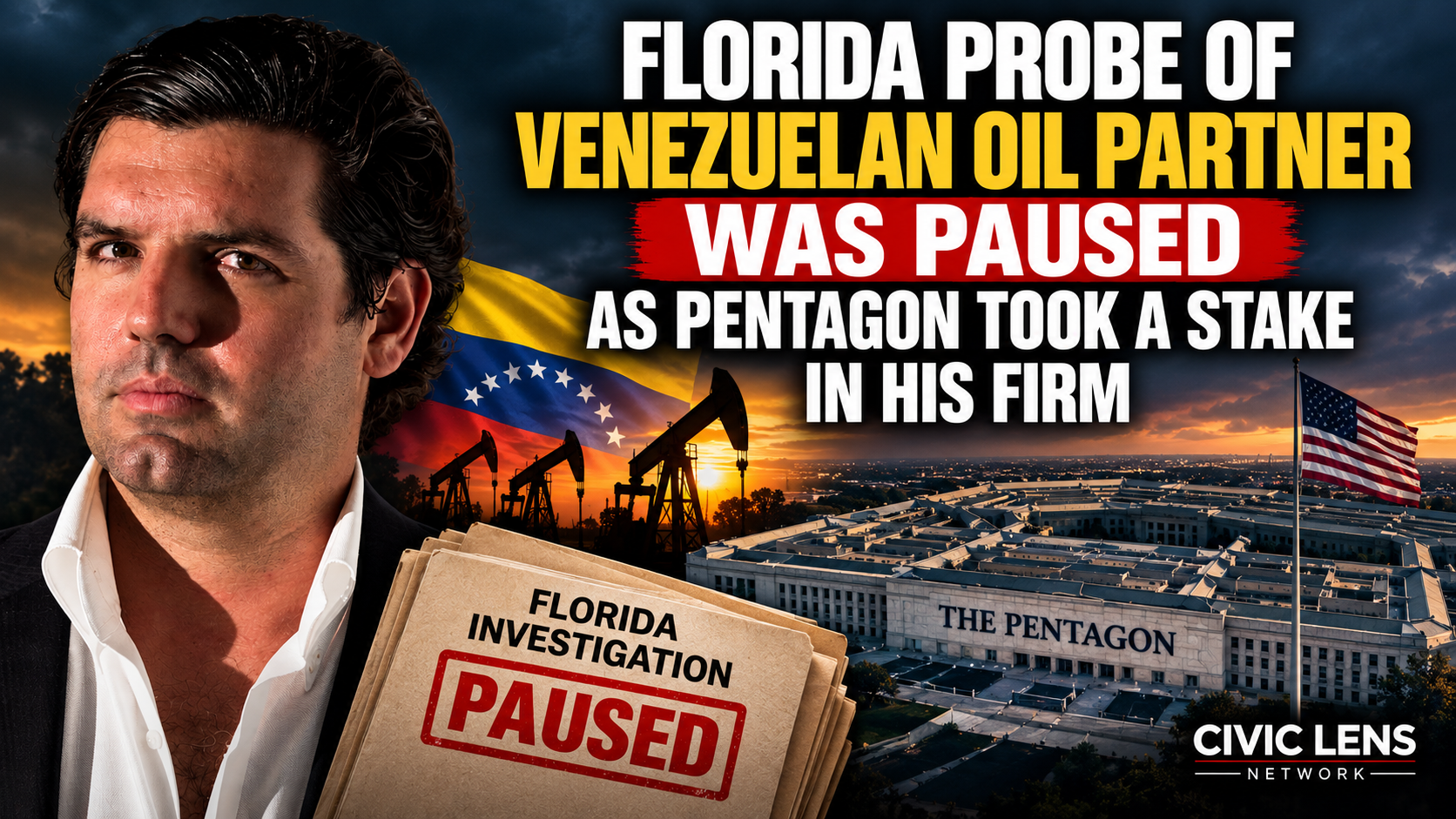
Alejandro Betancourt, the Venezuelan businessman now at the center of Washington’s long-term oil arrangement with Caracas, was for years a subject of a Southern District of Florida money laundering investigation tied to funds prosecutors say were stolen from Petróleos de Venezuela. He was never charged. Earlier this year, according to multiple people familiar with the matter, federal prosecutors in Florida paused that inquiry.
Within months, the Pentagon’s Office of Strategic Capital obtained rights to a 35 percent position in his company, North American Blue Energy Partners, and the State Department secured preferential access to the crude NABEP produces. The sequence, documented in court records from the older Florida case and in public descriptions of the new energy pact, has drawn attention to how the United States vets private partners in strategic contracting. It has also produced conflicting official accounts of the status of the Florida file.
Betancourt, 46, built his fortune first in power generation and later in oil. His firm Derwick Associates won roughly $2 billion in Venezuelan government contracts to build power plants during the electricity crisis of the early 2010s, some without competitive bidding and despite limited construction experience. Derwick has said the plants were completed and that later failures reflected state mismanagement. In 2012 he entered a partnership with PDVSA to operate mature fields in western Venezuela.
Those holdings later formed the core of NABEP, co-founded in April 2024 with Florida businessman Harry Sargeant, who sold his shares last month. NABEP is Barbados-registered and family-controlled. The company says it raised output from about 18,000 barrels a day to more than 200,000 barrels a day and now ranks as Venezuela’s second-largest private producer. The Florida investigation grew out of Operation Money Flight, an undercover Homeland Security Investigations case that produced a 2018 Southern District of Florida indictment.
Prosecutors alleged that a network of businessmen and former energy officials embezzled more than $1 billion from PDVSA through loan and currency-exchange arrangements, then moved proceeds through Miami real estate and accounts in Malta and Switzerland. Ten people have been charged since 2018. Several pleaded guilty. Betancourt’s cousin Francisco Convit was named as a lead defendant.
Court papers referred to unnamed co-conspirators. Six sources later told Reuters that investigators had identified Betancourt as an unindicted co-conspirator. The Miami Herald reported in 2019 that he was the person labeled Conspirator 2. He does not appear by name in the public charging documents reviewed for this article.
Jon Sale, Betancourt’s Florida counsel, has said his client committed no U.S. crime and did not know that funds in transactions involving relatives came from bribery or PDVSA. Sara Chouraqui, NABEP’s general counsel, said authorities in multiple countries examined the allegations and brought no charges. A U.S. official, speaking on condition of anonymity, told Reuters that most of Betancourt’s legal problems were nearly a decade old and that he currently has no legal problems in the United States.
What happened to the Florida file in 2026 is disputed. Reuters, citing eight people familiar with the matter, reported that prosecutors paused the investigation earlier this year. Two of those people said supervisors later discouraged further work on Betancourt. Four said line prosecutors received no explanation.
Reuters said it could not determine the exact date of the pause or whether it was tied to cooperation with the administration. CNN, citing two people briefed on the matter, reported that Miami prosecutors closed the inquiry on instructions from the office of then-Deputy Attorney General Todd Blanche. A Justice Department spokesperson called that account a fabrication and said Blanche never discussed the case with the Southern District of Florida and never ordered any case closed.
Secretary of State Marco Rubio has said authorities checked U.S. records and found no investigation against Betancourt in the American system. Swiss and Spanish matters remain separate. Zurich prosecutors say a criminal case continues even though Switzerland withdrew a United Kingdom extradition request in May, citing aspects of British extradition law. Betancourt had been arrested in Britain in 2025 and restricted from travel.
After the U.S. inquiry stalled, four people told Reuters that American officials pressed Switzerland to ease its work. The Zurich office declined to say whether Washington influenced the extradition withdrawal. In Spain, a National Court judge dismissed a related money-laundering file in March. The Criminal Chamber reopened it in June as premature.
That inquiry concerns alleged currency-exchange fraud involving PDVSA funds. Reuters said it could not confirm whether Betancourt remains under active Spanish investigation. The oil arrangement is not a conventional Defense Logistics Agency fuel-supply contract. Interim Venezuelan authorities granted NABEP concessions over 17 fields that the White House says hold about 65 billion barrels of proven reserves, roughly one-fifth of the country’s crude.
Washington describes the grants as 100-year concessions. Venezuelan officials have described a shorter preferential term. NABEP keeps operating control. The Office of Strategic Capital, created in 2022 and later written into statute, is slated to hold rights to a 35 percent position structured as penny warrants, instruments that give the government an option to obtain equity at a token price and are designed to limit dilution.
The State Department receives the right to buy 20 percent of production at cost, with a right of first refusal on the rest. Officials have said the cheap barrels could help refill the Strategic Petroleum Reserve. Pentagon spokesman Sean Parnell has said OSC’s statute authorizes loans, loan guarantees, and technical assistance, not equity stakes in private companies. Other officials have called the warrant structure consistent with existing authority.
Congress has debated, but not clearly enacted, broader equity powers for the office. Betancourt’s lawyers and company statements emphasize operating results and the absence of charges. Administration officials have cited his production record and his usefulness as an intermediary with interim President Delcy Rodríguez after the January capture of Nicolás Maduro.
The unresolved questions are narrower and documentary: what the Florida file now legally is, who decided to stop work on it, what OSC may lawfully hold in a Barbados-registered oil company, and how the government discloses those choices when a private partner was once an uncharged subject of a major Justice Department case.