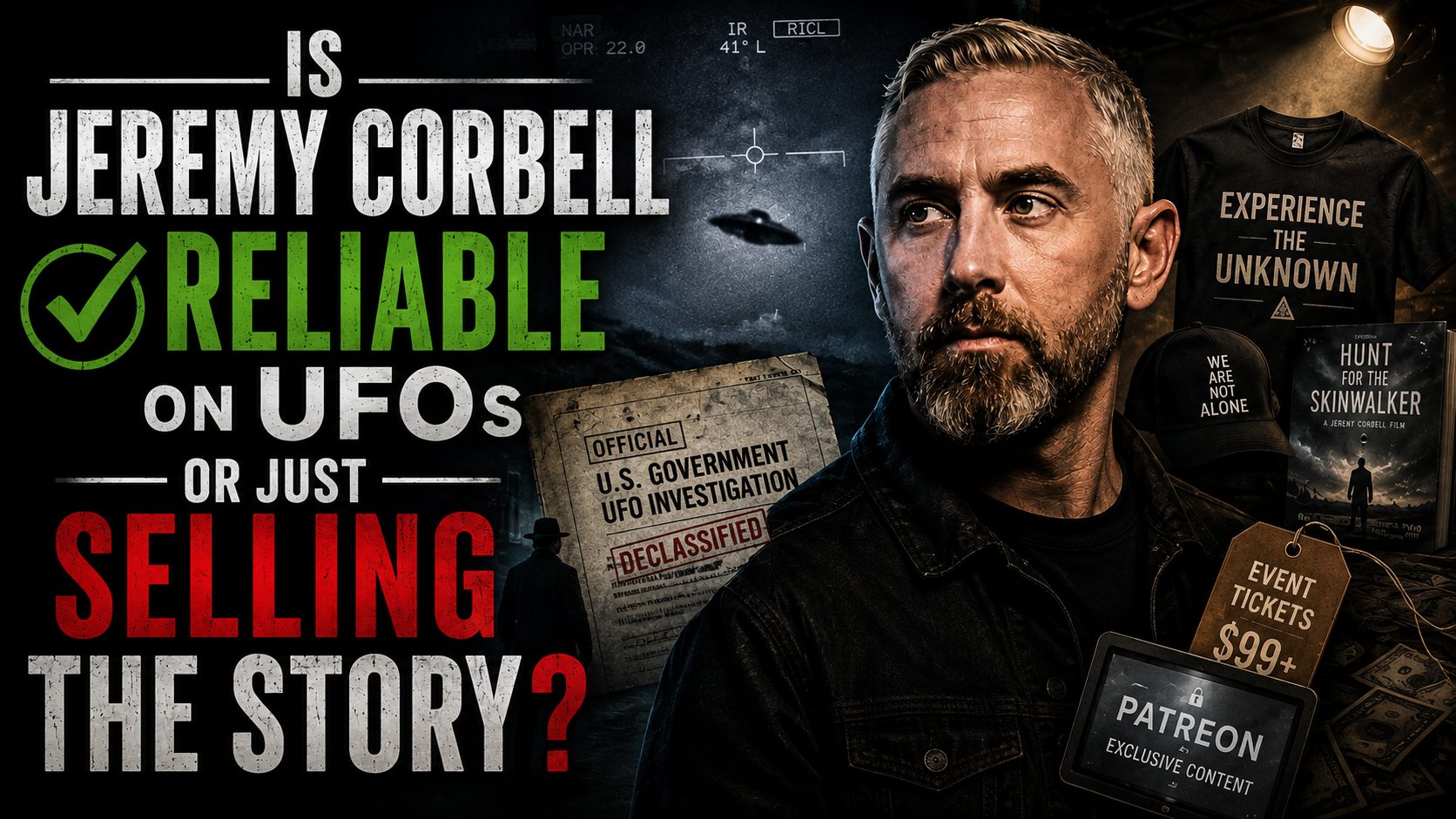
Jeremy Corbell has become one of the most visible faces in modern UFO discussions. The Los Angeles based filmmaker and martial artist turned investigative documentarian regularly releases military videos of unidentified objects, interviews people claiming inside knowledge, and co hosts a popular podcast. Supporters treat him as a key player pushing for transparency. Critics see a pattern of hype that rarely holds up under close examination.
Understanding which view fits better requires looking at what he actually delivers. Corbell rose to wider attention through documentaries that treat extraordinary claims with little pushback. His film on Bob Lazar presented the long running Area 51 reverse engineering story in a sympathetic light. Lazar has said for decades that he worked on alien craft powered by an exotic element and that the government erased his educational and employment records.
Independent checks have never confirmed degrees from MIT or Caltech. Available records point instead to community college and lower level technical work. Corbell has continued to stand by the account and feature Lazar in discussions. That choice shapes how many people view the rest of his output.
A larger part of Corbell’s public profile comes from videos he says come from military sources. The Pentagon has confirmed that some clips were recorded by Navy personnel. That fact is not in dispute. What remains disputed is the interpretation.
One widely shared night vision recording showed objects that looked triangular. Analysts demonstrated that the shapes matched the triangular aperture of certain cameras creating a simple optical effect on out of focus lights and stars. Another set of lights over a Marine training area matched the timing and appearance of military flares dropped during an exercise. A floating shape nicknamed the jellyfish moved with the wind in a manner consistent with balloons.
Corbell has often rejected these explanations and framed the objects as evidence of advanced technology. The gap between the raw footage and the conclusions he draws is where trust erodes for many observers. He frequently tells audiences that he has reviewed stronger material that remains unreleased. He speaks of absolute evidence of non human intelligence and of whistleblowers who risk careers by talking to him.
Those claims cannot be checked by the public. They rest on personal assurance. In a subject already filled with anonymous sources and second hand testimony this approach keeps interest high but adds little that can be independently tested. The same pattern appears in his podcast conversations and public appearances.
Stories of threats surveillance and suppressed programs circulate freely. Hard documentation that would settle the questions tends to stay out of view. None of this means every video Corbell shares is fabricated. Real military recordings of unidentified objects exist and deserve study.
Pilots and radar operators have reported encounters that remain unexplained by ordinary aircraft. The problem is not the existence of odd data. The problem is the consistent leap from ambiguous video to confident claims about non human craft. When mundane explanations fit the evidence better and still get dismissed as disinformation the messenger starts to look more like an advocate than a careful investigator.
Corbell’s background adds context. He spent years in martial arts and later moved into mixed media art after a serious illness. The shift into UFO filmmaking happened later and quickly produced Netflix distribution and steady media appearances. The work generates attention merchandise and speaking opportunities.
That commercial side does not automatically prove bad faith. It does create incentives to keep the mystery alive rather than close cases that can be resolved with ordinary explanations. People who follow the topic closely split into clear camps. Some value Corbell because he forces official acknowledgment of videos that would otherwise stay hidden.
Others see repeated cycles of dramatic release followed by quieter debunking and view him as a source that damages the credibility of more careful research. Both reactions respond to the same body of work. The videos that survive scrutiny as genuine military recordings are useful. The interpretations layered on top of them and the reliance on unverifiable personal sightings are not.
Anyone evaluating Corbell’s statements should separate the raw material from the framing. Confirm what the Pentagon has actually said. Compare the visual evidence against known camera artifacts training exercises and atmospheric effects. Demand primary documents rather than second hand assurances.
That approach works better than accepting or rejecting the messenger on reputation alone. In a field long plagued by both secrecy and exaggeration the only lasting standard is evidence that stands on its own.