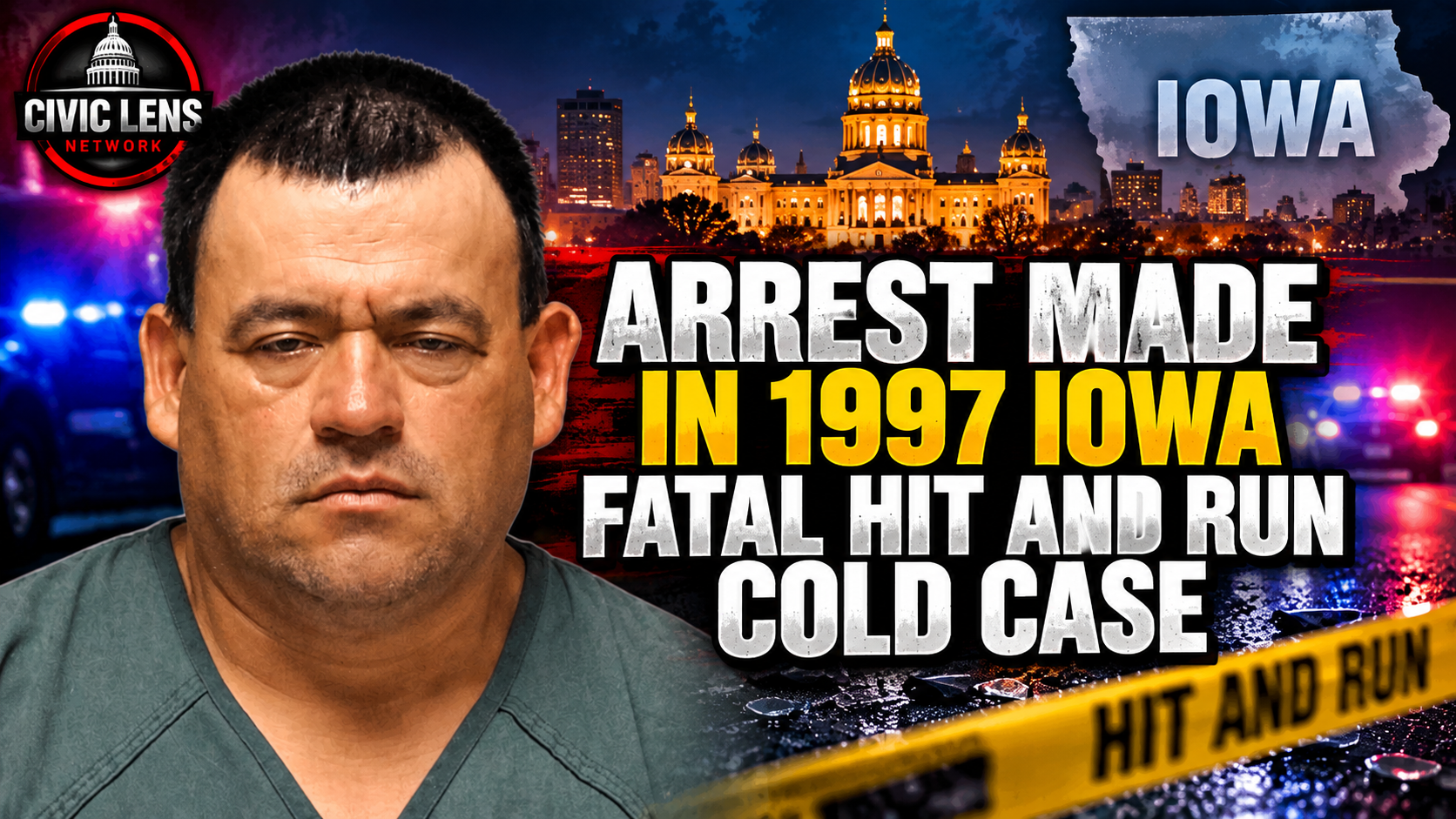
DES MOINES, Iowa A television rerun and a single neighbor tip have revived a fatal east side crash that stood unresolved for almost three decades. Des Moines police say a man long sought in the 1997 death of Leslie Ruby is now in custody in New Jersey and faces return to Iowa on a vehicular homicide warrant that never expired. Police announced the arrest on Tuesday, September 29, 2026, one day short of the 29th anniversary of the crash.
Investigators name Gerardo Garcia Michel, now 57, as the suspected driver. He was 28 at the time of the incident. He has not been convicted. All accusations against him remain allegations that must still be proven in court.
Ruby, 64, died on September 29, 1997, after a vehicle struck him in the 3400 block of Easton Boulevard, just outside his home. Police say the retired Korean War veteran had been mowing the yard at the home of his daughter and granddaughter. He was riding a lawnmower back across the street toward his own house when the car hit him. Dan Anderson, who still lives next door, described the force of the collision.
He said Ruby was struck in front of the driveway of the house next door and was carried about 150 feet, coming to rest in front of Anderson’s driveway. Anderson said his wife saw the crash from inside their home. Investigators in 1997 had no doorbell cameras and no traffic cameras. Sergeant Paul Parizek, the department’s public information officer, said the case was built the old way, through officers talking to witnesses.
Those interviews and later patrol work led officers to an abandoned vehicle that matched the description of the car involved. Police say that evidence and additional leads identified Garcia Michel as the driver. By then he was gone. Parizek said he apparently did not waste much time leaving town.
Early leads pointed investigators toward Southern California. A warrant for vehicular homicide was issued on January 26, 1998. It remained active for nearly 30 years. The case reached a national audience in 1998 when America’s Most Wanted profiled the crash and named Garcia Michel.
Tips came in then, police said, but none led to an arrest. Ruby’s family was left without answers. His wife, Patricia, to whom he had been married for nearly 40 years, died about three years later. Their granddaughter, Shonna, later said she always thought grief played a part.
She also said she could never understand how someone could leave and simply live a life afterward. That national broadcast returned to the air in August 2026. On August 4, Crime Stoppers received a tip from a person in New Jersey who was watching the rerun. The caller told police the man on the screen looked like someone who lived in the same building.
Parizek said detectives were immediately encouraged. The message was simple: a viewer recognized a neighbor. Detectives in the Des Moines Police Department Intelligence Section checked the tip with New Jersey authorities. Police say Garcia Michel had made minor changes to his name and date of birth over the years, and likely other adjustments, which helped him remain undetected.
On August 26, 2026, United States Marshals arrested him in Ocean County, New Jersey. A jail photograph released with the case identifies him as being held there. He remains in custody on the East Coast while extradition to Iowa proceeds. Police say more details will be released as they become available.
The investigation is continuing. Ruby’s wife and daughter have died since 1997. Officers notified his granddaughter. Parizek said she told them it was a relief to know that justice might still be possible and that the family had not been forgotten.
Anderson, standing near the same stretch of Easton Boulevard where the crash happened, offered credit to investigators who never closed the file. The arrest does not resolve the case. Garcia Michel is presumed innocent unless a court finds otherwise. If he is returned to Iowa, he is expected to face the vehicular homicide allegation tied to the 1998 warrant, along with whatever additional filings prosecutors may pursue after a review of the original evidence and the new identification work.
For a city that watched the file go cold after the first wave of tips faded, the sequence is unusually direct. A 1998 broadcast, a 2026 rerun, a neighbor who thought he recognized a face, and a warrant that never lapsed produced an arrest almost 29 years after Leslie Ruby was killed outside his own home.