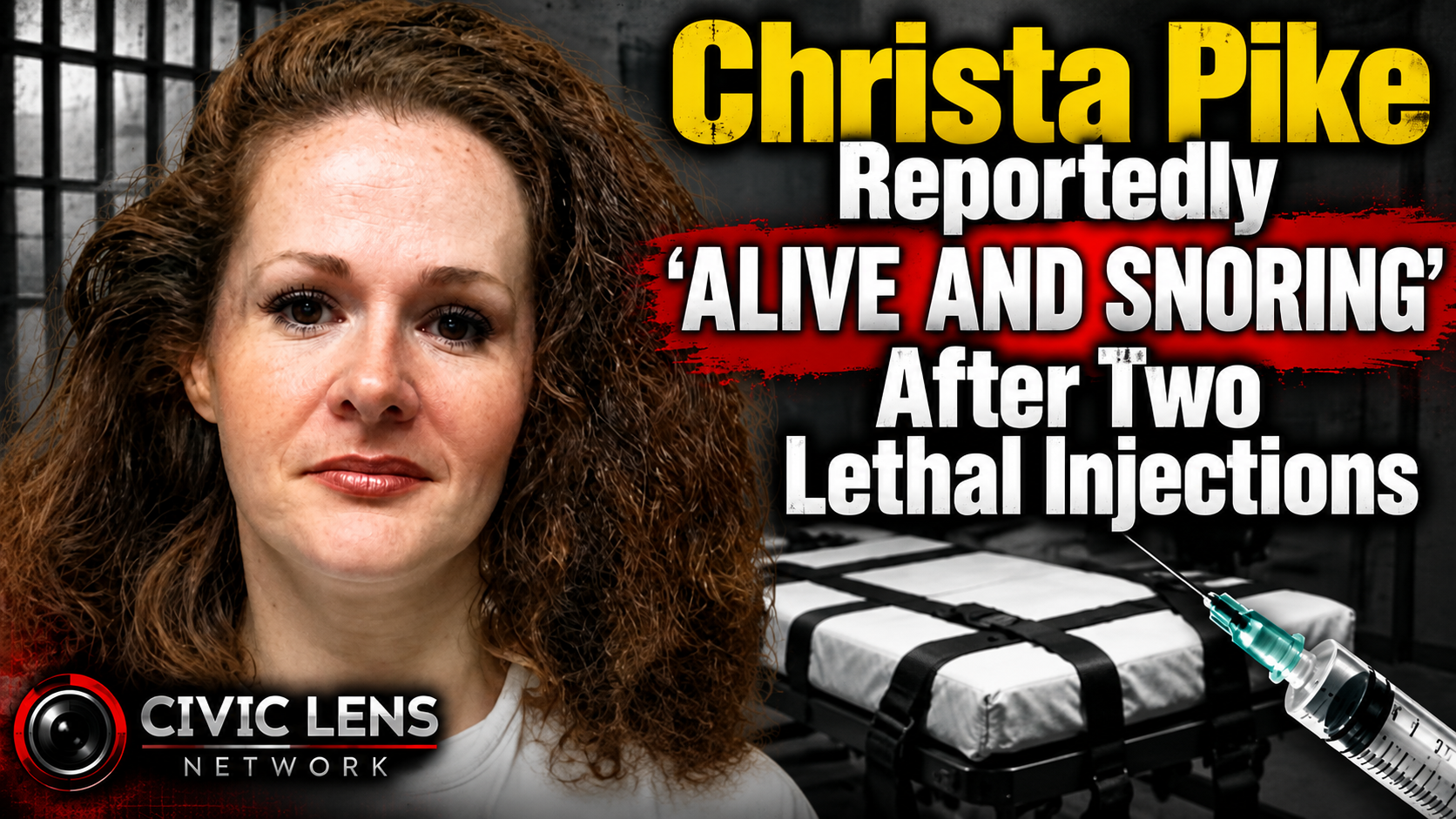
NASHVILLE, Tenn. Tennessee officials were unable to complete the execution of Christa Gail Pike on Wednesday after prison staff administered two doses of pentobarbital and witnesses reported she remained alive and audibly snoring. Pike, 50, was taken by ambulance from Riverbend Maximum Security Institution to a hospital. Her attorneys said they had not been informed of her condition.
Gov. Bill Lee ordered an independent review and said the state’s remaining scheduled execution this year would not proceed. The procedure began in the evening after a day of court rulings. Pike had been set for execution at 10 a.m. local time.
A panel of the U.S. Court of Appeals for the Sixth Circuit issued a stay roughly an hour before that time so judges could consider claims about her age at the time of the crime and allegations of childhood sexual abuse. The U.S. Supreme Court later vacated the stay on a 6 to 3 vote, clearing the way for the state to act before the execution warrant expired at midnight.
Media witnesses entered an observation room shortly before 7 p.m. Curtains to the chamber opened at 7:27 p.m., showing Pike strapped to a gurney with an intravenous line in her right arm. She spoke with a spiritual adviser, sang briefly, and said she was at peace. She then told the adviser that the vein in her arm felt as if it were about to burst and asked whether that was normal.
Witnesses later described jaw grinding, deep breaths, a yawn, grunting, and at one point Pike lifting her torso from the gurney. Tennessee uses a single drug protocol of pentobarbital. State rules call for a second set of syringes if the inmate is not deceased after the first set. A signal rock was placed in the observation window at 7:41 p.m., indicating the first dose had been given.
Curtains closed and reopened. By about 8:01 p.m. the rock appeared a second time. Witnesses reported that the second dose had been administered by 8:26 p.m. Snoring, choking sounds, and breathing continued behind the closed curtain.
The microphone was cut off at 8:53 p.m., and journalists were escorted out while the sounds were still audible. Much of the later process occurred with the curtain closed. In emergency court filings, Pike’s attorneys wrote that executioners had injected both syringes of the lethal injection chemical and that Pike had not lost consciousness, still had a heartbeat, and was audibly snoring. Attorney Kelly Gleason told reporters that a colleague inside the chamber had relayed that Pike was “alive and snoring.”
The phrase “two lethal injections” in those accounts refers to two doses, or two syringes, of the same drug under the primary and backup provisions of the protocol, not two different chemicals or two fully separate execution attempts. The attorneys argued the process had become unnecessary agony and violated the prohibition on cruel and unusual punishment.
In a later statement they said concerns about difficult vein access, blown veins, and the drug itself had proved true, and that Pike was being treated at a nearby hospital. The Tennessee Department of Correction said it followed every step of the lawful protocol approved by the attorney general’s office. The department stated that the chemical in the protocol has consistently been effective and that the protocol does not allow additional procedures beyond what was carried out that evening.
It confirmed Pike had been transported to an off site medical facility. Officials did not publicly detail her vital signs or prognosis. Lee said carrying out a lawfully imposed sentence is among the state’s most serious responsibilities and that residents expect it to be legal, constitutional, and effective. He ordered a comprehensive third party review to determine exactly what occurred.
As a result, the execution of Gary Wayne Sutton, previously set for December 3, will not take place this year. A federal judge later noted that medical personnel had begun care, rendering one emergency motion moot. Pike was convicted in the January 12, 1995, killing of 19 year old Colleen Slemmer, a classmate at a Knoxville job training program.
Prosecutors said Pike, then 18, believed Slemmer was involved with her boyfriend, lured her to a wooded area, cut her with a box cutter, and beat her with a piece of asphalt. Tadaryl Shipp, who was 17, participated and later received a life sentence with the possibility of parole. A pentagram was carved into Slemmer’s body. Pike did not deny the killing.
She was later diagnosed with bipolar disorder and post traumatic stress disorder. Supporters argued her youth, mental illness, and claims of severe childhood abuse should have barred a death sentence. She was the only woman on Tennessee’s death row. Completing the sentence would have made her the first woman executed in the state in more than 200 years.
Death penalty researchers described survival after administration of the lethal drug as without recent precedent in the United States, distinguishing it from earlier cases in which teams could not establish intravenous access. Tennessee switched to pentobarbital in 2024 after earlier problems, including a halted execution of Oscar Smith over drug testing and a May 2026 attempt involving Tony Carruthers that ended when staff could not place an intravenous line after more than an hour.
Slemmer’s mother, May Martinez, who supported the execution, later described the evening as a mess. As of Thursday morning, neither the department nor Pike’s lawyers had released a confirmed medical update beyond her transfer for treatment. The warrant had expired, and no new execution date had been set.