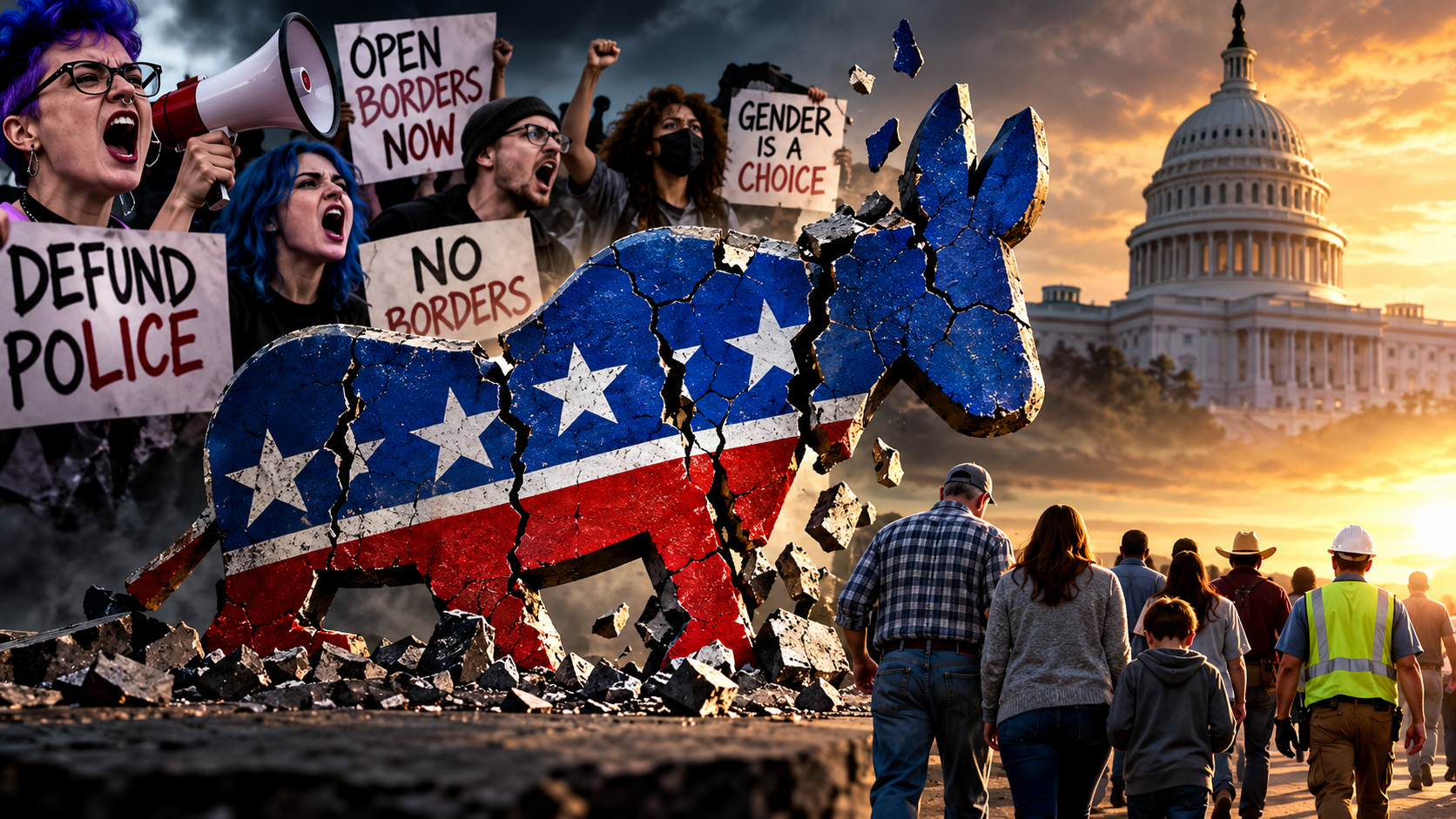
The Democratic Party has a problem, and it is much bigger than Donald Trump, the Republican Party, or the conservative media. Its biggest problem may be the people speaking on its behalf.
At a time when millions of Americans are concerned about the cost of living, crime, housing, immigration, and the future of their children, Democrats risk becoming increasingly disconnected from the very voters they need to win back.
Instead of convincing Americans that they understand their everyday struggles, some of the party’s loudest voices appear determined to turn every disagreement into a moral confrontation. Political opponents are portrayed as dangerous, ordinary concerns are dismissed as ignorance, and controversial cultural positions are sometimes defended with more enthusiasm than practical economic solutions.
The result is a party that risks talking itself out of power.
A Party That Seems to Have Forgotten Ordinary Americans
For generations, Democrats built their political identity around working families, organized labor, affordable living, and economic opportunity.
That message helped the party develop strong relationships with industrial communities, blue collar workers, and middle class households.
Today, however, critics see a party increasingly associated with university campuses, wealthy donors, progressive activists, and political professionals who often seem far removed from the financial pressures facing ordinary Americans.
A family struggling to afford groceries does not necessarily want another lecture about political terminology. A worker worried about losing a job wants to know how elected officials intend to protect economic opportunity. Parents concerned about their children’s education want serious answers about academic performance and school safety.
When politicians respond to those concerns with slogans, accusations, or ideological arguments, they risk reinforcing the perception that they simply are not listening.
Democrats cannot expect voters to remain loyal because of political tradition. Loyalty must be earned, and once lost, it can be difficult to recover.
The Cultural Battles That Could Cost Democrats Elections
One of the party’s greatest vulnerabilities involves controversial social issues.
Questions surrounding biological sex, transgender participation in sports, parental authority, religious freedom, and the role of government in personal decisions have become major political flashpoints.
Americans hold a wide range of views on these subjects. Many support equal treatment and legal protections while also believing that fairness, parental involvement, and individual freedoms deserve serious consideration.
The political danger for Democrats comes when party figures treat those concerns as illegitimate rather than addressing them.
Disagreement does not automatically make someone hateful. Religious convictions do not automatically make someone intolerant. Asking questions about government policy should not make an American afraid to speak.
When progressive activists demand ideological conformity, they can create a backlash that extends well beyond traditional Republican voters.
And when Democratic leaders refuse to challenge the most controversial rhetoric coming from their own political coalition, voters may conclude that those positions represent the entire party.
That perception can become devastating at election time.
Calling Voters Names Is Not a Winning Strategy
Another damaging political habit is the tendency to portray opposition voters as morally defective.
Americans have repeatedly heard political figures describe their opponents using terms such as extremists, threats to democracy, or enemies of progress.
There are circumstances in which genuinely extremist behavior deserves condemnation. But treating millions of ordinary voters as dangerous simply because they support a different candidate is something entirely different.
A voter concerned about illegal immigration is not automatically motivated by hatred. A parent questioning school policy is not necessarily an extremist. A taxpayer who believes government spending is excessive is not an enemy of democracy.
Political parties win elections by persuading people, not by humiliating them.
Every time a Democratic politician appears to dismiss legitimate concerns with an insult, Republicans gain an opportunity to argue that their opponents look down on ordinary Americans.
That is a difficult reputation to overcome.
Immigration Has Become a Test of Political Credibility
Immigration is another issue where Democrats face serious challenges.
America has a long history of welcoming immigrants, and the country benefits from lawful immigration. But Americans also expect the federal government to maintain border security, enforce immigration laws, and protect public safety.
These positions are not mutually exclusive.
The political problem arises when Democratic officials appear more interested in attacking Republican immigration proposals than explaining how they would enforce existing laws.
Voters deserve answers about border security, asylum processing, immigration courts, and the financial responsibilities placed on local communities.
Dismissing these questions as political fearmongering does not make them disappear.
If Democrats want to rebuild public confidence, they must demonstrate that compassion and enforcement can coexist.
The Economy Cannot Be Replaced With Political Slogans
Perhaps the most important challenge is economic credibility.
Americans judge political leadership through their daily experiences.
They know what groceries cost. They know whether rent has increased. They know how much money remains after paying the electric bill, insurance premiums, and household expenses.
A politician can deliver an impressive speech about economic statistics, but those numbers mean little to a family that is falling behind financially.
Democrats risk making a serious mistake whenever they appear to minimize those frustrations.
Economic messaging must reflect what people actually experience rather than what politicians want them to believe.
Working Americans are not interested in being told that their concerns are exaggerated. They want policies that improve their lives.
Until Democrats convincingly address affordability, wages, housing, and economic security, Republicans will continue to have opportunities to attract dissatisfied voters.
The Progressive Wing Is Creating a Political Dilemma
The Democratic Party also faces an internal struggle over its identity.
Progressive activists often demand sweeping changes involving policing, taxation, climate policy, education, and social institutions.
Moderate Democrats, meanwhile, must appeal to voters who may support some liberal policies but reject ideological extremes.
This creates a difficult balancing act.
If party leaders move too far toward the activist wing, they risk alienating moderates and independents. If they reject progressive demands, they risk internal opposition from activists and organizations that play important roles in Democratic politics.
Republicans can exploit those divisions by highlighting the party’s most controversial proposals and statements.
That does not mean every Democrat supports every progressive position. It means the party must decide which ideas it is willing to defend publicly and which it believes go too far.
Remaining silent while the loudest voices define the party is itself a political decision.
Republicans Should Not Mistake Democratic Weakness for Permanent Victory
There is one important reality Republicans should remember: American political power is never guaranteed.
Both major parties have suffered devastating defeats and later returned to government.
Voters change their minds. Economic conditions change. Political coalitions evolve. Leaders emerge who can rebuild damaged reputations.
Democrats are not mathematically or constitutionally prevented from winning future elections, and declaring that they can never regain power would be political wishful thinking.
Republicans also face their own vulnerabilities, including internal divisions, controversial rhetoric, and the responsibility to deliver results when governing.
If Republican leaders fail to improve Americans’ lives, dissatisfied voters may eventually look elsewhere regardless of their frustrations with Democrats.
The Democratic Party’s future therefore depends not only on what its leaders say but also on how effectively its opponents govern.
The Real Threat to the Democratic Party Comes From Within
The most damaging political wounds are often self inflicted.
Democrats can blame conservative media, Republican advertising, Donald Trump, or misinformation for their difficulties. Those factors may influence public perceptions, but they cannot explain away every criticism.
A party that wants to govern must be willing to examine its own failures.
It must recognize that millions of Americans hold traditional religious beliefs, support law enforcement, want secure borders, and believe parents should have a meaningful voice in their children’s education.
Those Americans are not going away.
Neither are voters who want affordable healthcare, economic opportunity, civil rights, and accountable government.
A successful national political party must find ways to speak to people across those differences.
If Democrats continue allowing their most confrontational voices to dominate the conversation, they may make that task increasingly difficult.
Democrats Could Spend Years in the Political Wilderness
The Democratic Party is not facing inevitable extinction. It is facing a choice.
It can continue allowing ideological battles, inflammatory rhetoric, and internal divisions to overshadow the practical concerns of everyday Americans.
Or it can rebuild a political message centered on affordability, public safety, constitutional freedoms, and competent government.
The first path could leave Democrats struggling for national power for years. The second could eventually restore their competitiveness.
What should worry Democratic leaders most is that Republicans do not need to invent every controversy surrounding the party. Sometimes its own politicians and activists provide the material.
And if Democrats cannot learn when to stop talking down to voters and start listening to them, they may discover that the greatest obstacle to regaining power was never the Republican Party.
It was the Democratic Party itself.