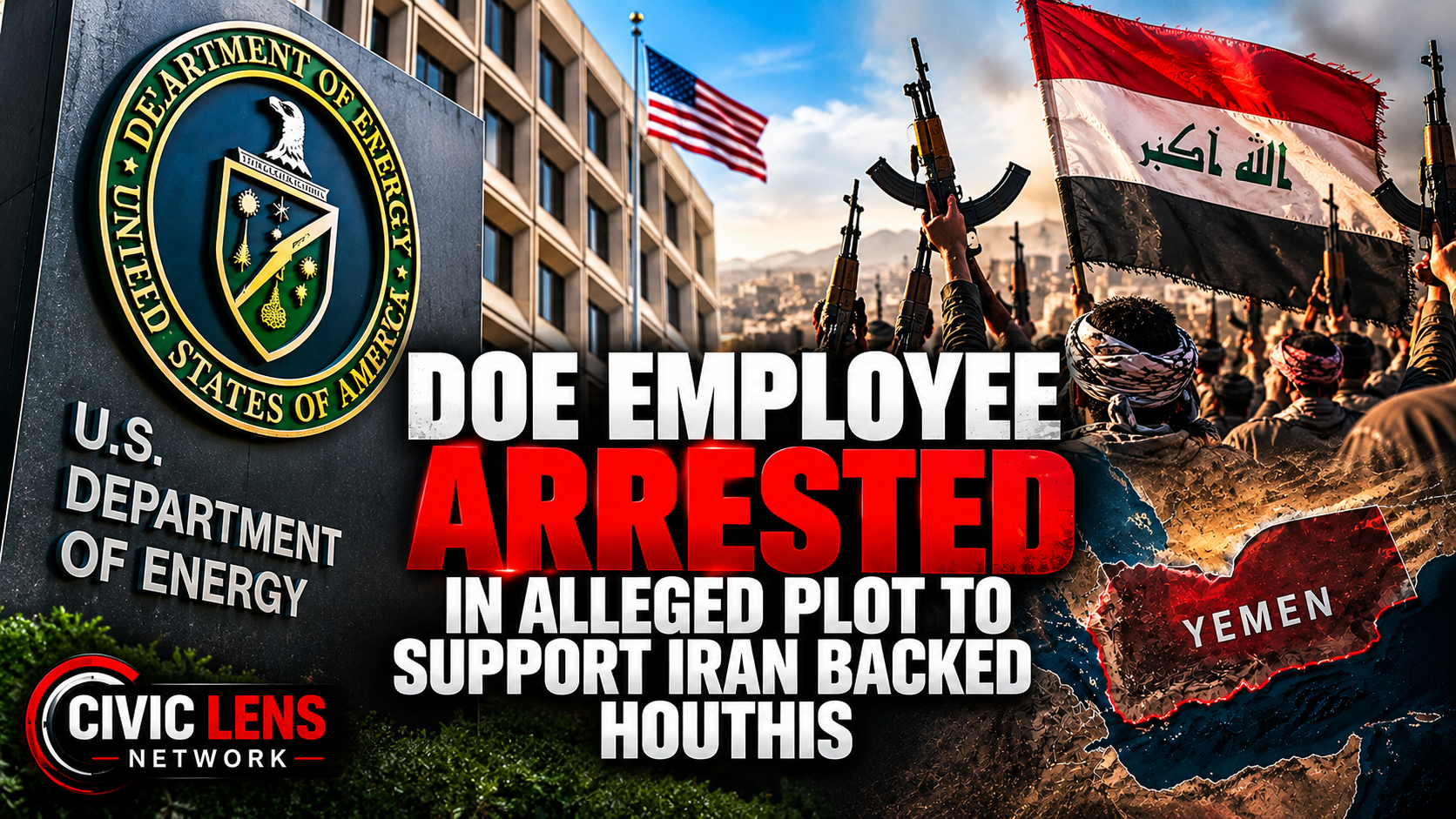
A Department of Energy employee who worked at the Hanford nuclear site in Washington state was arrested Thursday morning on a federal charge alleging he attempted to provide material support to the Iran backed Houthi movement in Yemen. Ashton Hamed Ellaboudy, 51, of Richland, was taken into custody during a search of a residence on Oxford Avenue in south Richland.
Agents from the FBI Seattle field office, members of the Inland Northwest Joint Terrorism Task Force, the Richland bomb squad, and local police participated in the operation, which began around 8:30 a.m. Ellaboudy was booked into the Benton County jail. Agents were also present that morning at the Department of Energy Office of River Protection in Richland. Ellaboudy worked in the Nuclear Safety Division at Hanford, according to a professional profile reviewed by local reporters.
He previously held a position with the U.S. Army Corps of Engineers. Federal prosecutors allege he used an official passport issued during that earlier employment for travel connected to the case. The Department of Energy Hanford Field Office said the matter did not involve any attempt to harm the site or its workforce and that there was no threat to the safety or security of the facility.
According to a criminal complaint and supporting affidavit filed September 30 in the Eastern District of Washington, the FBI began investigating after receiving information that Ellaboudy had purchased precursor chemicals, components, and other materials commonly used in the construction of homemade explosive devices. Court documents list purchases between November 2024 and February 2025 that included nitric acid, ammonium nitrate, hydrogen peroxide, sulfuric acid, potassium nitrate, aluminum powder, sulfur powder, and firework igniter parts, along with additional chemicals and components.
Investigators also identified purchases of parts used for drones and remotely operated aerial systems. The complaint alleges that in December 2024 Ellaboudy took sick leave from his Department of Energy job and claimed the absence was caused by exposure to highly concentrated nitric acid, a chemical often associated with explosive mixtures. In September 2025 he traveled from Richland through Los Angeles and Doha to Salalah, Oman, using the official passport from his prior Corps of Engineers employment.
According to the affidavit, his cellphone was later tracked near the Oman Yemen border. Prosecutors allege he used the same passport to cross into Yemen with the intention of reaching Sanaa, the capital under Houthi control. In a recorded conversation in October 2025, Ellaboudy said he paid approximately 1,400 dollars to be smuggled across the border and wanted to travel to Sanaa. Some accounts in the investigative record indicate he did not ultimately reach the capital.
Upon his return to the United States he told Customs and Border Protection officers that the trip had been official government business. His Department of Energy supervisor later told investigators that Ellaboudy had no authorized travel to the region and that the supervisor knew of no missile inspection program or other official reason for the journey. During the investigation Ellaboudy began communicating with an FBI confidential human source who purported to be working for a Houthi colonel.
The source discussed acquiring communications equipment that would be sent to Yemen for use in a mobile communications center. Court documents allege that Ellaboudy, drawing on his background in electrical engineering, helped the source test and modify solar power generators and communication equipment. He provided guidance on how the power systems and communication systems integrated, supplied schematics and diagrams for their setup, and researched additional equipment that could improve the systems.
The affidavit states that he recognized the solar and radio equipment from his own experience with solar power systems and offered to test it. Prosecutors allege these actions amounted to an attempt to provide personnel, services, expert advice and assistance, and electronic components to Ansarallah, the formal name of the Houthi organization. Ellaboudy is charged with attempting to provide material support or resources to a designated foreign terrorist organization. If convicted he faces a maximum penalty of 20 years in prison.
He is scheduled to make an initial appearance before a federal magistrate judge at 11 a.m. Friday in Richland. Court records available Thursday did not list an attorney for him. The case is being prosecuted by an assistant U.S. attorney in the Eastern District of Washington and trial attorneys from the National Security Division’s Counterterrorism Section.
The charges in the complaint are allegations. Ellaboudy is presumed innocent unless and until proven guilty beyond a reasonable doubt. The Houthis, also known as Ansarallah, are a militant movement that has controlled Sanaa and large parts of northern Yemen for years. The group receives arms, training, and other support from Iran’s Islamic Revolutionary Guard Corps.
Since late 2023 it has launched repeated attacks on commercial shipping in the Red Sea and Gulf of Aden and has fired at U.S. Navy vessels. The State Department designated Ansarallah a foreign terrorist organization in March 2025, reversing an earlier decision to remove the group from the list. Under federal law it is a crime to knowingly provide material support or resources, including expert advice, services, personnel, or equipment, to a designated foreign terrorist organization.
The designation is intended to cut off financing, technical help, and other assistance. Assistant Attorney General for National Security John A. Eisenberg said the allegations describe a government employee who traveled overseas and used specialized expertise in an attempt to aid the Houthis while also acquiring materials for explosives and drones capable of delivering them. FBI Counterterrorism Division Assistant Director Jarod Brown said the investigation detected the alleged conduct before further assistance could be completed.
Hanford Field Office Manager Ray Geimer said the office appreciated the FBI’s work and reiterated that the site itself was never at risk.