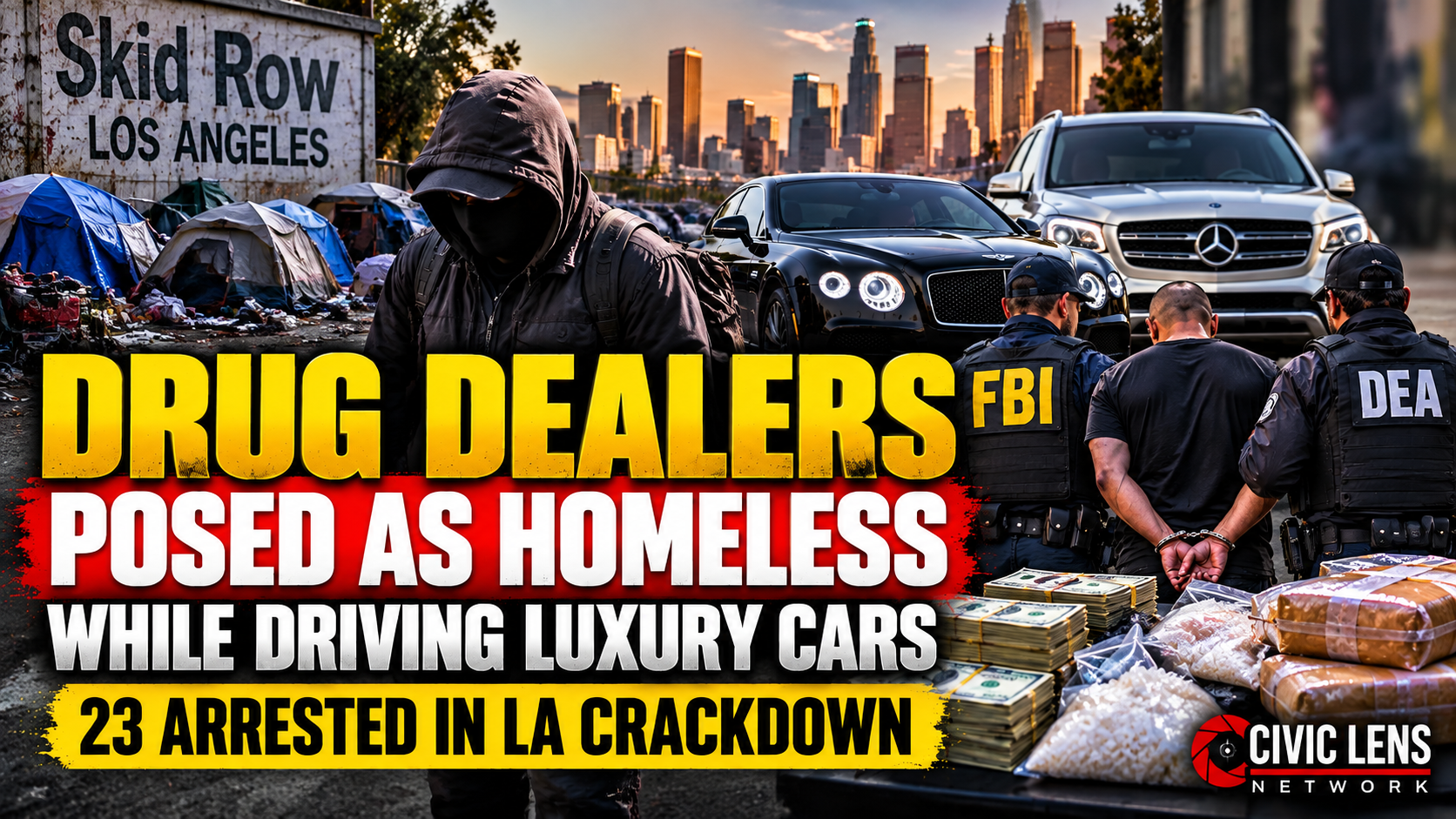
Federal authorities announced Thursday that 23 people had been arrested and 28 charged in criminal complaints as part of Operation Save Skid Row, a coordinated crackdown on alleged street-level narcotics trafficking in downtown Los Angeles. The Justice Department and local officials described dealers who operated from tents and temporary structures on Skid Row, in some cases blending into the neighborhood by dressing as unhoused residents or social workers while selling fentanyl, methamphetamine, PCP and other drugs. First Assistant U.S.
Attorney Bill Essayli said the operation executed 28 arrest warrants and 44 search warrants for federal drug trafficking offenses involving fentanyl, PCP and other narcotics in and around Skid Row. More than 300 officers from the Homeland Security Task Force, FBI, Drug Enforcement Administration, Los Angeles Police Department, Bureau of Alcohol, Tobacco, Firearms and Explosives, IRS Criminal Investigation and other agencies took part. Early reports from LAPD Chief Jim McDonnell placed 21 suspects in custody; the Justice Department later confirmed 23 arrests.
Searches covered roughly 20 residences, most outside Skid Row, along with tents tied to alleged sales near Fifth and Crocker streets, with additional warrants served in areas including Pasadena, West Covina, Simi Valley, Paramount, Gardena and Helendale. According to federal court documents cited by prosecutors and local reporting, alleged dealers used tents, tarps and makeshift structures as distribution points, stored narcotics in vehicles and single-room occupancy units, and sometimes relied on properties or cars registered to other people.
DEA Los Angeles Special Agent in Charge David Olesky said traffickers operated in plain sight, treating tents and temporary structures as storefronts. Mayor Karen Bass said some sellers masqueraded as unhoused people and used tents as offices while preying on those struggling with addiction. Prosecutors allege that Rodney Thomas, 55, also known as Jamaica, lived in a downtown high-rise near the Los Angeles Convention Center yet traveled to a tent at Fifth and Crocker to sell drugs.
Court documents state that he drove luxury vehicles, including a Bentley and a Mercedes-Benz, to the location. Other defendants named in complaints include Charles McIntyre, 65; Dwayne Richards, 62; Tyzarioun Grimsley, 28; Eric Goring, 38; and Michael Taylor, 39, all of Los Angeles; Manuel Vaughns, 52, of West Covina; Larry Pitre, 70, also known as Kat Daddy, of Studio City; and Lionel Nelson, 57, also known as Popeye, of Watts. All face charges of distributing controlled substances. None has been convicted.
Court filings allege that Taylor disguised himself as an unhoused person by wearing dirty clothing and enlisted people living on the streets as lookouts, paying them with drugs. Essayli said dealers targeted people on Skid Row, kept them addicted on drugs such as PCP, and accepted public assistance money as payment. He wrote that the activity was about making money and that it ends with the enforcement action. Vaughns, identified as a Raymond Avenue Crip, is accused of regularly selling in Gladys Park.
Authorities also linked members of the Pueblo Bishops Bloods to distribution from tents and tables near Fifth and San Pedro, and McDonnell said Main Street Crips and other gangs had run distribution operations for years, in some cases involving generational participation in which parents involved their children. Investigators seized firearms, suspected methamphetamine, fentanyl, cocaine, crack cocaine, PCP, heroin, pills, cash and luxury vehicles. FBI Assistant Director Patrick Grandy said the traffickers were the single largest driver of violent crime in the Skid Row area.
Each defendant faces a statutory maximum of 20 years in federal prison if convicted. Essayli said those dealing drugs face mandatory prison sentences and described the operation as the beginning of continued prosecutions. The investigation preceding Thursday’s arrests lasted more than three months by one official account and approximately six months by another. McDonnell and Los Angeles County District Attorney Nathan Hochman described drug distribution on Skid Row as a longstanding problem measured in years and decades.
Officials noted a similar federal action earlier in 2026 at MacArthur Park that produced 24 arrests, and they framed Operation Save Skid Row as a further step against suppliers rather than users. No prior specific ignored complaints or findings of official misconduct were detailed in the announcements. Essayli said prosecutors will use every lawful tool to dismantle the networks. Bass said the distinction between alleged traffickers and unhoused people who need treatment must be maintained.
The charges remain allegations pending court proceedings.