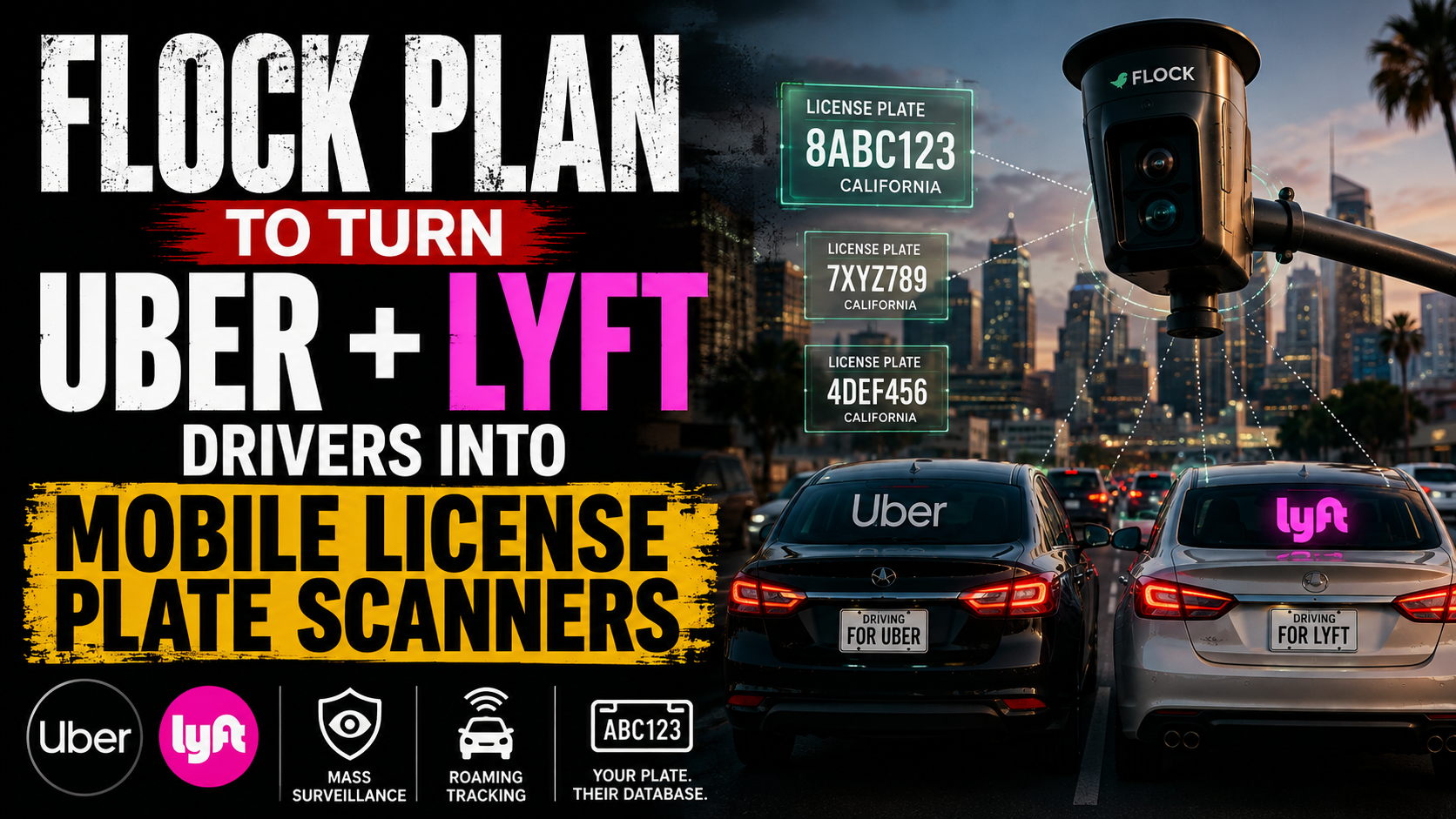
Flock Safety reportedly proposed expanding its automated license plate reader network by turning hundreds of thousands of rideshare and delivery vehicles into mobile scanners. A company presentation prepared for the Georgia Office of the Attorney General in August 2025 outlined plans for a partnership with dashcam provider Nexar that would incorporate about 350000 Uber Lyft and other delivery service devices.
The document obtained through a public records request detailed how these vehicles already equipped with Nexar cameras for driver safety and accident documentation could capture license plate information from cars they passed. That data would then feed into Flock Safetys existing surveillance system used by law enforcement agencies neighborhoods and businesses. The presentation specifically noted hundreds of commercial businesses and homeowner associations in Georgia as part of the network plus the Nexar partnership covering those 350000 devices.
Flock Safety has built its business around fixed cameras typically mounted on poles at intersections or property entrances. These units photograph vehicles extract plate numbers along with details like make model color and distinctive features then store the information in a searchable database accessible to police for investigations into stolen cars missing persons or other crimes. The mobile approach would have filled coverage gaps allowing plate data collection across broader areas as drivers moved through cities and suburbs in real time.
According to reporting the company actively pitched this idea to potential customers around the same period. Flock Safety later stated that it never executed the partnership with Nexar. Questions remain about whether Uber Lyft the delivery companies or the individual drivers would have been informed that their vehicles were contributing data to a law enforcement network. Passengers in those rideshare vehicles also would have had no indication of any such activity under the outlined plan.
This proposal emerges amid ongoing debates over Flock Safetys technology which the company says processes billions of plate scans monthly across tens of thousands of cameras in dozens of states. Supporters including many police departments credit the system with helping solve crimes more efficiently by providing quick leads on vehicle movements. Critics raise concerns about the scale of data collection potential for misuse and limited public awareness of how information is shared or retained.
Default retention periods often last around 30 days though local policies can vary. The presentation itself focused on Georgia but illustrated broader ambitions to leverage existing commercial vehicle fleets rather than relying solely on stationary infrastructure. Nexar dashcams already operate in large numbers of gig economy vehicles marketed primarily as tools for documenting incidents and protecting drivers. Redirecting plate reading capabilities from those cameras would have created a vast roaming layer of surveillance without installing new hardware.
Public records requests continue to surface internal materials from Flock Safety offering windows into its expansion strategies. In this case the document revealed active planning for the Nexar collaboration even as the company has faced scrutiny in various communities over camera placements data access and oversight. While the specific partnership did not move forward the existence of the pitch underscores how surveillance networks can evolve by integrating consumer and commercial technologies already on the road.
Drivers for rideshare and delivery platforms spend significant time navigating public streets making their vehicles natural candidates for continuous data gathering in such a model. The presentation framed the addition as a straightforward network expansion building on existing Georgia participants. Yet the lack of clarity around consent and notification for those involved highlights tensions between public safety tools and individual privacy expectations in an era of widespread camera use.
Flock Safety maintains that its systems aid law enforcement without facial recognition and with controls over data access determined largely by local agencies. The reported proposal for mobile scanners via Uber Lyft and delivery fleets represents one of the more ambitious concepts the company has considered for extending its reach beyond fixed locations.