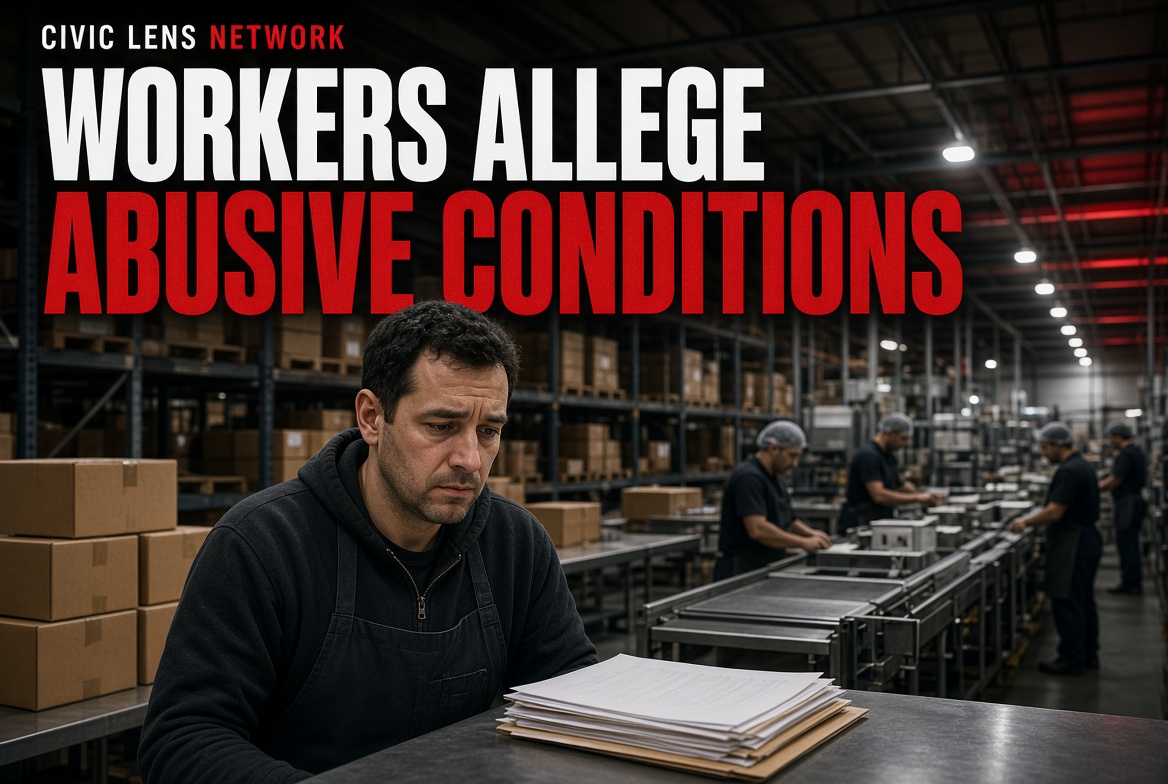
Workers at a HelloFresh distribution center in Newark, New Jersey, allege in an amended class-action complaint that they endured abusive supervision, severe restrictions on bathroom breaks, discrimination, and other mistreatment while employed through staffing agencies. A New Jersey state court judge is scheduled to review the proposed amended complaint at a hearing on October 23, 2026. The company has denied the allegations. The original lawsuit was filed in August 2024 against HelloFresh and staffing agencies Action Staffing, On Target Staffing, and ProStaff Workforce Solutions.
Plaintiffs, represented by attorneys including Lauren Herman of Make the Road New Jersey and Michael Scimone of Outten & Golden, claim the facility operated with a two-tier workforce in which temporary workers—primarily Hispanic or Latino—faced different treatment from direct hires. According to the complaint and statements reported by The Guardian, the allegations include managers taking identification badges from temporary workers that were needed to exit the facility, repeated threats to contact U.S.
Immigration and Customs Enforcement, assignment of the hardest tasks to Hispanic workers, racist or abusive remarks, reprimands for speaking Spanish, and selective enforcement of a no-cellphone policy. The suit further alleges sexual harassment of Hispanic female employees, including grabbing of body parts, managers displaying pornography or genital images, simulation of sex acts with food items, and propositions for sex.
On bathroom access, the complaint alleges Hispanic temporary workers were required to use a sign-out system with time limits policed by supervisors, while non-Hispanic workers faced fewer restrictions. It claims one manager menaced workers with a baseball bat to enforce time limits, and that the policy was so restrictive that some workers urinated on themselves and continued working; at least one worker reportedly brought extra clothing.
Plaintiff Luis Penafiel, a former temporary worker at the Newark facility from November 2021 to August 2023, told The Guardian he held his bladder for hours, developed incontinence and infections, and sought treatment from a urologist. He described noticing discrimination based on Latino identity and fear of punishment for complaining. The complaint also alleges physical assaults, including beatings, hands placed around workers’ necks, and screaming into ears—sometimes in view of other Hispanic employees to induce fear—as well as denial of medical care for workplace injuries.
Workers who raised complaints were allegedly bounced between HelloFresh and the staffing agencies with little resolution. HelloFresh has rejected the claims. A spokesperson told The Guardian: “Upon learning of these allegations, which date from 2023 and years prior, we conducted a thorough internal investigation and found these claims to be entirely without merit. We vehemently denied these allegations when this lawsuit was filed over two years ago, and we continue to vehemently deny them today.”
The company has emphasized its anti-discrimination and anti-harassment policies, mandatory training, and reporting channels including a confidential hotline, stating that a safe, fair, and respectful workplace is its highest priority for frontline workers. HelloFresh filed a motion to dismiss in April 2025 denying the allegations. The staffing agencies also moved to dismiss; some argued workers falsified immigration documents, that HelloFresh offered direct employment (disputed by plaintiffs), and that no complaints were made.
The court previously granted dismissal of claims under New Jersey’s anti-human trafficking law but allowed an amended complaint identifying individual plaintiffs or defendants. The Newark facility is HelloFresh’s large U.S. distribution hub, involved in picking and packing meal kits for Northeast customers. No court has found the company liable; the allegations remain unproven. The October 23 hearing concerns review of the amended complaint.
The case remains pending, with outcomes for the workers’ claims and any broader implications for temporary warehouse labor still unresolved.