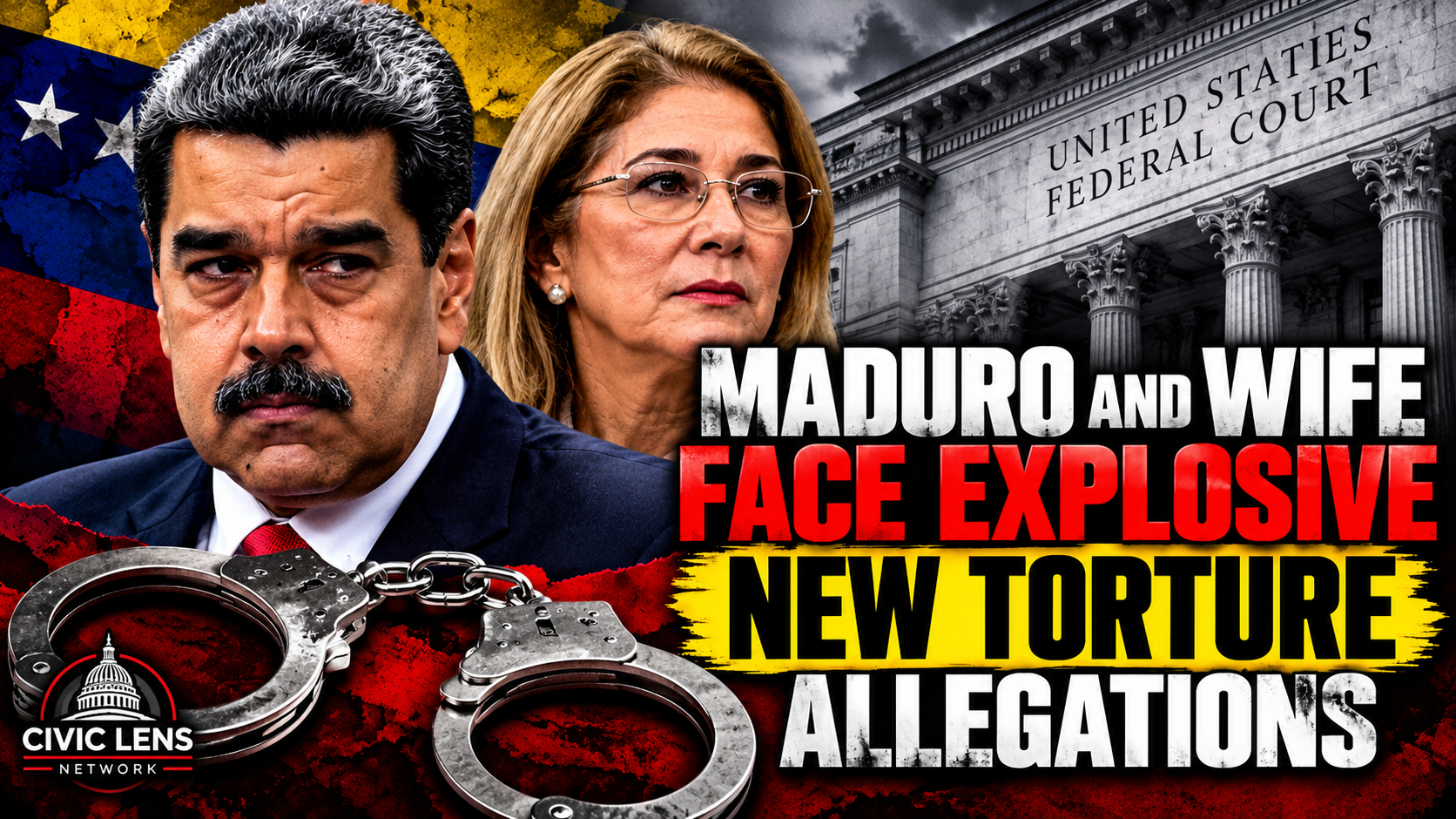
Federal prosecutors in Manhattan unsealed a superseding indictment Thursday charging former Venezuelan President Nicolás Maduro and his wife, Cilia Flores, with conspiracy to commit torture. The new count accuses the couple of directing a system of repression that used severe physical and psychological abuse to silence opponents and hold power from at least 1999 through 2025. The 30-page filing in the Southern District of New York, case 1:11-cr-00205, adds the torture conspiracy to existing charges of narco-terrorism conspiracy, cocaine importation conspiracy, and weapons offenses.
Maduro and Flores, captured by U.S. forces at their Caracas residence on January 3 and held since at the Metropolitan Detention Center in Brooklyn, have pleaded not guilty to the earlier counts. Their trial remains scheduled for June 1, 2027, before Judge Alvin Hellerstein, who on Thursday denied Flores’s request for release on health grounds.
Prosecutors allege Maduro presided over the apparatus, commanded military and intelligence units that carried out the abuse, ordered specific detentions and torture, received regular updates on prisoners, and in some cases directed harsher treatment. When told one detainee remained defiant, he reportedly ordered officials to “squeeze them harder.” He is also accused of suggesting methods such as sleep deprivation and pouring water on prisoners, of watching a forced confession video, and of personally threatening the life of one prisoner’s child as psychological torture.
Flores, a former legislator and attorney general, is alleged to have helped design the repressive system, agreed to kidnapping and torture plans during periods of military unrest, ordered torture of particular individuals to protect family interests, and attended briefings on the treatment of detainees.
The indictment describes methods that include electric shocks applied to arms, legs, sides, knees, and genitals; repeated beatings with fists, belts, pipes, shovels, and gun butts; asphyxiation by plastic bags and simulated drowning in which heads were submerged roughly 30 times; hanging by hands and feet; forced injections that produced seizures; starvation and denial of water; prolonged isolation in punishment cells with constant light and noise; rape; forced nudity; and threats to kidnap, rape, or kill family members, including children.
One Venezuelan military officer arrested in November 2013 on suspicion of coup plotting was allegedly shocked about 20 times with a live wire, struck on the legs, back, and head, and suspended by the limbs. An opposition figure arrested in 2014 faced beatings, sleep deprivation, and isolation. After a 2018 drone incident the government called an assassination attempt, another detainee was subjected to shocks and asphyxiation. Three U.S. citizens appear as numbered victims.
One, detained in January 2022 and accused of plotting against Maduro, allegedly endured electric shocks to the arms, legs, and genitals, beatings, asphyxiation, food and water deprivation, and forced injections causing seizures, then spent more than eight months at Boleíta Norte prison. A second American, held from August 2023, was beaten, had a gun placed in his mouth, and received shocks to the testicles; prosecutors say harsher treatment was limited because of his citizenship and potential value in an exchange.
A third, arrested in January 2025, was beaten every half hour for two days, suffering a lasting eye injury, and later warned not to speak of the abuse. The filing states that more than a dozen American citizens held in Venezuelan custody were subjected to such treatment.
Public civil lawsuits filed by former Marine Matthew Heath and others have described parallel accounts of electric shocks, waterboarding, threats of sexual assault, and confinement in a cell known as El Tigrito, though those named plaintiffs are not identified by name in the criminal indictment. The alleged purpose was political control.
Prosecutors write that Maduro and Flores “presided over a system of repression that relied on violence against political opposition, arbitrary detention, and the torture of detainees, including United States citizens,” in order to “undermine Venezuelan democracy and entrench themselves in power.” Abuse intensified around the 2014 protests, the 2018 drone episode, and the unrest after the 2024 election. The Directorate General of Military Counterintelligence (DGCIM) and other units are described as the primary instruments, operating at facilities including Boleíta Norte and Ramo Verde.
Armed civilian colectivos and elements tied to drug trafficking are also alleged to have assisted in detentions. The indictment cites years of public documentation that the defendants are said to have denied while the practices continued. United Nations investigators and the Office of the High Commissioner for Human Rights issued repeated reports between 2014 and 2025 describing patterns of torture, including electric shocks, asphyxiation, and sexual violence, at Venezuelan detention sites.
The International Criminal Court has maintained an investigation into alleged crimes against humanity in Venezuela centered on arbitrary detention and mistreatment of opponents. Maduro has long rejected those findings. Cooperating witnesses, including former intelligence chief Hugo Carvajal, who pleaded guilty to related drug charges and has offered testimony, form part of the evidentiary base prosecutors intend to present, along with victim accounts and intelligence developed over the multi-year probe.
Attorney General Todd Blanche said the additional charges reflect work since the January capture “to uncover the extent of their alleged crimes against the people of Venezuela and of the United States” and the administration’s commitment to justice for victims of torture and narcoterrorism. U.S. Attorney Jamie McDonald for the Southern District of New York stated that the case demonstrates law enforcement will pursue human rights abuses and narcotics trafficking worldwide.
FBI Director Kash Patel said the regime “subjected over a dozen American citizens to torture while held in custody of the Venezuelan government, including drugs, electrocution, sexual assault, and more.” Flores’s attorney told the court Thursday he had not yet reviewed the new allegations. Maduro’s counsel had not issued an immediate public response. Both defendants have previously argued that head-of-state immunity and the circumstances of their capture bar the prosecution.
Venezuelan authorities under interim leadership of Delcy Rodríguez have not asserted immunity for Maduro or Flores in the New York case, according to a recent prosecution filing, even as Caracas sought immunity protections for Rodríguez in a separate Florida civil suit brought by American former detainees. Under 18 U.S.C. § 2340A, conspiracy to commit torture outside the United States carries a maximum of 20 years in prison, or life if death results from the prohibited conduct.
The preexisting narco-terrorism charge carries a 20-year mandatory minimum and exposure to life imprisonment. Reuters reported that conviction on the full set of charges would expose Maduro and Flores to a mandatory minimum of 50 years. The couple already faced potential life sentences on the drug and weapons counts alone.