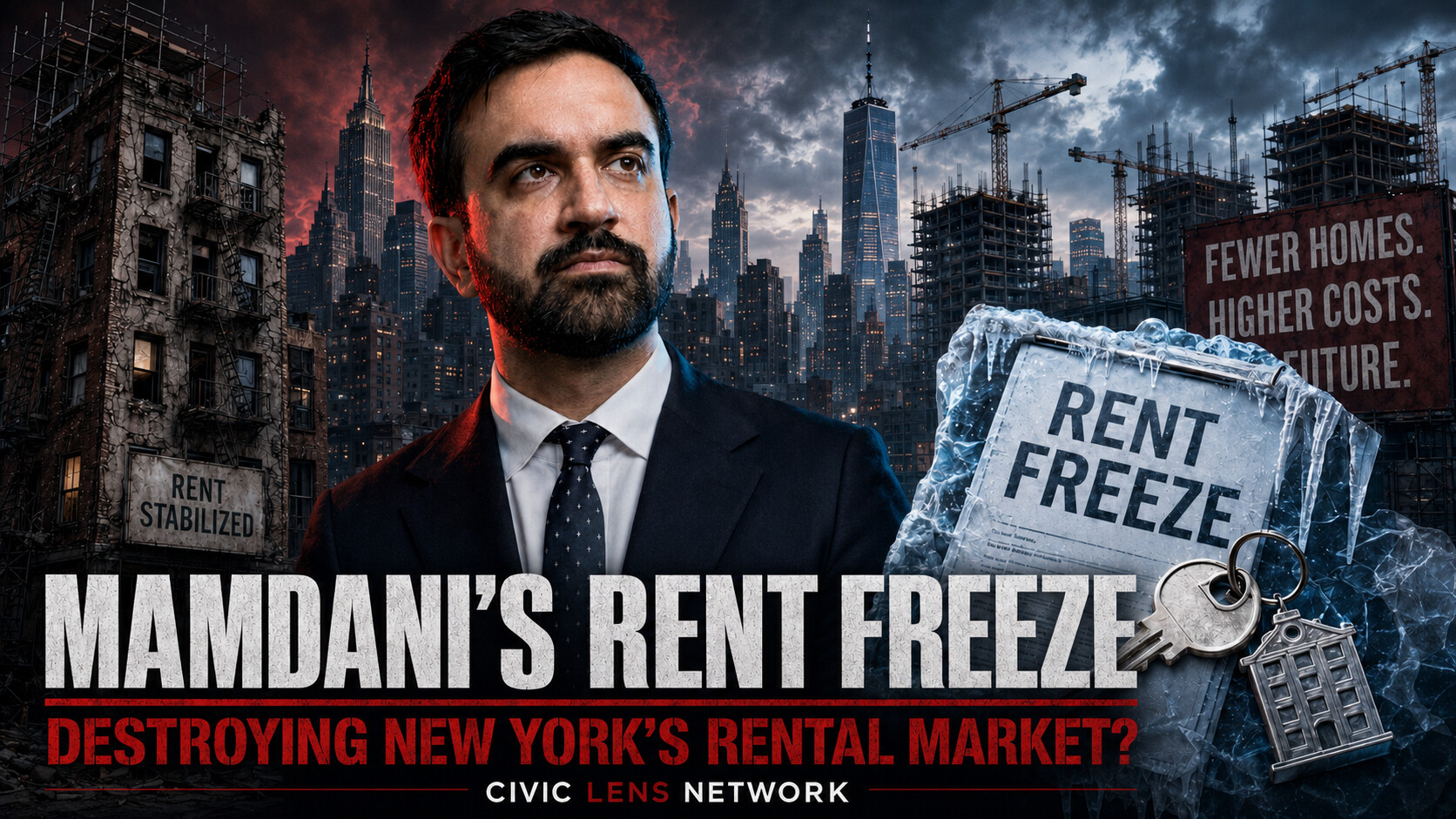
Mayor Zohran Mamdani’s housing approach in New York City has drawn sharp criticism for prioritizing short term tenant relief over the long term health of the city’s rental market. His signature rent freeze on roughly one million rent stabilized units, combined with aggressive targeting of property owners, are the plan set to worsen rather than ease the housing shortage. Economists have long warned that rent freezes suppress the symptom of high prices while ignoring the underlying shortage of units.
By locking in zero increases for one and two year leases, the policy reduces landlords’ ability to cover rising costs for maintenance, insurance, taxes, and capital repairs. Historical evidence from New York and other cities shows this leads to deferred upkeep, more vacant units that become uninhabitable, and fewer incentives to invest in existing buildings. Critics note that thousands of rent stabilized apartments already sit empty because renovation costs exceed what owners can recover under tight rules. Freezing rents accelerates that dynamic.
Mamdani’s administration has amplified pressure through Rental Rip Off hearings and a public playbook focused on low road or bad actor landlords. The city collaborates with tenant groups to identify violations, pursues large civil penalties, and seeks to remove negligent owners so properties can transfer to other stewards. Record fines, such as the 31 million dollar judgment against certain Bronx owners, and settlements forcing repairs send a clear signal. Supporters call this accountability for dangerous conditions.
Detractors argue it creates a climate of hostility that discourages both large and small owners from staying in the market or improving their holdings. Compounding the issue is the regular public release of the city’s Worst Landlord Hit list, compiled by the Public Advocate using Housing Preservation and Development violation data. The annual ranking names individual owners and associated companies with the highest open code violations including heat outages, pests, mold, and structural problems and is promoted alongside city enforcement efforts.
Mamdani’s team has referenced these hit lists, highlighted specific names in announcements, and encouraged tenant organizing around them. While the data itself comes from existing public records, the formal, highly visible naming turns enforcement into a public spectacle. Property ownership details are already accessible through city databases, yet the Hit list format packages names for broad attention. The cumulative effect risks shrinking the private rental supply that New York depends on.
When returns become uncertain and owners face intensified scrutiny, litigation, and public identification, capital flows elsewhere. Nonprofits and city linked entities cannot fill the gap at the scale required. Mamdani’s broader plan to build or preserve hundreds of thousands of affordable units relies heavily on public investment and transfers of distressed properties, but critics contend this path socializes more of the housing stock without solving the production bottleneck created by regulation.
New York’s housing crisis is real: high costs, aging buildings, and inadequate supply hurt tenants. Holding owners accountable for genuine hazards is legitimate. Yet policies that freeze revenues, escalate enforcement theater, and spotlight landlords by name appear more likely to accelerate deterioration and exit from the market than to deliver durable affordability. The short term political win of a rent freeze may leave the city with fewer, worse maintained apartments in the years ahead.
Mamdani knows what he is doing he is destroying New York and that’s the plan.