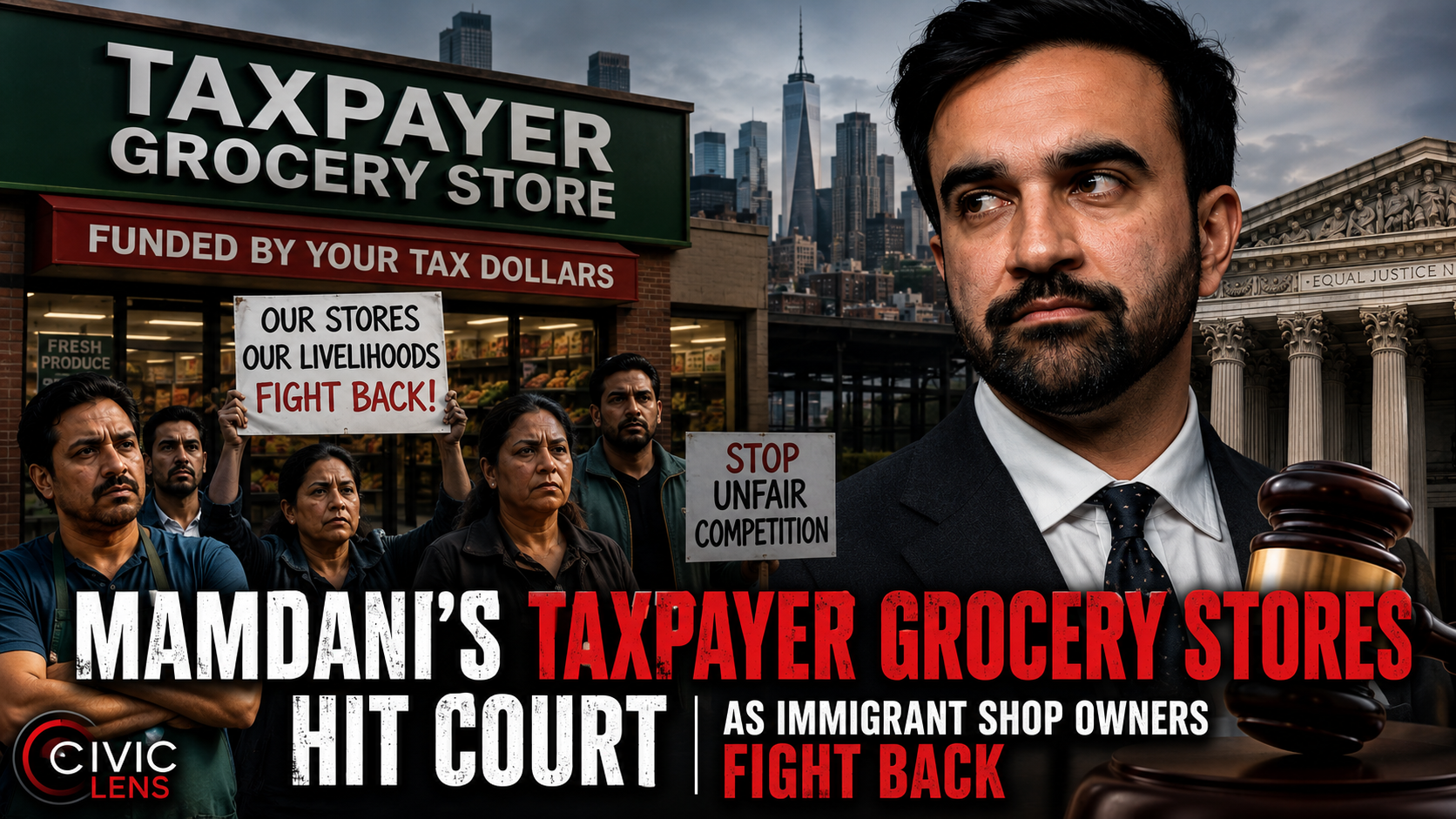
New York City Mayor Zohran Mamdani built his campaign on the promise of cheaper groceries through government-owned stores. Now that promise has landed him in court. On August 24, a coalition of immigrant-owned grocers, bodega operators, and small supermarket owners filed two lawsuits in Manhattan Supreme Court seeking to halt the plan. They argue the city is using taxpayer money to undercut the very businesses that already feed working-class neighborhoods.
Mamdani’s administration plans five city-owned grocery stores, one in each borough, at a cost of $70 million in capital funds. The first is slated for Hunts Point in the Bronx in 2027. Another is planned for La Marqueta in East Harlem by 2029. The city will own the buildings, waive rent and property taxes, and require operators to sell a core basket of items—produce, meat, milk, bread, and pantry staples—at 30 percent below typical retail prices.
Officials claim this could save shoppers $90 a month, or about $1,000 a year. Private operators are being sought through a request for proposals due in mid-October. The Multicultural Business Coalition, which represents dozens of ethnic chambers of commerce and hundreds of small stores owned by Asian, Hispanic, African, Caribbean, Middle Eastern, and Jewish families, says the math does not work for them. These shops already operate on razor-thin margins.
They pay rent, utilities, insurance, and taxes. They cannot match a 30 percent discount backed by the city treasury. Coalition president Kenneth Roldan called the plan a “direct assault on minority business” by a mayor who presents himself as a champion of the working class. The lawsuits make two main claims.
One seeks class-action status and argues the program violates New York civil rights laws and the state constitution’s equal protection clause because it disadvantages minority-owned stores that cannot offer the same subsidized prices. The other asks a judge to block the program until the city conducts a proper economic study of its impact on existing neighborhood grocers. The coalition says City Hall never performed that analysis and selected sites arbitrarily.
They note that stores around La Marqueta, for example, include Hispanic- and Korean-owned markets that would sit directly in the path of the new subsidized competitor. City Hall ignored repeated requests for meetings dating back to May. A last-ditch letter from the coalition offered to discuss alternatives, such as helping existing stores form buying groups to lower their own costs. Those overtures went unanswered.
Mamdani responded to the filings by saying he remains confident in the plan’s legality and its importance. He pointed out that New York has more than a thousand grocery stores and argued five municipal ones will not change the market. That answer skips the core problem. Government stores do not compete on the same terms.
They do not face the same overhead. They can sell at a loss because taxpayers cover the difference. This is not a new idea dressed up as innovation. Cities and countries that have tried government-run retail have often discovered that political pricing distorts markets, creates shortages of unsubsidized goods, and leaves private operators holding the bag.
Small grocers in New York already struggle with high commercial rents, theft, and thin profits. Adding a subsidized competitor next door is not “affordability.” It is a transfer of business from taxpaying shopkeepers to a city-backed operation. Many of those shopkeepers are immigrants who built their stores the hard way.
They hire locally, know their customers, and stay open late. They do not need a lecture from City Hall about feeding the working class. The comparison the coalition draws to Walmart is revealing. New York politicians spent years blocking the big-box retailer on the grounds that it would crush neighborhood stores.
Now the same city government wants to play the role of the deep-pocketed discounter, except this time the deep pockets belong to taxpayers. If a private chain tried this pricing strategy without subsidies, it would face antitrust scrutiny. When the government does it, the mayor calls it justice. Mamdani’s broader affordability agenda treats high prices as a problem government can solve by entering the business itself.
That approach assumes bureaucrats and political appointees can run grocery stores more efficiently than people who have done it for decades. History suggests otherwise. The more realistic path would be cutting the taxes, regulations, and energy costs that drive up prices for everyone, including the small stores now heading to court. Instead, the city is preparing to spend tens of millions to prove a campaign slogan.
The lawsuits will not be resolved quickly. Operators considering the city’s request for proposals now face the extra risk of being sued themselves. The coalition has already warned that anyone who signs on could end up in court. That uncertainty alone may delay or shrink the program.
For the families who own the bodegas and markets in Hunts Point and East Harlem, the delay is not a legal technicality. It is time they need to keep their doors open while City Hall experiments with their livelihoods. Government has a role in making sure people can afford food. That role is not to become their grocer.
When a mayor decides the state should sell bananas cheaper than the guy down the block who pays rent, the guy down the block has every right to ask a judge to look at the books. The court filings are not an attack on cheaper groceries. They are a defense of the people who already provide them without a $70 million subsidy.