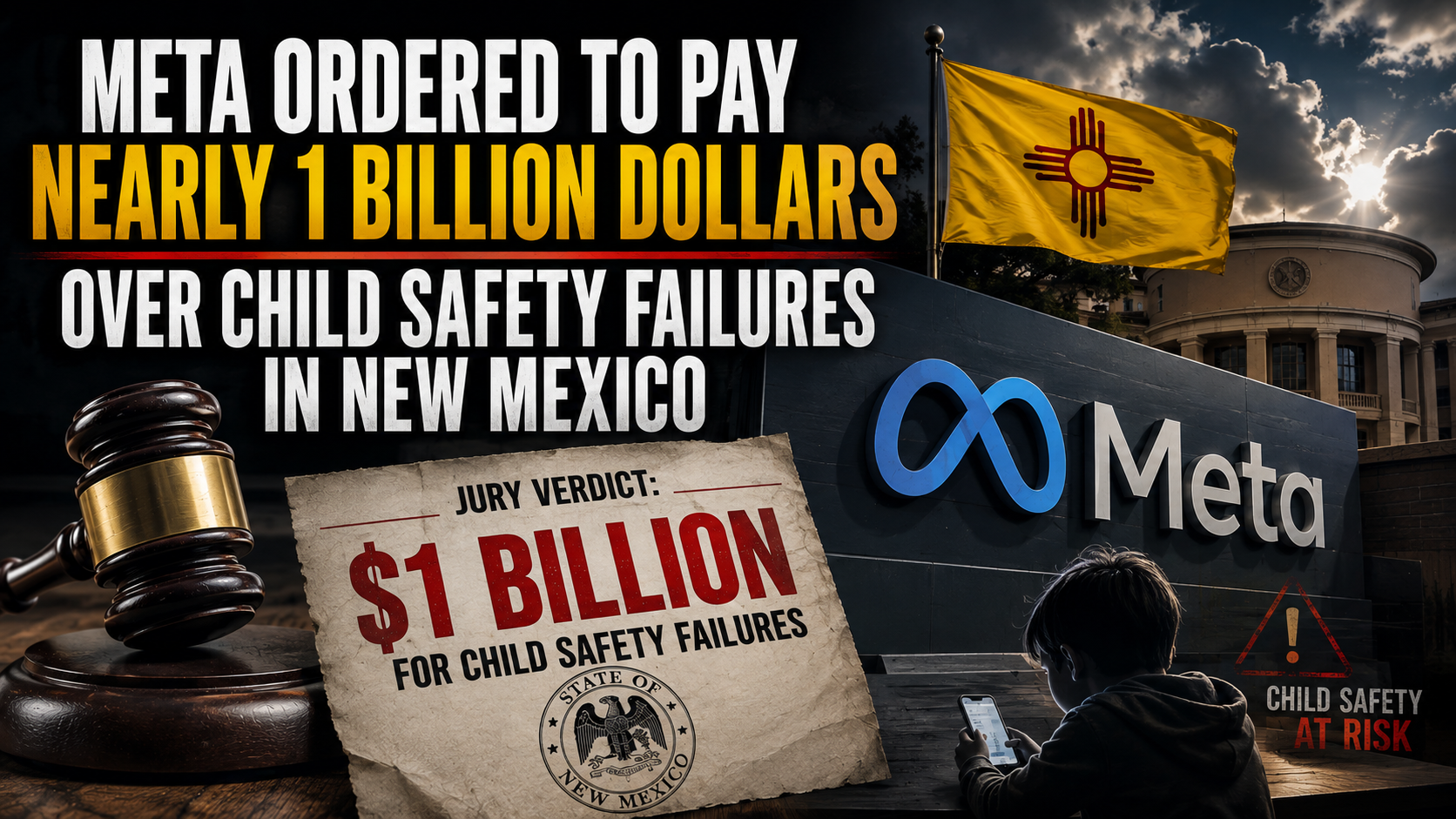
Meta Platforms faces a court order to pay nearly 1 billion dollars following a landmark ruling in New Mexico over child safety concerns on its social media platforms. A Santa Fe state court judge directed the company to contribute 567 million dollars to an abatement fund while earlier jury penalties of 375 million dollars bring the total to 942 million dollars.
The decision holds Meta responsible for creating a public nuisance through features on Facebook and Instagram that the court said optimized engagement in ways harmful to teenagers and contributed significantly to the state’s teen mental health crisis. The judge’s 68 page ruling detailed how Meta failed to adequately communicate risks to users. Evidence presented showed platform designs prioritized prolonged use among young people, contributing to documented harms including mental health challenges and enabling exploitation.
The abatement fund aims to support awareness campaigns, prevention programs, improved screening, and treatment services for those affected by the platforms. Most of the new funds will target clinical and behavioral health support for young people already impacted, with remaining portions dedicated to training educators and health professionals along with broader prevention efforts over the coming years. This case began with a lawsuit filed by New Mexico’s attorney general.
In an earlier phase, a jury found Meta misled consumers about platform safety and enabled harms including child sexual exploitation. The jury imposed the maximum civil penalties available under state consumer protection laws. The recent ruling builds on that finding by classifying the platforms as a public nuisance similar to environmental hazards that require remediation. In response, Meta has stated it disagrees with the decision and intends to appeal.
Company representatives emphasized ongoing efforts to protect teens online and argued the claims misrepresent facts about their safety record. The order also requires specific operational changes limited to New Mexico. These include restrictions on push notifications to underage accounts during late night and school hours, monthly usage limits of about three hours per day across the platforms for users under 18, elimination of public like counts for those accounts, bans on recommending underage accounts to adults, and stronger measures against messaging between adults and minors.
Additional requirements cover policies for handling reports of child sexual abuse material and limits on certain content sharing by young users. The total penalty remains a fraction of Meta’s annual profits, yet it marks one of the largest financial consequences to date in lawsuits examining social media effects on youth. Similar cases continue in other states and involve thousands of individual claims.
Legal observers note the New Mexico outcome could influence strategies in those proceedings by establishing a model for treating platform designs as public nuisances subject to abatement. The ruling underscores growing scrutiny of how technology companies balance engagement metrics against potential developmental impacts on younger users. Meta has previously faced other substantial regulatory penalties in different jurisdictions, though this case focuses specifically on youth related harms and state level public health claims.
The company continues to monitor multiple legal matters that could affect its operations and financial results in the years ahead.