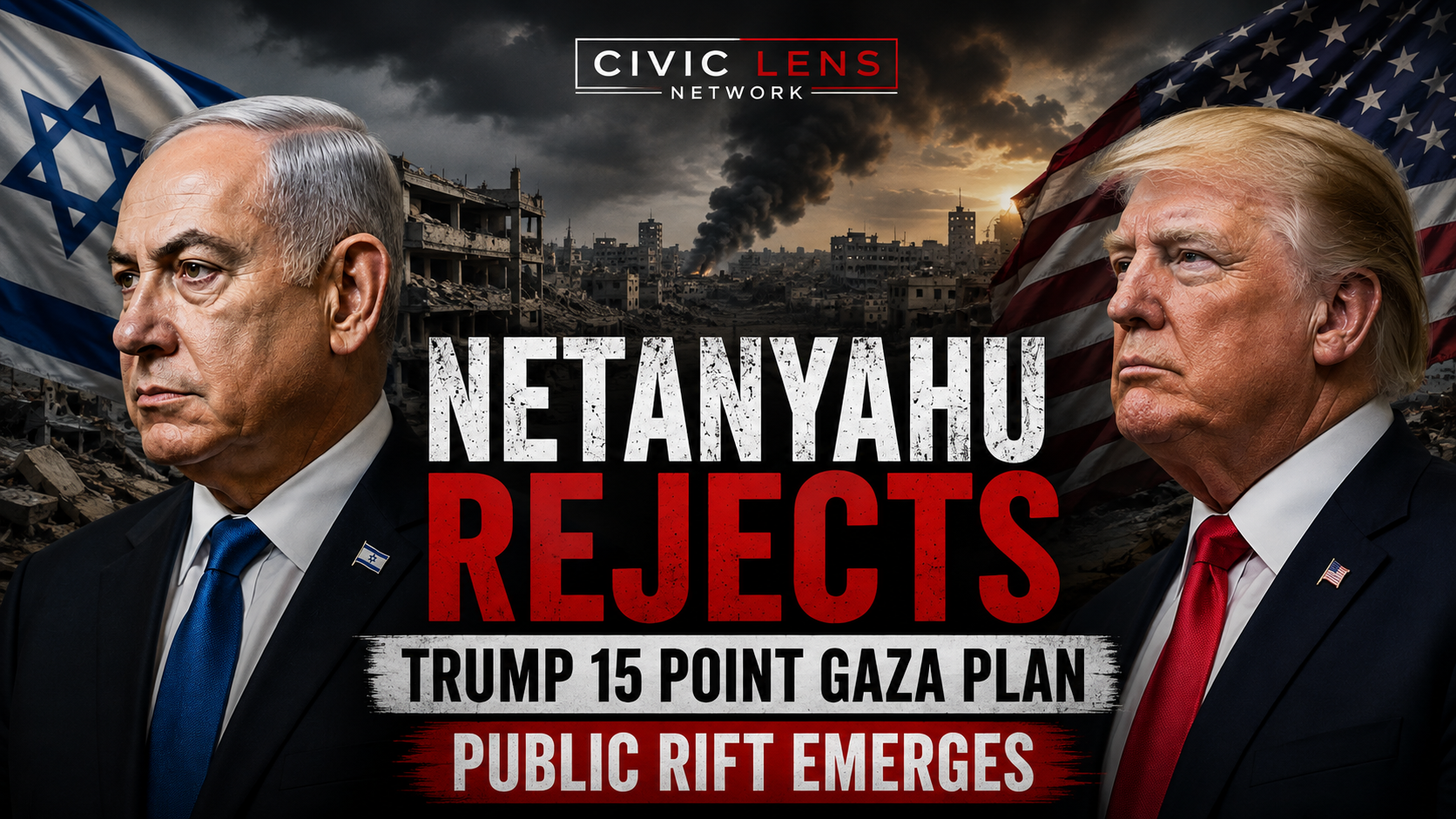
Israeli Prime Minister Benjamin Netanyahu has publicly rejected President Donald Trump’s 15 point Gaza peace plan. The proposal centered on the complete disarmament of Hamas and certain aspects of Israeli military withdrawal from the Gaza Strip. Netanyahu made clear that Israel cannot accept terms that would leave residual threats or force premature pullbacks before lasting security is guaranteed. In his view the plan falls short of ensuring that Hamas can never again rebuild its military capacity or launch attacks against Israeli civilians.
The rejection creates an open difference between Jerusalem and Washington. For years the two allies have coordinated closely on Middle East strategy. This disagreement stands out because it involves the core question of how to end the current conflict and prevent its return. Trump’s framework aimed to combine pressure on Hamas with incentives for reconstruction and governance changes in Gaza.
Disarmament formed the central demand. Elements of phased Israeli withdrawal were also included once security benchmarks were met. Netanyahu’s government maintains that any withdrawal must follow full demilitarization and verifiable long term arrangements rather than optimistic timelines. Analysts note that such public statements rarely represent the final position in Israeli American diplomacy.
Negotiations continue through private channels even when leaders express firm views in public. Both sides share the goal of removing Hamas as a military force while managing the humanitarian situation and regional fallout. The disagreement reflects deeper differences in timing and risk assessment. Washington has pushed for faster movement toward a political horizon.
Jerusalem prioritizes military achievements and ironclad guarantees against renewed rocket fire tunnels and attacks. These priorities have shaped Israeli operations since the conflict escalated. Regional actors continue to watch the exchange closely. Arab states involved in mediation efforts and other international players will adjust their own positions based on how the two allies resolve the gap.
Domestic politics in both countries also play a role. Netanyahu faces coalition pressures that favor a hard line on security. Trump must balance domestic expectations with the desire to claim progress on a long standing crisis. History shows that Israeli American differences over Gaza and the broader Palestinian issue have surfaced before and then narrowed through intensive talks.
The current episode follows the same pattern. Public rejection does not close the door to further discussion or eventual adjustment of positions. Security remains the non negotiable foundation for Israel. Any plan that appears to leave Hamas with residual capabilities will meet strong resistance.
At the same time the United States continues to emphasize the need for a sustainable outcome that reduces the chances of future wars. The coming weeks will test whether quiet diplomacy can bridge the gap. Officials on both sides have experience managing such tensions without letting them damage the overall strategic partnership. Netanyahu’s statement sets a clear marker yet leaves room for the practical work of negotiation that usually follows public declarations of this kind.
Ongoing military operations diplomatic contacts and shifting battlefield realities will influence the next moves. The public disagreement is real yet it occurs within an alliance that has repeatedly found ways to align on core interests.