In July 2026, at a moment of heightened danger, The New York Times made a deliberate choice that prioritized a scoop over the safety of the President of the United States and the integrity of national security. While Iranian proxy forces were actively targeting President Trump and Air Force One near the Turkish border, the newspaper published detailed information about critical vulnerabilities in the new Qatari gifted presidential aircraft. This was not abstract policy discussion.
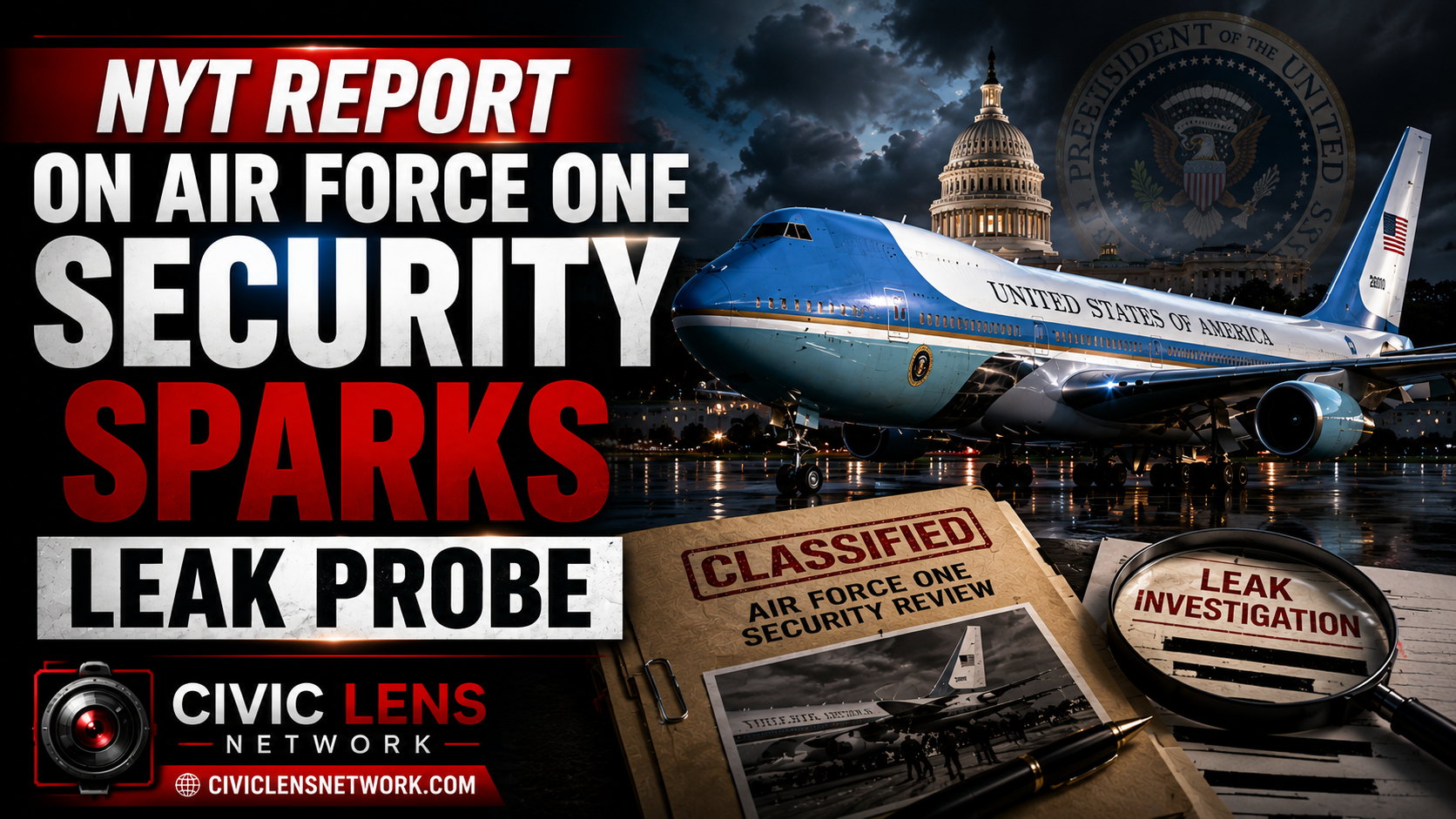
It was the disclosure of specific defensive shortcomings, most notably the absence of advanced antimissile systems, on the very plane the president was using while an adversary sought to kill him. The facts are straightforward. Trump had flown the newly retrofitted Boeing 747-8, a $400 million gift from Qatar rushed into service at his insistence, to a NATO summit in Turkey.
That country shares a border with Iran, and the region was already on edge after the collapse of a fragile ceasefire and renewed U.S. strikes. Intelligence agencies detected a credible threat from Iranian linked proxies aiming at the president and his aircraft. The Secret Service responded by urgently advising a switch to the older Air Force One, which carried the full suite of protective systems the newer jet still lacked. The decision was driven by real time danger, not politics or optics.
Yet The New York Times chose this precise window to reveal those gaps. Citing anonymous sources, the paper reported both the plane switch and the specific security deficiencies of the Qatari jet. Before one of the stories ran, a senior FBI official contacted the newsroom and explicitly asked that the article be withheld on national security grounds. The official declined to provide operational details, standard practice when protecting classified information, but the warning was clear.
The Times ignored it and published anyway. That decision handed potential adversaries a clearer picture of the president’s airborne vulnerabilities at the worst possible time. Revealing that a presidential aircraft lacks certain antimissile capabilities while hostile forces are plotting against it is not transparency. It is the functional equivalent of advertising a soft target.
Journalists have a legitimate role in scrutinizing government decisions, including the rushed adoption of a foreign donated plane and any trade offs made during its retrofit. But timing and specificity matter. Publishing operational weaknesses of the aircraft carrying the commander in chief during an active Iranian threat crosses a line that responsible reporting should never approach. The subsequent Justice Department investigation was a predictable and necessary response.
Federal prosecutors sought to identify the government officials who broke the law by leaking classified defense information. Subpoenas issued to Times journalists were aimed at the sources, not at punishing the press for its existence. The paper and its defenders framed the probe as an assault on the First Amendment. That framing obscures the central issue: the original wrong was the unauthorized disclosure of sensitive military details that could aid an enemy intent on assassinating the president.
Leaking and publishing such information does not automatically serve the public interest when the immediate result is heightened risk to the nation’s highest office. The older Air Force One existed precisely because the new jet was not yet fully hardened. By spotlighting that gap while Iranian proxies were positioning themselves, the Times reduced the margin of safety the Secret Service was working to preserve.
In an environment where Iran has repeatedly demonstrated both the intent and the capability to target American leaders, that reduction is not a theoretical concern. It is a practical one. The episode exposes a deeper failure of judgment. National security is not a partisan slogan.
It is the baseline requirement that allows every other debate, about foreign gifts, procurement timelines, or presidential preferences, to occur at all. When a major newspaper elects to broadcast defensive shortfalls of Air Force One in the middle of a credible foreign threat, it is not holding power accountable. It is gambling with the lives of the president, the crew, and the continuity of government. That choice was wrong.