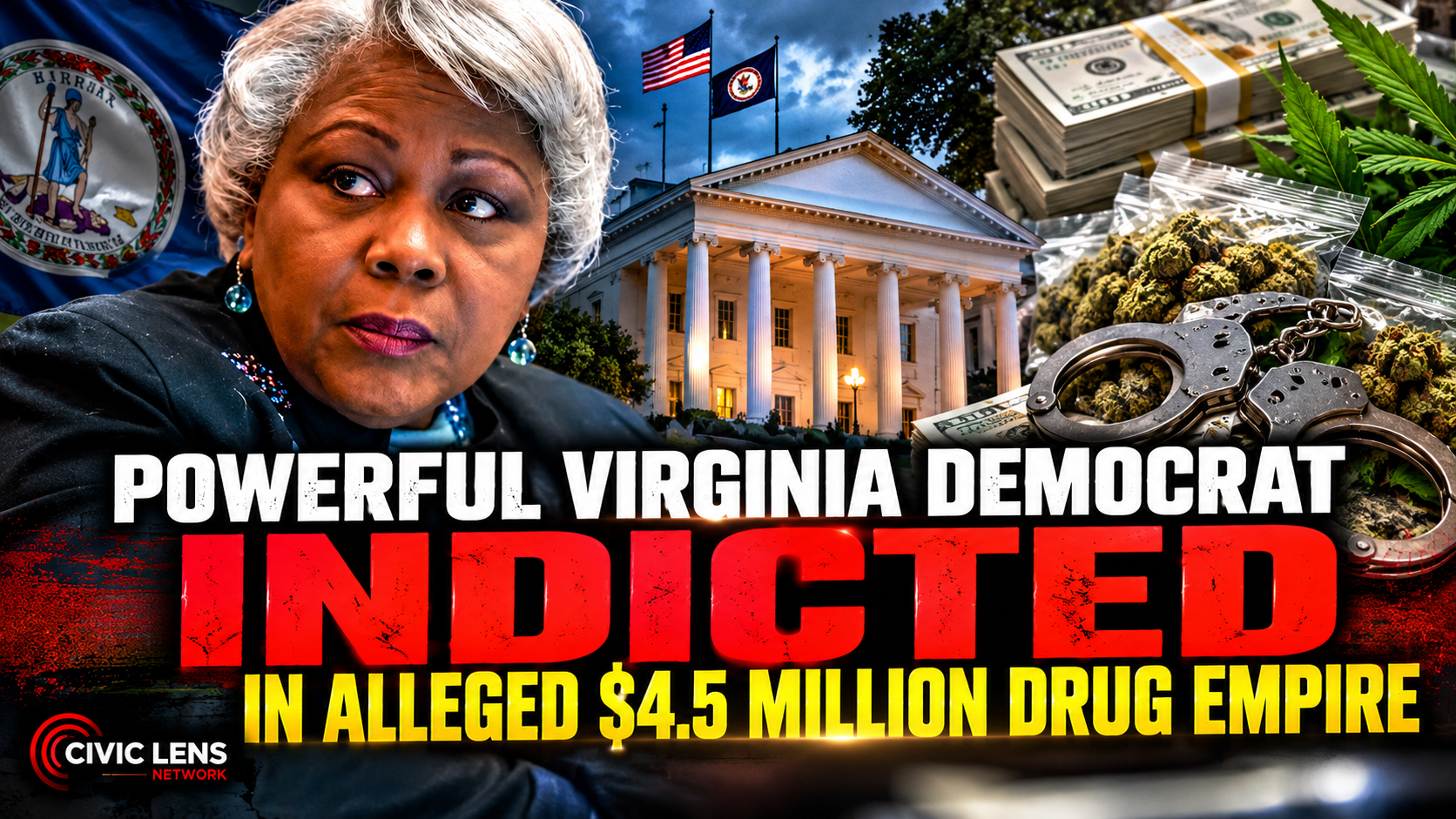
Federal prosecutors unsealed an eight-count indictment on October 22, 2026, charging Virginia Democratic State Senator L. Louise Lucas and six others, including two of her daughters and her grandson, in an alleged racketeering conspiracy involving marijuana distribution, money laundering, and honest services fraud through bribery. The 82-year-old Portsmouth lawmaker, who has served in the Senate since 1991, as president pro tempore since 2020, and as chair of the powerful Senate Finance and Appropriations Committee, faces five of the counts.
An indictment is an allegation, not a conviction. All defendants are presumed innocent until proven guilty. FBI Director Kash Patel described an alleged five-year operation valued at approximately $4.5 million. According to the 45-page indictment filed in the Eastern District of Virginia and the accompanying Justice Department announcement, Lucas allegedly led what prosecutors call the “Lucas Enterprise,” a close-knit group of family members and associates.
She is accused of approving and directing the acquisition and distribution of at least 100 kilograms of marijuana and supervising the laundering of proceeds. The enterprise allegedly operated through businesses including The Cannabis Outlet and The CBD Shoppe under the umbrella of VA Freedom Life. Prosecutors allege Lucas used her legislative authority to insulate the operation from scrutiny and to advance legislation that could financially benefit it. Virginia legalized simple possession of limited amounts of marijuana in 2021, a measure Lucas co-sponsored.
Recreational retail sales, however, remain unlicensed and unlawful until a regulated market is established. Possession of small amounts does not authorize unlicensed commercial distribution. The indictment alleges the enterprise acquired and sold marijuana outside licensed medical channels while operating storefronts that purported to sell hemp and CBD products. In August 2022, Lucas allegedly paid $750,000 for a 100 percent stake in a shell holding company tied to a co-conspirator’s anticipated recreational marijuana license.
She allegedly failed to disclose that interest on required Statements of Economic Interests. Prosecutors further allege she met the co-conspirator at her Capitol complex office to receive a partial repayment and discussed the individual’s qualifications for a license with other officials and legislators, conditioning those discussions on her receipt of a bribery payment. In a February 9, 2026, wiretapped call cited in the indictment, Lucas is quoted saying of pending marijuana legislation and an associate’s potential license: “This is our last chance at generational wealth.
I’ve got too old to not be greedy.” The indictment and related reporting reference regulatory problems at The Cannabis Outlet. The Virginia Department of Agriculture and Consumer Services issued violation notices in 2023 and 2024 for products containing illegal levels of THC. A 2022 Virginia Mercury investigation documented mislabeled products and illegal delta-9 THC quantities at the store.
Federal agents executed search warrants on May 6, 2026, at The Cannabis Outlet and The CBD Shoppe, recovering marijuana and firearms. Controlled purchases later tested positive for marijuana. The other defendants are Lisa Lucas-Burke, Theresa Lucas-Lamb, Ryan Eichelberger, Carlton Upton Jr. (Lucas’s former business partner in VA Freedom Life), Prince Albert William Hudson III, and Tameka Johnson.
They face varying combinations of the eight counts, which also include maintaining drug-involved premises, firearms charges in furtherance of drug trafficking, and wire fraud. Their involvement remains alleged; none has been convicted. Lucas’s legislative role created an inherent tension with the allegations. As Finance Committee chair she wielded decisive influence over budget, tax, and regulatory bills, including those shaping the future recreational market.
Prosecutors claim she sought to steer licenses toward entities in which enterprise members held interests and to protect the existing operation. Documented financial disclosures listed her as president and CEO of VA Freedom Life in 2022, yet the alleged shell-company interest went unreported. The money trail cited in the indictment includes cash payments for multi-pound marijuana deliveries and checks totaling tens of thousands of dollars. Lucas responded on social media by framing the charges as politically motivated.
“Today, the FBI, the Department of Justice, and the full weight of the federal government have been wielded against an 82-year-old great-grandmother,” she wrote. “I grew up under Jim Crow. I’ve seen what happens when people in power try to silence those who stand up to them. I spent my life fighting back, and I’m not stopping now.
I will not be intimidated. I will not be bullied. And I will not back down.” Brian Woolfolk, chief counsel for the L.
Louise Lucas Legal Defense Fund, told reporters the proceedings were “the circus we always expected it to be.” She surrendered Thursday morning and was released on her own recognizance after an initial appearance. Attorney General Todd Blanche rejected the political-motivation claim. “We don’t do political paybacks,” he said, noting the investigation began during the Biden administration.
Patel stated that public office is a position of trust that should never be abused for personal gain. Democratic leaders in Virginia, including Gov. Abigail Spanberger, emphasized the presumption of innocence while some questioned the timing near midterm elections. Lucas is not on the ballot this fall.
Unresolved questions remain about the scope of regulatory enforcement before the federal investigation, the precise intersection of specific legislative votes with the businesses, and whether oversight bodies adequately examined potential conflicts of interest. The evidence outlined in the indictment—controlled purchases, recovered marijuana and firearms, wiretap statements, financial transactions, and the undisclosed ownership interest—forms the core of the government’s characterization of an organized criminal enterprise. Those allegations will be tested at trial.
This case raises fundamental questions about public trust when a legislator of Lucas’s seniority is accused of leveraging the very office that regulates an industry in which she held private financial stakes. Whether the charges hold or are disproven, the episode underscores the need for rigorous conflict-of-interest enforcement, transparent financial disclosures, and independent oversight capable of examining powerful officials without regard to party. Accountability cannot be selective if citizens are to believe that public office serves the public rather than private enrichment.