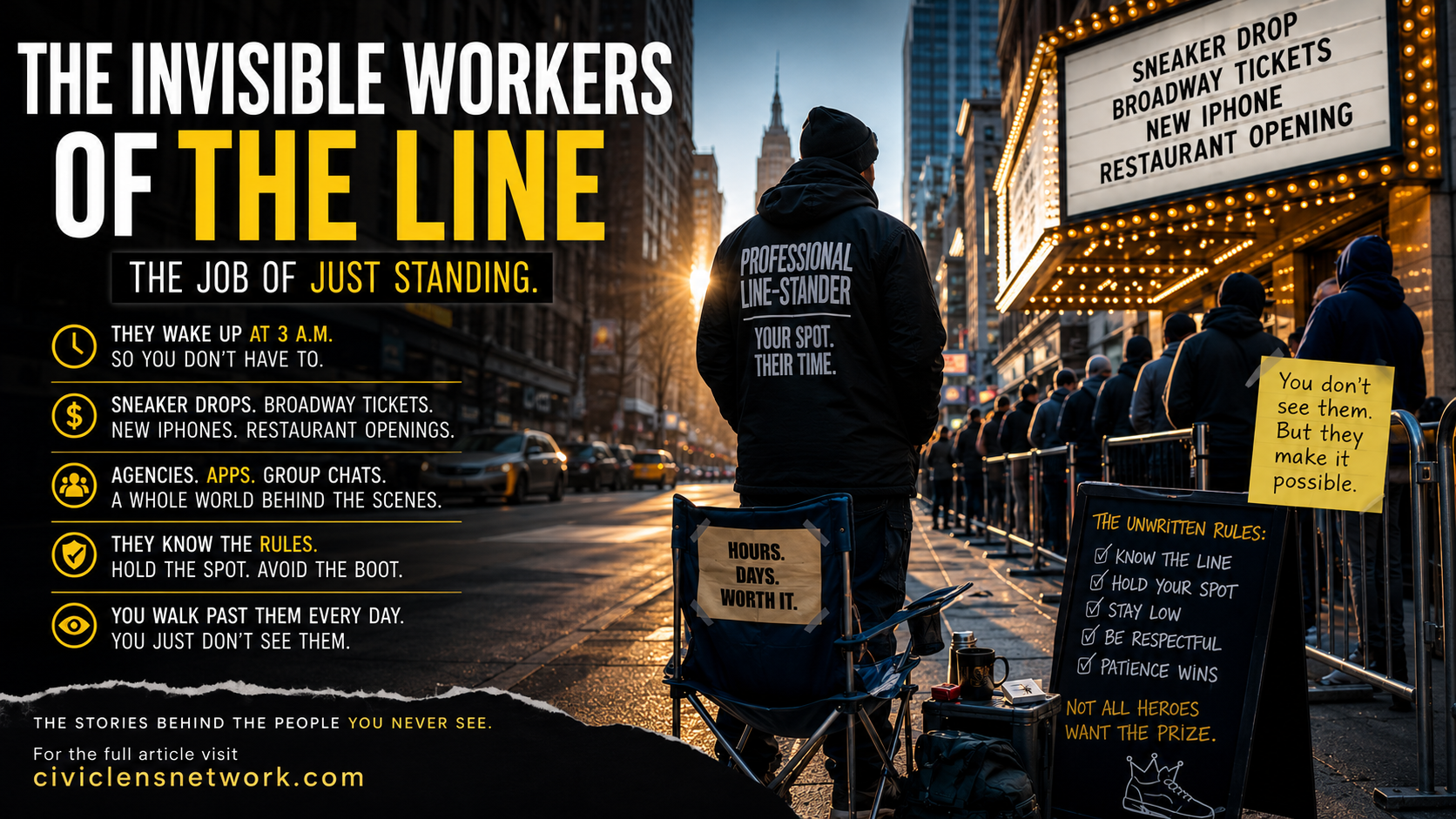
In the busiest cities on Earth a quiet profession thrives in plain sight. Professional line-standers, also called queue proxies, get paid to occupy space so someone else does not have to. From New York to Tokyo, Los Angeles to London, these workers rise before dawn, claim a place in line, and simply wait. The demand is constant.
Sneaker drops, limited-edition product launches, Broadway lotteries, exclusive restaurant openings, government offices, and overnight camping for concert tickets all create lines that stretch for blocks. Wealthy clients, busy executives, or dedicated fans who cannot spare the hours hire standers through specialized apps, agencies, or informal networks. Rates typically range from 20 to 50 dollars an hour, with longer or high-stakes waits commanding more. Some full-time standers earn a solid living solely by holding places for others.
The job requires more skill than it appears. Experienced proxies know the unspoken rules of every venue: which side of a line advances faster, how long security will tolerate a held spot, when to rotate with a partner without losing position, and how to handle aggressive rivals who try to cut or challenge legitimacy. Weather, boredom, and the occasional confrontation are part of the routine. Many standers form their own temporary communities, sharing coffee, warnings about inspectors, or tips on the next big drop.
The practice reveals a clear truth about modern city life. Time has become a luxury commodity. Those who can afford to outsource waiting do so, while others turn the inconvenience itself into paid work. Next time you pass a line forming at sunrise, look closer.
The person at the front may not even want what waits at the end. They are simply doing a job most of us never notice.