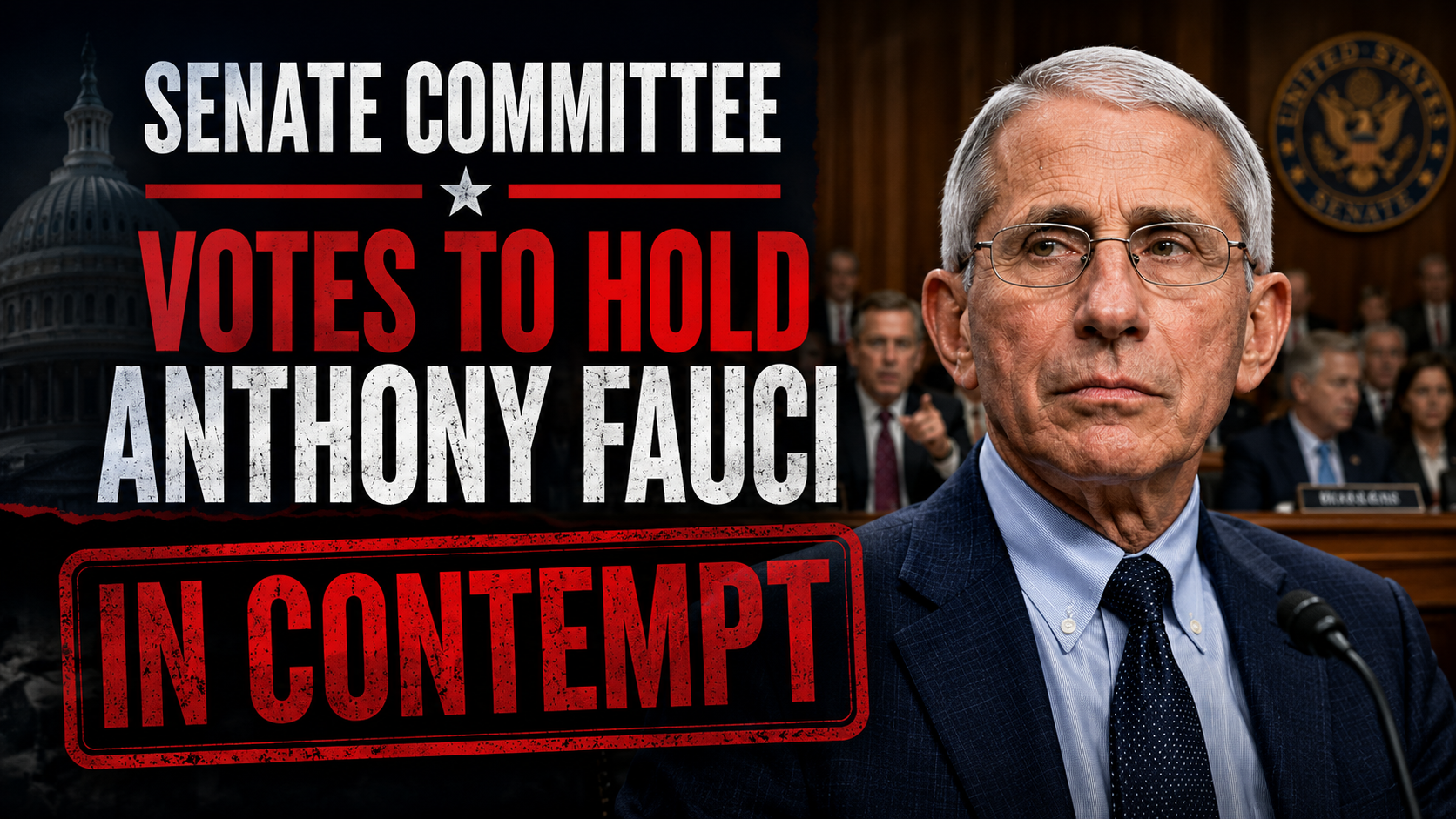
Senate Panel Votes to Hold Anthony Fauci in Contempt of Congress The Senate Homeland Security and Governmental Affairs Committee voted on Thursday to hold Dr. Anthony Fauci in contempt of Congress. The 8-7 party-line decision came after Fauci refused to answer questions at a hearing last week about his handling of the COVID-19 pandemic. Fauci, 85, retired as director of the National Institute of Allergy and Infectious Diseases in 2022.
He appeared under subpoena on July 29 and invoked his Fifth Amendment right against self-incrimination more than 100 times. He declined to respond to nearly every question from senators. In a brief opening statement, Fauci said he was acting on advice of counsel and accused committee Chairman Sen. Rand Paul of Kentucky of seeking to put him behind bars.
Paul, a longtime critic of Fauci, argued that the Fifth Amendment claim was invalid. Former President Joe Biden issued a broad pardon in January 2025 covering Fauci’s federal actions related to the pandemic. Paul said the pardon removed any risk of federal prosecution for those matters and that Fauci’s opening remarks waived remaining protections. He directed Fauci to answer during the hearing and warned of consequences for refusal.
The resolution adopted Thursday focuses on Fauci’s failure to comply with the subpoena. Contempt of Congress is a federal misdemeanor that can carry up to 12 months in prison. Paul said the committee would refer the matter directly to the Justice Department and the U.S. attorney in Washington for possible prosecution. Democrats on the committee opposed the move.
They called it a one-sided and rushed process that risked weakening future congressional investigations and constitutional protections. Fauci’s lawyer, David Schertler, described the vote as a crude political stunt meant to punish Fauci for exercising his rights. Paul has long pressed claims that Fauci funded research connected to the pandemic’s origins and misled lawmakers about the virus response. Fauci has repeatedly denied those allegations.
The committee vote does not resolve those broader disputes. It centers only on the refusal to answer questions under subpoena. Whether the Justice Department will pursue a case remains unclear. Democrats noted that standard practice usually requires a full Senate vote before referral, a step that would need 60 votes and is unlikely to succeed.
Paul proceeded with the committee referral anyway. The decision marks a new chapter in years of Republican efforts to examine Fauci’s role as a leading figure in the U.S. pandemic response under two administrations. Fauci has testified before Congress many times since 2020. This latest appearance ended in silence and a formal contempt finding.