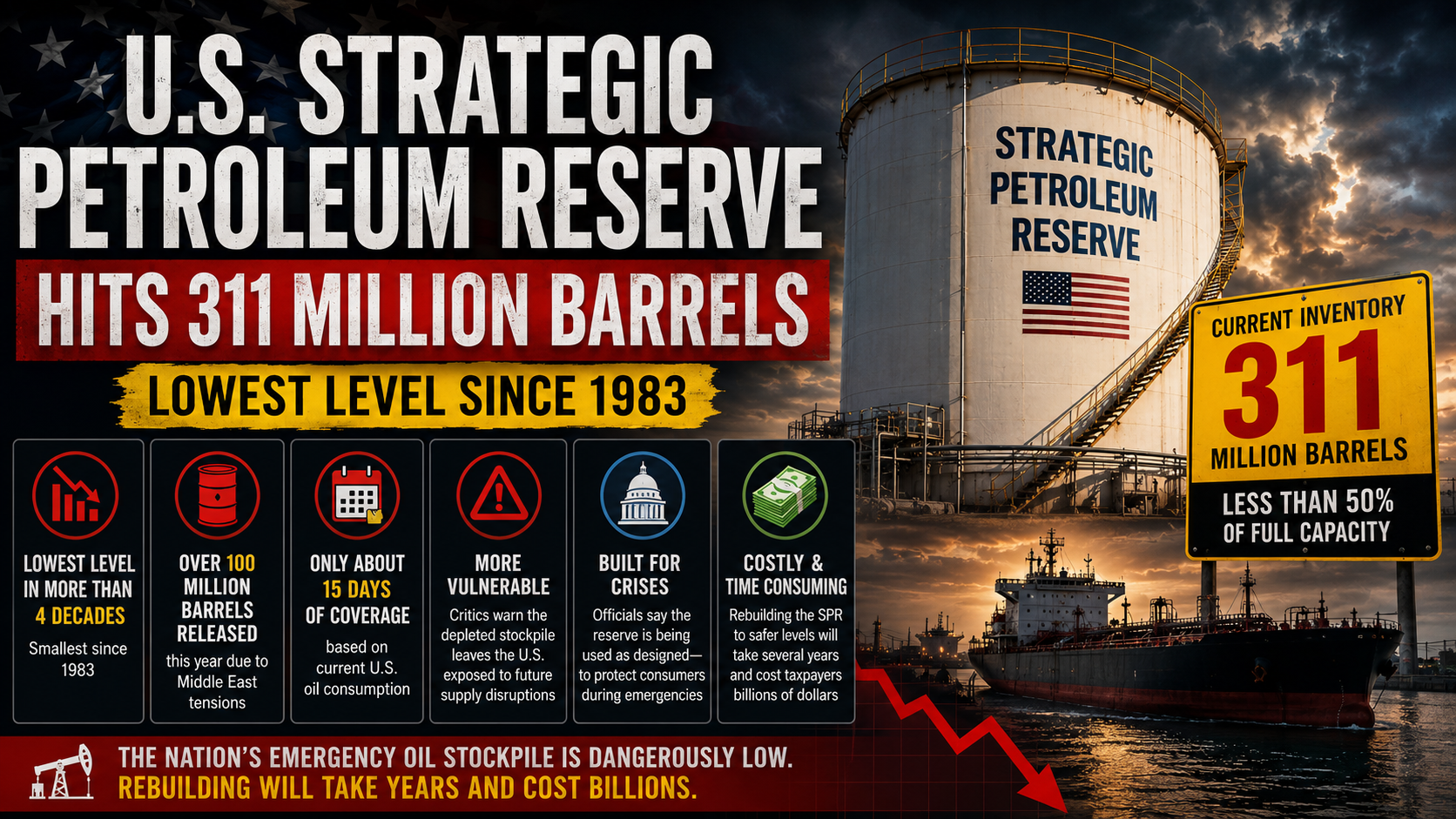
Strategic Petroleum Reserve Hits 43-Year Low as Emergency Releases Continue The U.S. Strategic Petroleum Reserve has fallen to 311.4 million barrels, its lowest level since March 1983, according to the latest data from the Energy Information Administration. The figure, recorded for the week ending July 17, 2026, marks a continued drawdown of the nation’s primary emergency oil stockpile amid ongoing geopolitical pressures in the Middle East. The reserve now stands at less than half of its authorized storage capacity of 714 million barrels.
At current U.S. consumption rates, the inventory equates to roughly 15 days of domestic oil demand. Measured against net imports, the stockpile provides approximately 37 days of cover. Maximum withdrawal capacity remains limited to about 2.7 million barrels per day, meaning it would take more than 100 days to fully empty the reserve under ideal conditions. The recent decline is part of a larger 172-million-barrel emergency release authorized to mitigate supply disruptions linked to the ongoing U.S. conflict involving Iran.
Since late February 2026, when hostilities intensified, SPR inventories have dropped by more than 104 million barrels. Weekly drawdowns have varied, with the most recent week showing a reduction of approximately 5.1 million barrels from the prior week’s 316.5 million barrels. This is not the first time the Strategic Petroleum Reserve has been used aggressively.
In 2022, the Biden administration released 180 million barrels in response to the energy shock following Russia’s invasion of Ukraine, pushing inventories to a then-40-year low of about 347 million barrels in mid-2023. The current drawdowns have surpassed that previous trough and returned the reserve to levels not seen since the early years of its buildup under the Reagan administration.
Supporters of the releases argue the reserve is fulfilling its intended purpose: providing a buffer against sudden supply interruptions and helping moderate price spikes for American consumers and businesses. Officials have emphasized that the oil is being deployed strategically rather than as a long-term market intervention. The statutory minimum inventory that restricts certain types of limited drawdowns remains at 252.4 million barrels, leaving the current level still above that floor.
Critics, however, warn that repeated large-scale releases without a clear and funded plan to refill the reserve leave the United States more vulnerable to future shocks. Replenishing hundreds of millions of barrels will require significant time and expenditure. Past refill efforts have moved slowly, constrained by market prices, budget priorities, and infrastructure considerations. Analysts estimate that restoring the SPR to more comfortable levels could take several years and cost taxpayers billions of dollars, depending on crude prices at the time of repurchase.
The Strategic Petroleum Reserve was established in 1975 following the 1973–74 Arab oil embargo. It reached its highest inventory of nearly 727 million barrels in late 2009. Over the subsequent decade and a half, a combination of authorized sales, exchanges, and emergency releases has steadily reduced the stockpile. The four Gulf Coast storage sites—Bryan Mound, Big Hill, West Hackberry, and Bayou Choctaw—continue to operate, though aging infrastructure has drawn scrutiny from government auditors in recent reports.
As of late July 2026, the administration has not announced a firm timeline or funding mechanism for large-scale refilling. Market observers are watching closely to see whether the current releases will be extended further or whether attention will shift toward gradual restoration once immediate pressures ease. For now, the nation’s primary strategic oil cushion sits at its thinnest point in more than four decades.