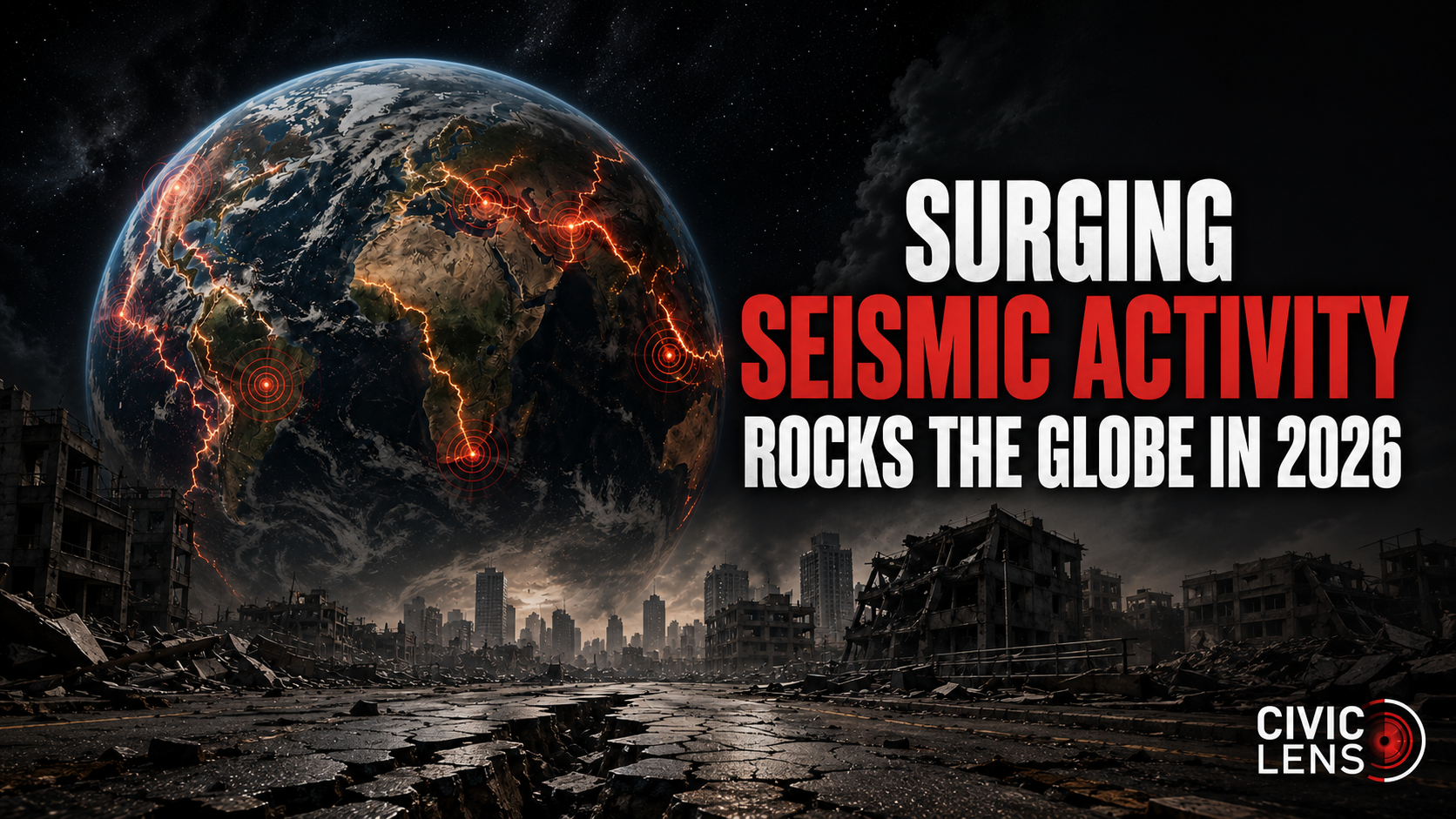
The ground has been shaking with unusual force and frequency across multiple continents this year, leaving communities reeling and raising questions about whether earthquake activity is truly on the rise. In just the past few months of 2026, a series of powerful tremors has struck regions from Southeast Asia to South America, claiming thousands of lives and causing widespread destruction. The most recent of these major events hit eastern Indonesia on August 14, when a magnitude 7.7 earthquake struck near Ende in the Flores Sea.
The shallow quake, occurring at a depth of about 10 kilometers, generated strong shaking felt by millions. At least 38 people lost their lives as buildings collapsed while many residents slept, and thousands more were displaced. Aftershocks continued to rattle the area, including several above magnitude 5, while a brief tsunami warning was issued and later lifted after monitoring confirmed only modest wave heights of under one meter in some coastal spots.
Just days earlier, on August 10, a magnitude 7.4 earthquake struck western Colombia near San José del Palmar. Despite its greater depth of over 100 kilometers, the tremor caused severe damage and resulted in around 287 deaths along with nearly 4,000 injuries. Homes, roads, and infrastructure suffered heavily in the Chocó region, underscoring how even intermediate depth events can prove devastating in vulnerable areas. These events form part of a broader pattern of significant seismic activity throughout 2026.
In late June, Venezuela endured a rare and catastrophic doublet of earthquakes. A magnitude 7.2 foreshock was followed mere seconds later by a magnitude 7.5 mainshock near the coast of La Guaira. The combined force leveled large portions of buildings in Caracas and surrounding states, with official figures reporting more than 6,300 deaths, over 73,000 injured, and tens of thousands still missing or displaced months later. Economic losses are estimated in the tens of billions of dollars.
Earlier in June, a magnitude 7.8 quake struck offshore southern Mindanao in the Philippines, claiming more than 100 lives and damaging or destroying over 120,000 homes while triggering a tsunami that reached heights of about 2.5 meters in places.
Other notable shocks include a magnitude 7.3 event off the coast of Mexico near Puerto Madero in mid July that injured dozens and damaged hundreds of structures across Chiapas and into Guatemala, and a magnitude 6.8 quake in Japan’s Kumamoto region on July 28 that killed 39 people and left hundreds injured amid collapsed buildings and landslides. Indonesia has seen repeated activity as well, including earlier events that added to the regional toll.
Many observers looking at the string of large magnitude events have wondered if global earthquake rates are climbing. Long term records maintained by monitoring agencies show that the planet typically experiences around 15 to 16 earthquakes of magnitude 7 or greater each year. By mid August 2026, roughly 11 such events had already been recorded, placing the year within the expected range of natural variation rather than signaling an extraordinary surge.
Years with higher or lower totals have occurred regularly in the past century, including periods with more than 20 major quakes and others with fewer than 10. What has changed is the speed and reach of information. Modern seismic networks detect far more events than in previous decades, and instant global news coverage means nearly every significant tremor reaches public attention within minutes. This heightened visibility can create the impression of increasing activity even when the underlying rate of large earthquakes remains statistically steady.
Tectonic processes continue to drive these events as the Earth’s plates grind against one another along boundaries and faults. The Indonesia and Philippines quakes relate to complex subduction zones in the Pacific Ring of Fire, while the Venezuela and Colombia events stem from interactions along the Caribbean and South American plates. Japan’s recent activity ties into the ongoing stresses around the Eurasian and Philippine Sea plates.
Clustering of large quakes in different regions within a short span is a known feature of global seismicity rather than evidence of a coordinated planetary shift. Stress release on one fault does not typically trigger distant events of comparable size across oceans. The human impact remains the most pressing concern. In Venezuela the scale of collapse left entire neighborhoods uninhabitable and strained emergency response systems for months.
Colombia’s deeper quake still produced intense shaking that proved lethal in areas with older construction. Indonesia’s latest event highlighted the risks faced by island communities living near active faults, where rapid evacuation and building standards can mean the difference between survival and tragedy. Preparedness measures such as early warning systems, stricter building codes, and public education have improved outcomes in some places, yet gaps persist in many high risk zones.
Scientists emphasize that while individual large earthquakes cannot be predicted with precision, the overall pattern of activity fits within historical norms. Temporary spikes and quieter intervals form part of the natural fluctuation in how Earth’s crust releases accumulated strain. Improved instrumentation continues to refine our understanding of these processes, revealing more smaller events and aftershock sequences that once went unrecorded. The focus for communities therefore stays on resilience: strengthening structures, practicing response drills, and supporting rapid aid when the ground does move.
As August 2026 continues, aftershocks from the Indonesian quake and residual effects from earlier events keep seismologists vigilant. The recent sequence of big quakes serves as a stark reminder of the planet’s restless interior and the need for ongoing vigilance in vulnerable regions. While the numbers of major events this year align with long term averages, each one carries profound consequences for those who live through the shaking.
Monitoring networks around the world remain essential tools for tracking these forces and helping societies adapt to the inevitable movements of the Earth beneath our feet. YouTube keywords: recent earthquakes 2026, magnitude 7 earthquakes, Indonesia earthquake August 2026, Venezuela earthquake 2026, Colombia earthquake, global seismic activity, big earthquakes this year, Flores Sea quake, earthquake increase debate, tectonic plate movements