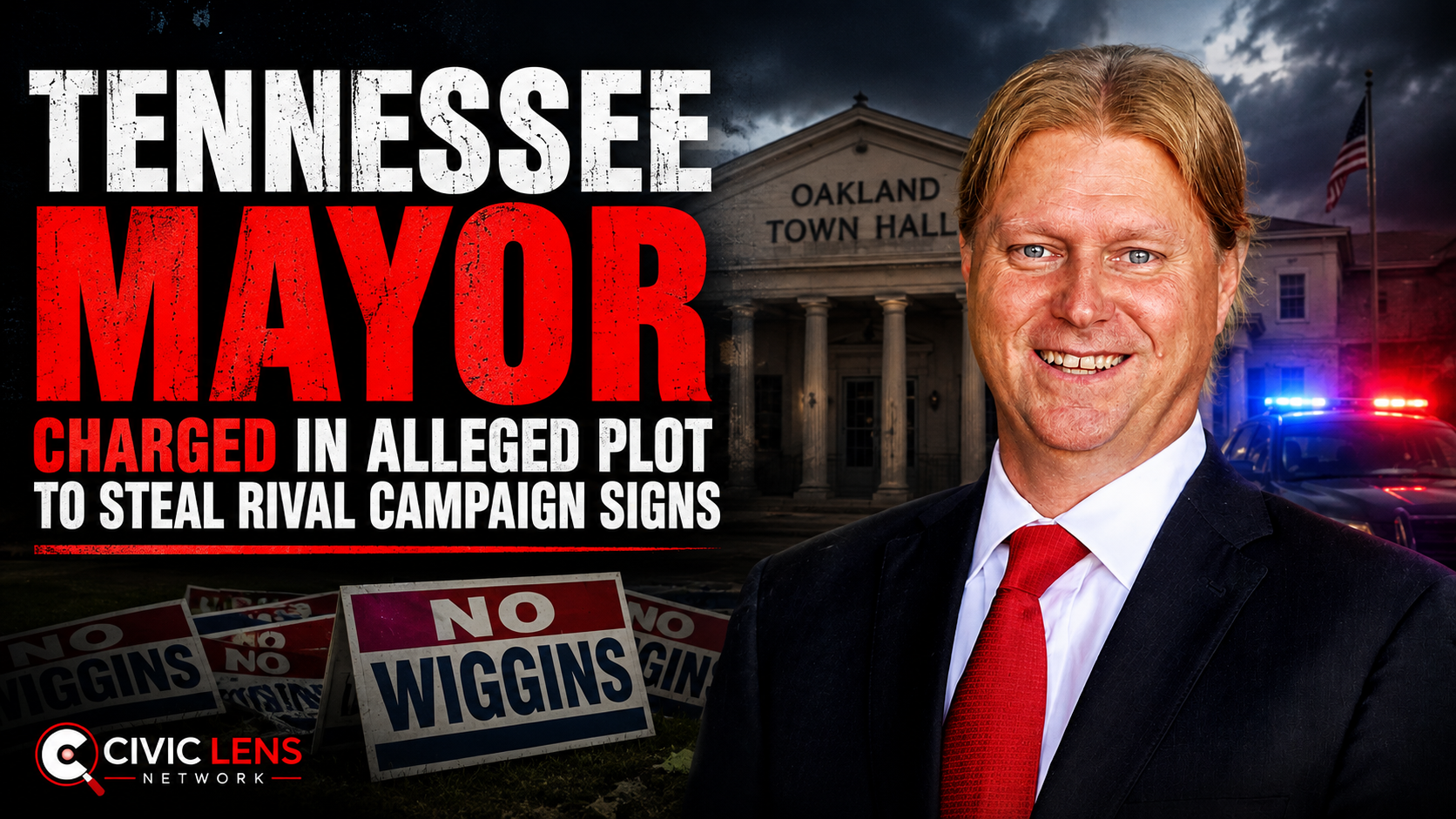
The mayor of Oakland, Tennessee, is facing a criminal charge after investigators said he helped arrange the theft and damage of campaign signs belonging to a political rival. George Adrian Wiggins, also known as Adrian Wiggins, was charged with criminal conspiracy to commit theft of property valued at less than one thousand dollars. His son Thomas Wiggins and a woman identified as Isabella Marino were also charged in the case. Wiggins has served as mayor of the small Fayette County town since 2024.
In the August 6 election he ran as a Republican for the District 9 Position 2 seat on the Fayette County Commission. His opponent was Chelsea Kivelle, who ran as an Independent. Kivelle won the race. The investigation began after Kivelle reported on August 6 that several of her campaign signs and multiple signs that read “No Wiggins” had been taken the day before from the grounds of West Junior High.
Police later said three signs were destroyed and about twenty five to thirty others were stolen. The signs were valued at three hundred seventy nine dollars. Investigators obtained video that they said showed two vehicles pulling up to the school, several people cutting down signs, and the signs being loaded into a Honda Civic. According to police, Wiggins’s son was among the people in the car and handed someone a box cutter used to cut the signs.
Officers later spotted the Honda at a McDonald’s and stopped it for illegal window tint. A woman inside the vehicle told police that Mayor Wiggins knew about the plan to take the yard signs and had paid her to do the work. She said Wiggins went to her workplace at Sonic and paid her. She also said Wiggins and his son told her to lie and stay quiet if anyone asked questions.
According to the account given to officers, Wiggins told her he had a good lawyer if they got into trouble. Police said one of the people stopped on August 5, the day before the election, confessed that the mayor paid her to vandalize Kivelle’s signs. The suspects were charged with misdemeanor theft and vandalism in addition to the conspiracy count against the mayor.
Wiggins, his son, and another person were released on a two thousand five hundred dollar bond, according to Fayette County Chief Deputy Ray Garcia. Local news outlets said they reached out to the mayor for comment and had not received a public response at the time the charges were first reported. The case has drawn attention because it involves a sitting mayor accused of directing others to interfere with an opponent’s campaign materials on the eve of an election.
Campaign sign theft is a familiar complaint in local races across the country, but charges against an elected official are less common. Prosecutors will have to prove that Wiggins agreed with others to commit the theft and took steps to carry out that agreement. Kivelle’s report and the video evidence gave investigators a clear starting point. The traffic stop for window tint then produced the statement that linked the mayor to payment and to instructions to deny involvement.
Those details, if credited by a court, form the core of the conspiracy allegation. Wiggins remains mayor of Oakland while the case proceeds. The commission race is over, and Kivelle has already been declared the winner of the District 9 seat. The criminal case is separate from the election result and will move through the Fayette County courts on its own timeline.
For residents of Oakland and the surrounding county, the episode raises questions about trust in local leadership. Voters expect candidates to compete on issues and records, not by removing the other side’s signs from public view. Whether the allegations are proven will be decided in court. Until then, the charges stand as a reminder that campaign tactics can cross from hardball politics into criminal law when property is taken and witnesses say an official paid for the work and coached people to lie.
The signs themselves were not worth a large sum. The legal issue is not the dollar amount alone. It is the claim that a sitting mayor organized a plan to steal and damage an opponent’s political speech in the final hours before voters went to the polls.