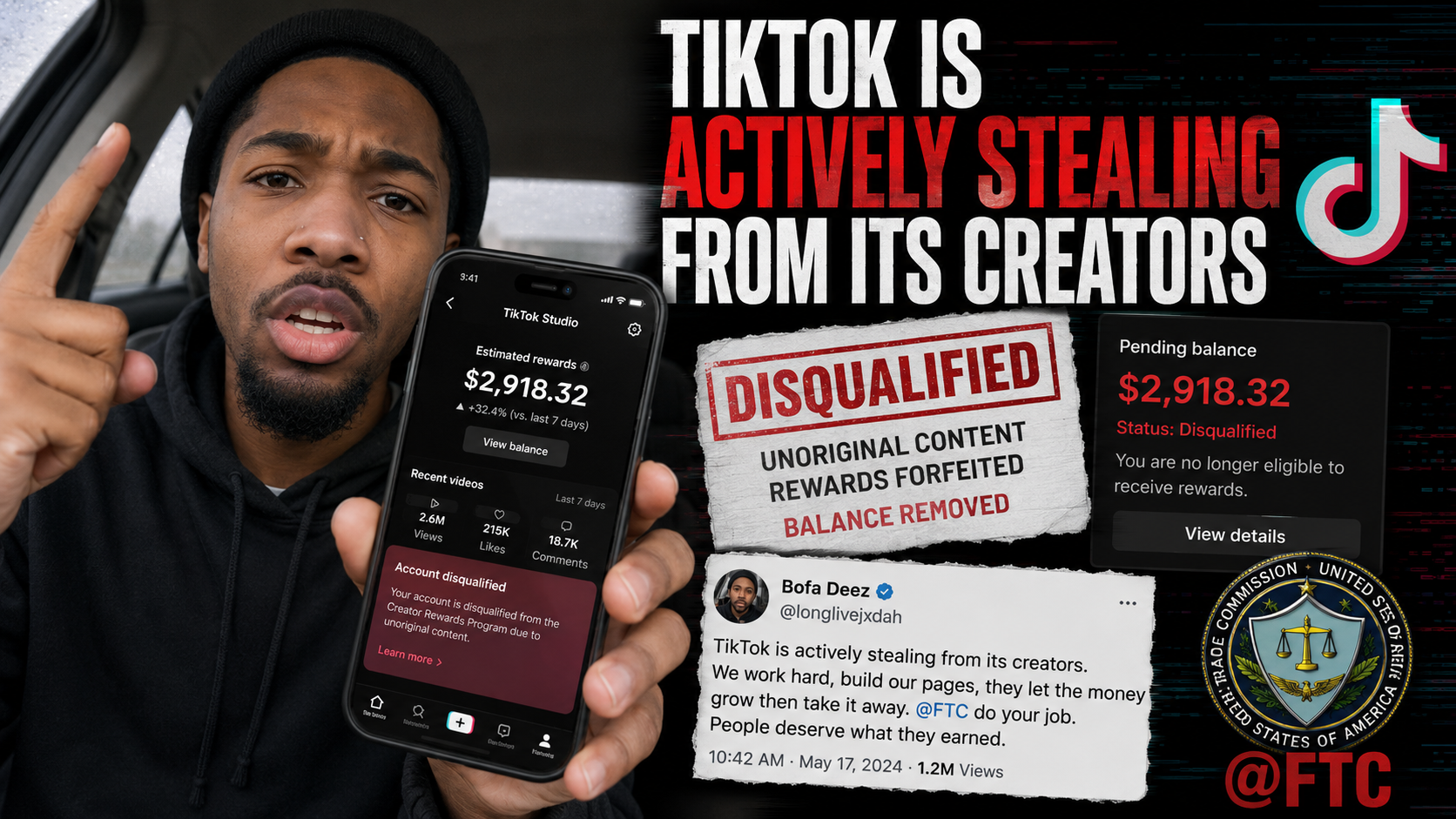
A recent video circulating on X captures growing frustration among TikTok creators who say the platform lets earnings build only to revoke them. In the clip, a creator known as Bofa Deez sits in a car and declares that “TikTok is actively stealing from its creators.” He navigates the TikTok Studio interface, gestures emphatically, and accuses the company of hiding accounts from the algorithm while relying on AI-driven support that offers little real help.
The accompanying post tags the FTC and claims the platform is taking money from people who have worked hard to grow their audiences. The pattern he describes matches numerous reports. Creators join the Creator Rewards (or earlier Creator Fund) program, post consistently, accumulate a sizable balance—sometimes hundreds or thousands of dollars—and then receive a sudden notice that videos or the entire account have been disqualified.
Common justifications include “unoriginal content,” “reproduced ideas,” low-quality material, or policy violations that many insist do not apply to their original work. Once disqualified, the pending payout often disappears or becomes unreachable. Reddit threads and TikTok videos document cases in which balances near $2,100 or $2,900 were cancelled shortly before withdrawal. One longtime livestreamer with years of family-friendly original content reported permanent removal for “unoriginality” despite never using others’ material.
Others describe repeated video-level disqualifications that steadily erode earnings even when overall account status remains intact. Support responses are frequently automated, leaving creators without clear explanations or meaningful appeals. TikTok’s terms give the platform broad discretion to enforce originality, quality, and community guidelines. Automated systems flag large volumes of content, which can produce false positives, especially for reaction, commentary, or niche formats.
Critics argue the opacity feels opportunistic: the platform benefits from the engagement and advertising value generated while creators wait for thresholds, only to lose access once the number becomes significant. Earlier complaints about low per-view rates and sudden reach drops after joining monetization programs add to the perception that the system is structured more for platform control than reliable creator compensation. The human cost is real. Many treat TikTok income as a primary or important secondary revenue stream.
Watching a hard-earned balance vanish undermines trust and pushes some creators toward other platforms or away from monetization entirely. While not every disqualification is unjustified—policy breaches do occur—the volume of similar stories, the timing relative to high balances, and the difficulty of obtaining human support suggest systemic problems in transparency and due process. Creators documenting these experiences, as in the Bofa Deez video, are forcing the issue into public view.
Greater clarity on qualification criteria, faster human review of high-value disputes, and clearer communication about why balances are withheld would reduce the sense that the platform is simply waiting for the right moment to reclaim the money. Until then, the cycle of accumulation followed by abrupt disqualification continues to frustrate those the rewards program was meant to support.