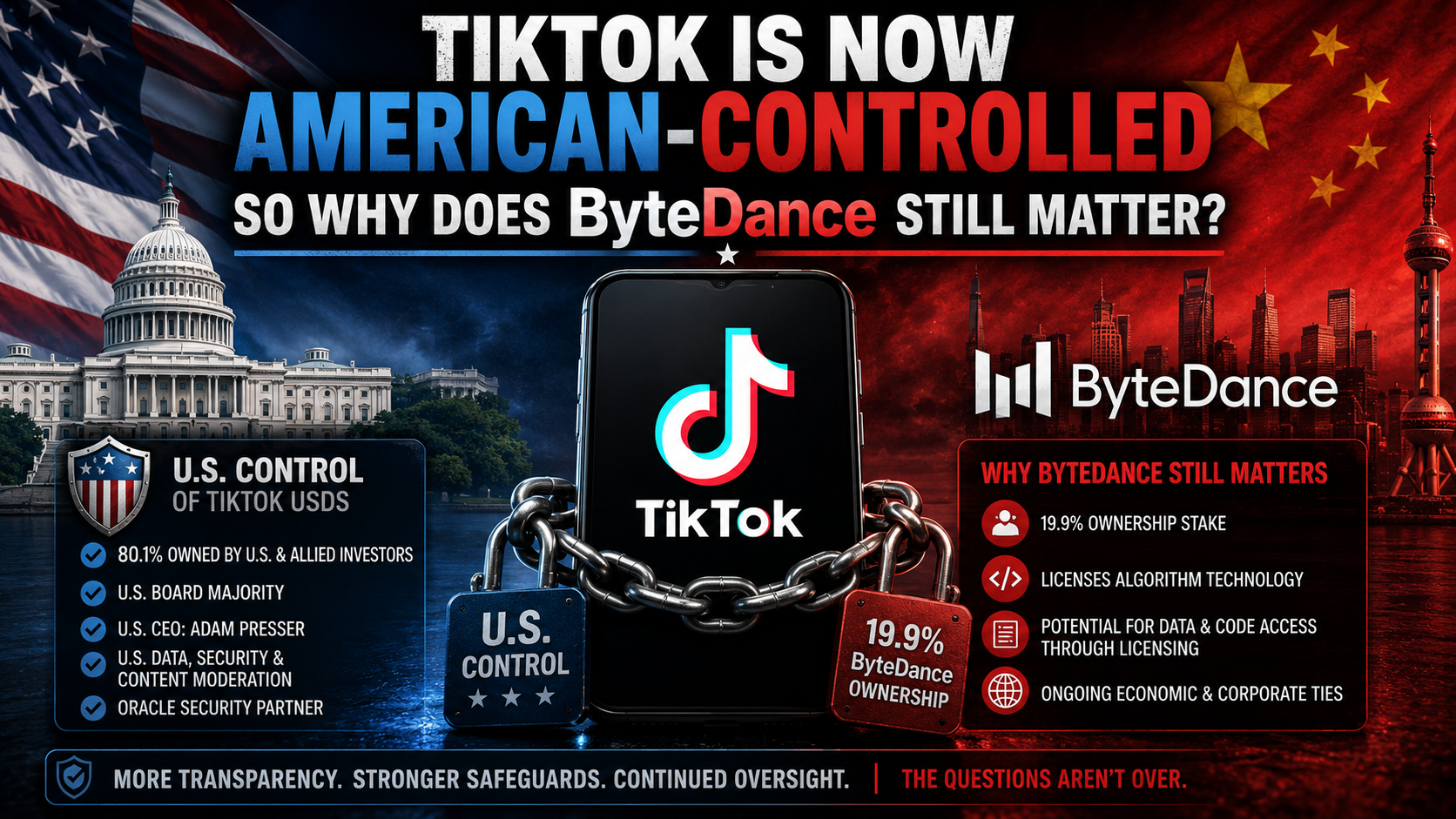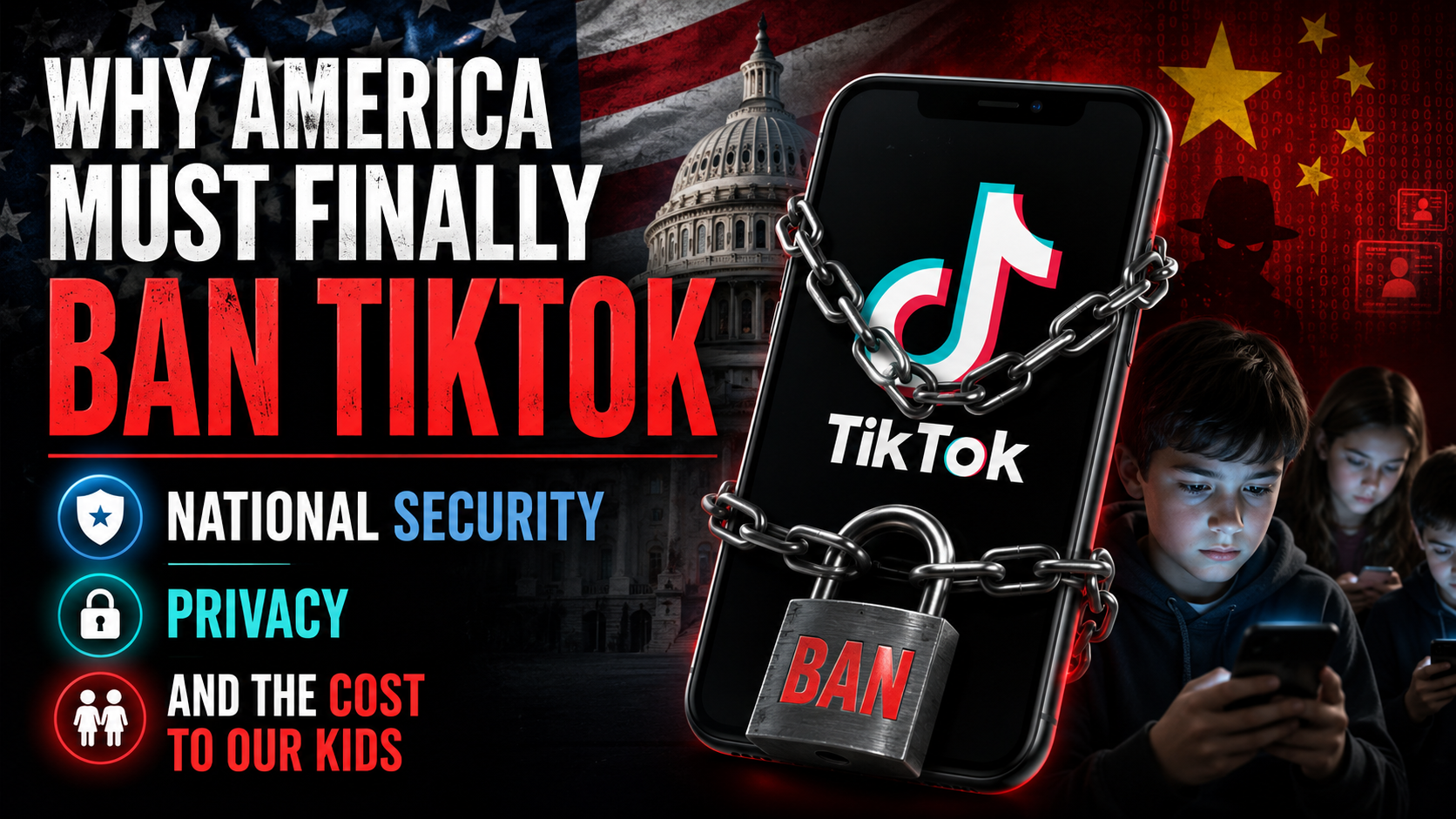
TikTok has become one of the most powerful forces shaping culture, attention, and information for an entire generation. With over a billion users worldwide and a dominant hold on American teenagers, the app is no longer just entertainment. It is a data-harvesting, algorithm-driven influence machine controlled by a company subject to the laws of the Chinese Communist Party. The time has come to ban it.
The core problem is national security. TikTok is owned by ByteDance, a Chinese company legally required to cooperate with Beijing’s intelligence apparatus. Chinese national intelligence law leaves no ambiguity. Companies must assist the state when asked.
That means the vast troves of data TikTok collects, including location history, device identifiers, browsing habits, biometric information, and content preferences, could be accessed by a geopolitical rival. U.S. intelligence agencies and bipartisan congressional reports have repeatedly flagged this risk. No amount of corporate promises or data localization schemes fully eliminates the possibility of remote access or pressure from Chinese authorities. Other countries, including India, have already banned the app on these grounds.
Pretending the threat is theoretical is reckless. Privacy concerns compound the danger. TikTok’s data collection is unusually aggressive even by social media standards. Independent analyses have shown the app accessing clipboard data, tracking users across devices, and gathering far more information than necessary for basic functionality.
Once collected, that data does not stay safely siloed. In a world of sophisticated cyber operations and authoritarian surveillance, handing a foreign adversary a detailed map of American habits, relationships, and vulnerabilities is indefensible. The damage is not limited to security. TikTok’s algorithm is engineered for maximum addiction.
Short-form video exploits the brain’s reward system with relentless precision, especially in developing minds. Studies and clinical observations link heavy use to rising rates of anxiety, depression, body image disorders, and shortened attention spans among adolescents. The platform amplifies extreme content because extreme content keeps people scrolling. What begins as dance challenges often slides into self-harm trends, disordered eating, or radicalizing material.
Parents and educators are left fighting an algorithm optimized for engagement over well-being. Beyond individual harm lies cultural and informational distortion. TikTok’s recommendation system can quietly suppress or promote content in ways that align with Chinese state interests. Sensitive topics such as Taiwan, Xinjiang, or the 1989 Tiananmen Square protests have been shown to receive different treatment on TikTok compared with competing platforms.
When a foreign-controlled algorithm helps shape the news diet and worldview of millions of young Americans, free speech and democratic discourse are undermined. Defenders argue that a ban would restrict free expression or simply drive users to other apps. These objections miss the point. Free speech does not require the government to tolerate a surveillance tool operated under authoritarian legal obligations.
Other platforms exist. American companies can compete on creativity and features without the same national-security baggage. Temporary bans or forced divestiture have been floated for years. Neither has delivered lasting protection.
A ban is not anti-technology or anti-China in principle. It is a narrow, necessary response to a clear asymmetry of power and risk. We already restrict foreign ownership in critical sectors such as defense, telecom, and energy for good reason. Social media that reaches the majority of American youth qualifies as critical infrastructure for the information age.
Continuing to allow TikTok’s unrestricted operation prioritizes convenience and corporate profits over security, privacy, and the mental health of the next generation. The evidence is sufficient. The risks are concrete. It is time to ban TikTok.