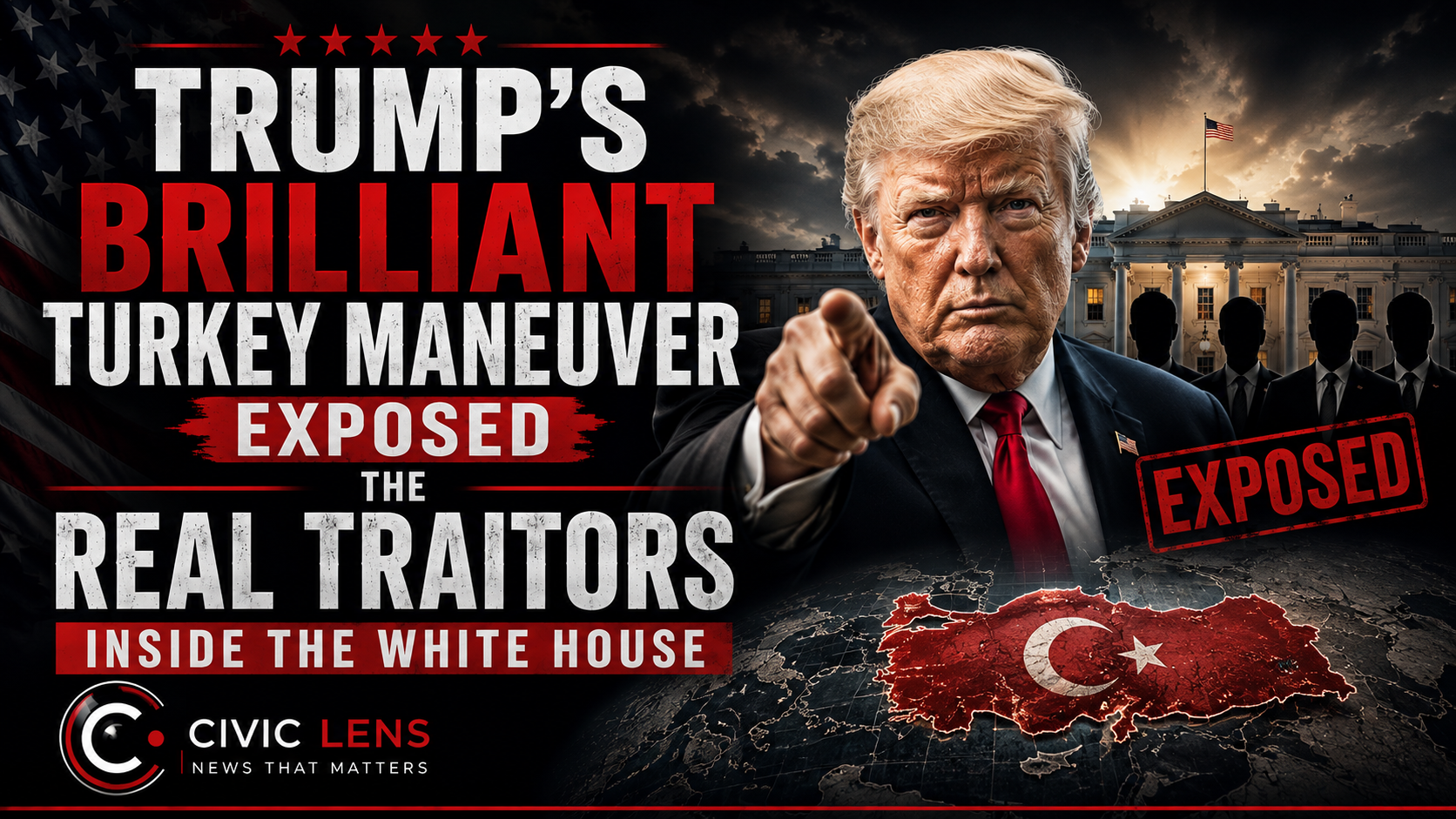
President Donald Trump once again proved why he remains the master of high stakes strategy. Recent reports detail how he left Turkey after the NATO summit by slipping away in a catering truck and boarding a military jet while Air Force One flew on as a decoy. The mainstream media rushed to frame this as a desperate escape driven by Iranian threats. That narrative misses the deeper truth.
This was a calculated operation designed to color the water and identify the leakers poisoning the White House from within. For years the Trump administration has battled unauthorized disclosures that compromise national security. Sensitive details about military movements, intelligence assessments, and presidential travel have routinely appeared in hostile outlets within hours of internal discussions. These leaks do not happen by accident.
They come from people with access who prioritize personal agendas or media relationships over loyalty to the elected leader and the American people. Trump has long understood this problem better than anyone in Washington. By staging a controlled scenario around his departure from Turkey, the president created a perfect test. Only a small circle of trusted aides and security personnel knew the full details of the switch.
The public story that later emerged about the catering truck transfer and the decoy flight could only have originated from someone inside that circle who chose to talk. When the reports hit the wires with specific operational flourishes, the source became easier to isolate. Color the water and watch where the dye shows up. That is basic counterintelligence, and Trump executed it with precision.
Critics on the left immediately spun the episode as proof of chaos or fear. They ignored the far more serious reality that Iran and its proxies continue to threaten American interests. A surface to air missile risk against the presidential aircraft is not a media invention. It is a genuine concern in an ongoing conflict.
Yet the greater danger often comes from within. Leakers who broadcast presidential travel plans or security protocols in real time hand adversaries free intelligence. Trump refused to accept that status quo. He turned a security challenge into an opportunity to clean house.
This approach fits the pattern of a president who has repeatedly outmaneuvered the permanent bureaucracy. From the first term through the current one, Trump has faced coordinated efforts to undermine his authority through selective disclosures. Career officials, holdovers, and even some political appointees have treated classified or sensitive information as currency to trade with reporters. The result is a government that leaks like a sieve while ordinary Americans demand results on border security, energy independence, and peace through strength.
Trump’s Turkey move sends a clear message. If you leak, you will be found. The media’s breathless coverage actually helped the operation succeed. By amplifying every detail of the catering truck and the decoy flight, outlets revealed how much they depend on their White House sources.
Those same outlets rarely apply equal scrutiny when information favorable to Trump stays quiet. Their selective outrage only underscores the double standard. A Democrat president taking similar precautions would be praised for caution. Trump does it and the narrative becomes one of panic.
Americans see through that game. National security requires trust. The president must be able to move freely and make decisions without every detail appearing in the next morning’s headlines. When staff members decide they know better than the commander in chief, they endanger lives.
The people on that original Air Force One flight included journalists and staff who became part of the decoy without knowing it. That risk was real. Identifying who chose to publicize the method protects future operations and future personnel. Trump has always preferred action over endless meetings and legalistic reviews.
This episode shows the value of that instinct. Rather than complain about leaks in private, he created conditions that forced the leakers into the open. Once the dye appears in the water, the responsible parties can be removed or reassigned. The administration becomes stronger as a result.
Loyal Americans who want the government to function without sabotage should welcome that outcome. The broader context matters. America faces determined adversaries who watch every signal from Washington. Iran has adapted its tactics as the conflict continues.
Proxy groups test shipping lanes and American resolve. In that environment, internal discipline is not optional. It is essential. Trump’s willingness to use an actual security situation as a loyalty test demonstrates seriousness about the office.
He refuses to let the White House become a sieve for political gamesmanship. Some will claim this interpretation gives the president too much credit. They prefer the simpler story of a president reacting to threats. That view underestimates Trump’s experience.
He has spent a decade under constant surveillance by political opponents, intelligence community elements, and media organizations eager for the next scoop. He knows how information flows. He knows how to disrupt those flows when they harm the country. The Turkey departure fits that record perfectly.
In the end the episode strengthens the case for continued vigilance against internal threats. Voters elected Trump to drain the swamp and restore accountability. Leaks that endanger presidential travel and military planning sit at the heart of that swamp. By coloring the water in Turkey, the president took a practical step toward sealing the leaks.
Americans who value results over drama should recognize the skill involved. This was not chaos. It was leadership under pressure, executed with the kind of creativity that career politicians rarely display.