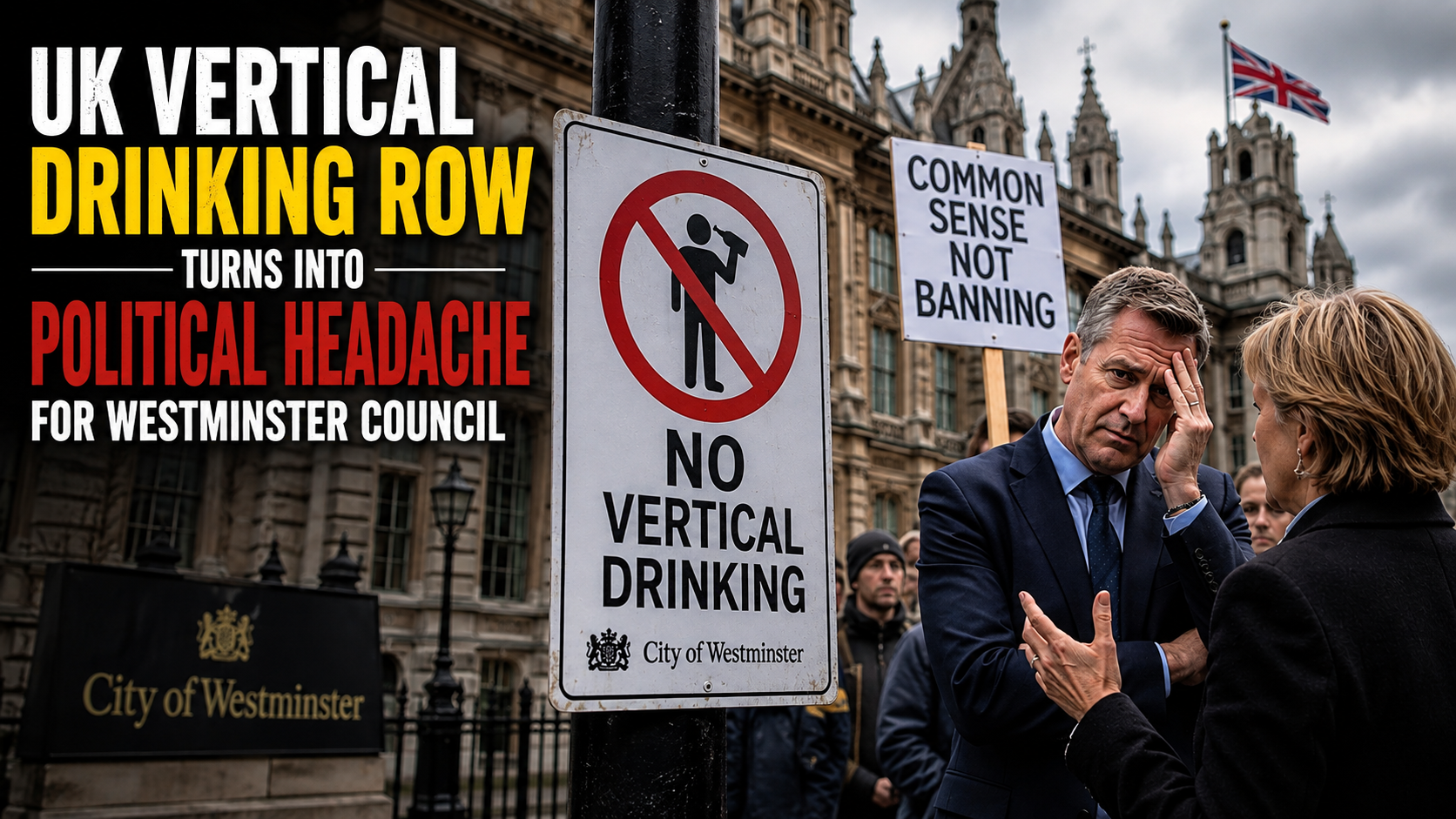
UK Vertical Drinking Row Escalates into Political Headache A bureaucratic push to curb standing while drinking in London pubs has exploded into a full blown political storm, drawing in the prime minister, the mayor of London and a chorus of outraged publicans. Westminster City Council, which oversees the packed nightlife of Soho and the West End, published draft licensing proposals that urge venues to move away from what officials call high volume vertical drinking.
The phrase simply means customers standing at the bar or in open spaces with a pint in hand rather than sitting at tables. The council says it wants more fixed seating and waiter service so people order food and drink while seated. Officials argue this will cut excessive drunkenness, ease overcrowding on pavements and reduce late night disturbance in one of Europe’s busiest entertainment districts.
The draft policy, out for public consultation until the weekend, states that applicants for new licences should aim for a predominantly seated operation. It also signals that the council will normally refuse fresh applications for pubs, bars and music venues inside the West End cumulative impact zone. Council leaders insist there is no outright ban on standing with a drink.
Deputy leader Tim Barnes called reports of a standing ban utterly ludicrous and said the aim is safety and better management of crowds, not stopping anyone from enjoying a pint upright. That reassurance has failed to calm the backlash. Pub owners warn the rules would force them to rip out open bar space, cut capacity and lose the spontaneous social mix that defines a traditional British pub.
Lesley Lewis, who runs the famous French House in Soho, said such changes risk closures, job losses and a duller night time economy. Industry voices argue vertical drinking is social drinking. People move between groups, strike up conversations and keep the atmosphere lively. Forcing everyone into fixed seats and table service turns pubs into quiet restaurants and strips away their character.
The political reaction has been swift and cross party. London Mayor Sadiq Khan branded the proposals restrictive and anti growth. He pointed out that hospitality and nightlife support thousands of jobs, culture and the capital’s global appeal. Khan said he hopes to use new powers coming from central government later this year to call in local licensing decisions and protect the sector.
Downing Street has gone further. A spokesperson for Prime Minister Andy Burnham declared that busy pubs full of people talking to each other are not a public nuisance. They are British life and they sustain thousands of jobs. The government is devolving stronger licensing powers to the mayor precisely to support pubs and nightlife, the statement added, and will not allow councils to strangle them with village hall rules.
Even cultural figures have piled in. Graham McPherson, better known as Suggs from the band Madness, asked whether the council plans to install benches or sofas when pubs are packed. He joked that Westminster itself should be laid horizontal and said he is happy to keep standing. The row taps deeper tensions.
Britain’s pub trade has faced years of pressure from rising costs, changing habits and licensing hurdles. Many operators already struggle to stay open. Critics say the Westminster draft risks another layer of red tape at the worst possible moment. Supporters of the council counter that the West End’s sheer density of venues creates genuine problems of noise, litter and street crowding that residents and visitors alike have complained about for years.
Consultation responses are still coming in, and the council must finalise its policy by early October. Whatever the final wording, the episode has already shown how quickly a technical licensing phrase can become a national talking point. Vertical drinking may sound like dry official speak, yet it touches something primal about British social life: the freedom to stand at a bar, raise a glass and talk to whoever happens to be next to you.
For now that freedom remains intact, but the political headache for Westminster’s leaders is only just beginning.