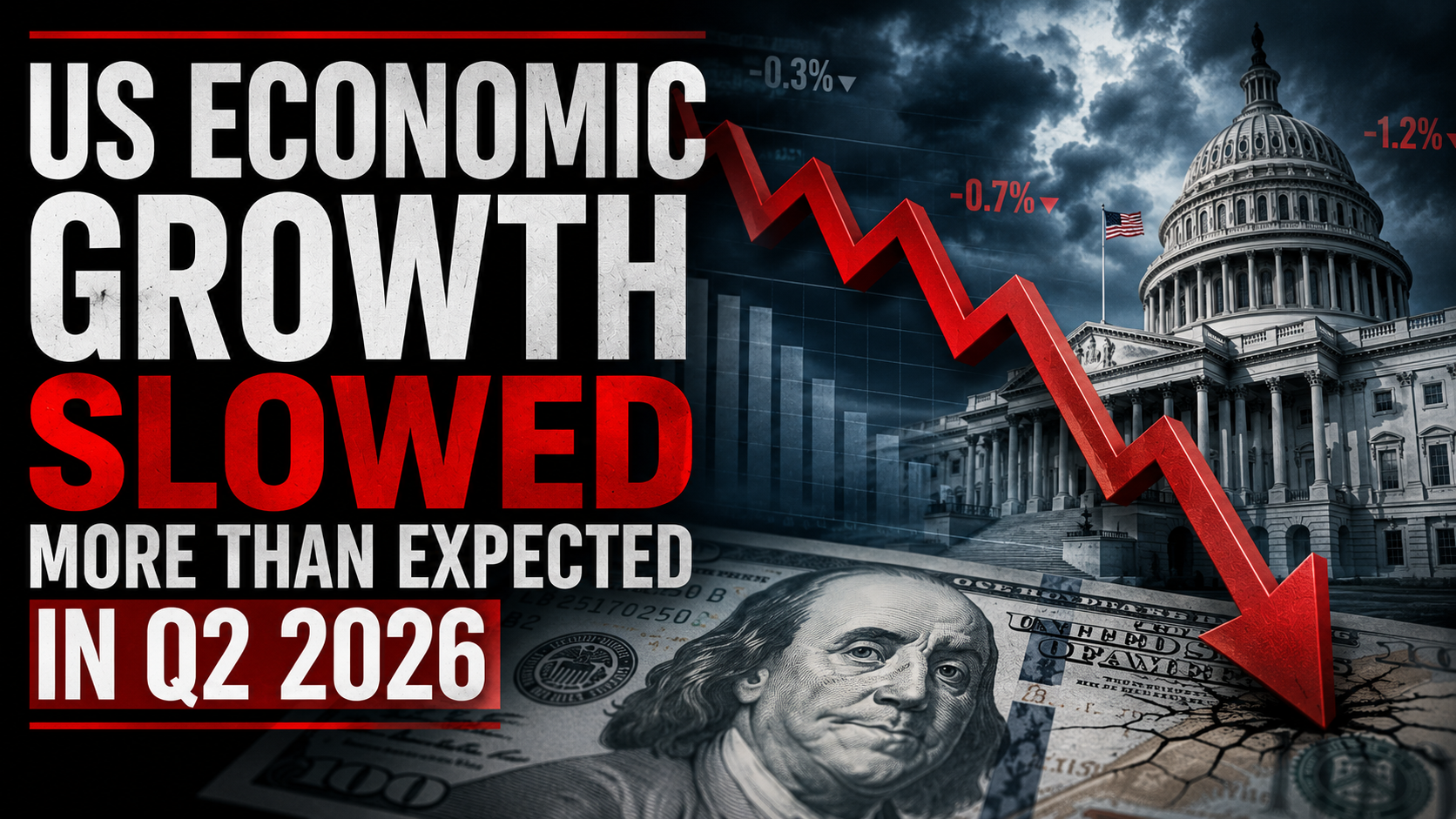
US Economic Growth Slowed More Than Expected in the Second Quarter The United States economy expanded at a slower pace than anticipated during the second quarter of 2026, according to the advance estimate released by the Bureau of Economic Analysis. Real gross domestic product rose at an annual rate of 1.5 percent from April through June. This marked a deceleration from the 2.1 percent growth recorded in the first quarter and fell short of most economists forecasts, which had centered around 2.0 to 2.1 percent.
The softer headline figure reflected several offsetting factors. Increases in consumer spending, private investment, and exports provided the main support for growth. However, these gains were partly counterbalanced by a decline in government spending and a notable rise in imports, which subtract from the GDP calculation. Trade in particular exerted a significant drag, with imports surging while export growth moderated.
Despite the weaker overall number, underlying domestic demand appeared robust. Real final sales to private domestic purchasers, a measure that combines consumer spending and fixed investment, advanced 3.9 percent. This represented a clear acceleration from the 1.7 percent pace in the prior quarter. Consumer outlays rose solidly, with spending on both goods and services showing improvement.
Business investment also contributed positively, driven by continued strength in equipment purchases and intellectual property products, even as spending on structures remained weak for another quarter. Residential investment posted a modest rebound after a prolonged period of declines. Inventory adjustments further weighed on the total, subtracting from growth alongside the trade imbalance. Government expenditures turned negative after a temporary boost earlier in the year.
Inflation measures within the report showed the personal consumption expenditures price index rising at a still elevated rate, though core readings excluding food and energy moderated somewhat from the previous quarter. Analysts noted that the slowdown arrives amid broader pressures, including elevated energy costs linked to ongoing geopolitical tensions in the Middle East. Higher gasoline prices have begun to strain household budgets, raising questions about the sustainability of consumer strength in the months ahead.
At the same time, the resilience in private demand offers a counterpoint, suggesting that the economy retains underlying momentum even as the headline growth rate cooled. The advance estimate is subject to revision in subsequent releases as more complete data become available. Markets and policymakers will watch closely for signs of whether this moderation continues or proves temporary.
For now, the second quarter results portray an economy that continues to expand, albeit at a more measured rate than previously expected, with domestic activity holding up better than the overall figure implies.