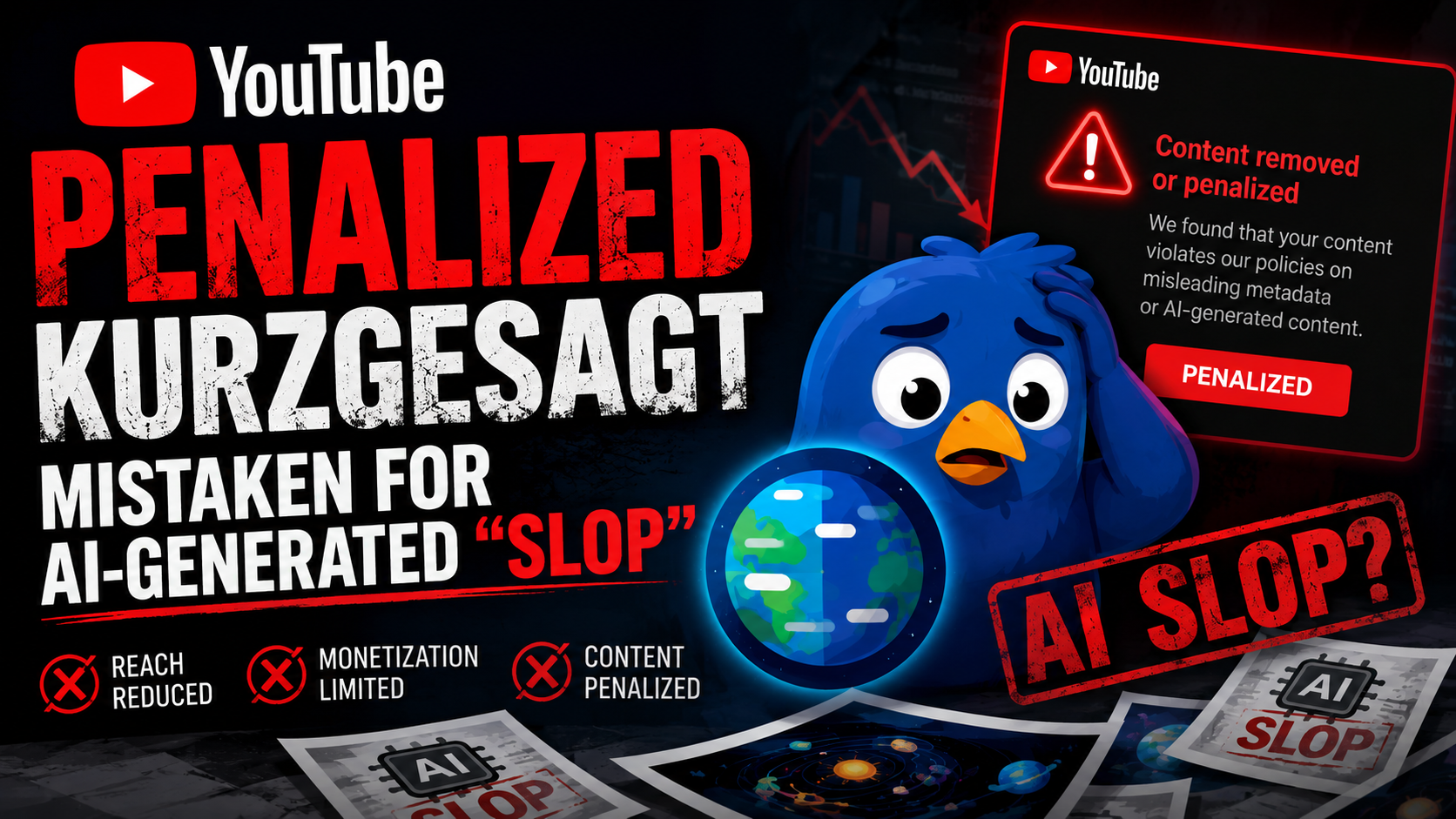
YouTube automated tools for detecting low quality AI generated content, often called AI slop, recently mistook videos from the popular educational channel Kurzgesagt for machine made material. The error caused a sharp drop in recommendations and led to the channel worst performing upload in more than a decade. Kurzgesagt, known for its carefully researched animated explainers on science, space, and big ideas, has built an audience of more than 25 million subscribers through fully human crafted production.
In late July 2026 the team first noticed odd fluctuations in view counts on recent videos. The problem became clear with their latest release on superpredators. That video performed extremely poorly, the weakest result since 2013. Yet the underlying numbers told a different story.
Viewers clicked the thumbnail more often than usual, stayed watching longer, and gave positive feedback. By every standard engagement measure the video should have performed at least averagely. Instead the platform appeared to stop recommending it almost entirely. The team contacted YouTube support.
Staff confirmed the issue quickly. Automatic AI detection systems had incorrectly classified the channel human made animations as AI slop. Once the false flag took hold, it began restricting the channel overall reach. Kurzgesagt described the experience as every creator worst nightmare: the algorithm itself blocking their work.
YouTube contacts were described as helpful and transparent. The channel expressed hope that the bug had been fixed. In a public statement the team made clear that it supports efforts to limit genuine low quality AI content on the platform. The incident, they said, appeared to be pure bad luck rather than a deliberate policy.
Because the team still valued the superpredators video, they removed it temporarily. They planned minor updates so it would be worth a second viewing and intended to reupload it several weeks later, hoping the detection tools would then treat it correctly. They also asked previous viewers to watch the revised version fully as a way to help restore algorithmic momentum. The episode has raised wider concern among other creators.
Many smaller channels fear they could face the same misclassification without the same level of direct support that a large, well known channel receives. YouTube has been expanding tools to identify and suppress networks of low effort AI generated videos that flood the platform. Those tools analyze patterns such as upload frequency, shared infrastructure, and content style. While effective against clear spam, the systems can produce false positives when human work shares visual or structural traits with generated material.
Kurzgesagt has long emphasized that its videos remain entirely human made, from research and scripting through animation and narration. The channel has even produced content examining the broader spread of AI generated material across the internet. The recent penalty therefore carried an extra layer of irony: a creator that publicly critiques AI slop was itself temporarily treated as one of its sources. The incident highlights ongoing challenges in content moderation at scale.
Automated systems must balance the need to curb low quality floods against the risk of harming established human creators. For Kurzgesagt the immediate problem appears resolved, yet the episode serves as a reminder that even carefully crafted work can fall foul of imperfect detection methods. As AI tools grow more sophisticated on both the creation and moderation sides, similar mistakes may become more common unless detection accuracy continues to improve.