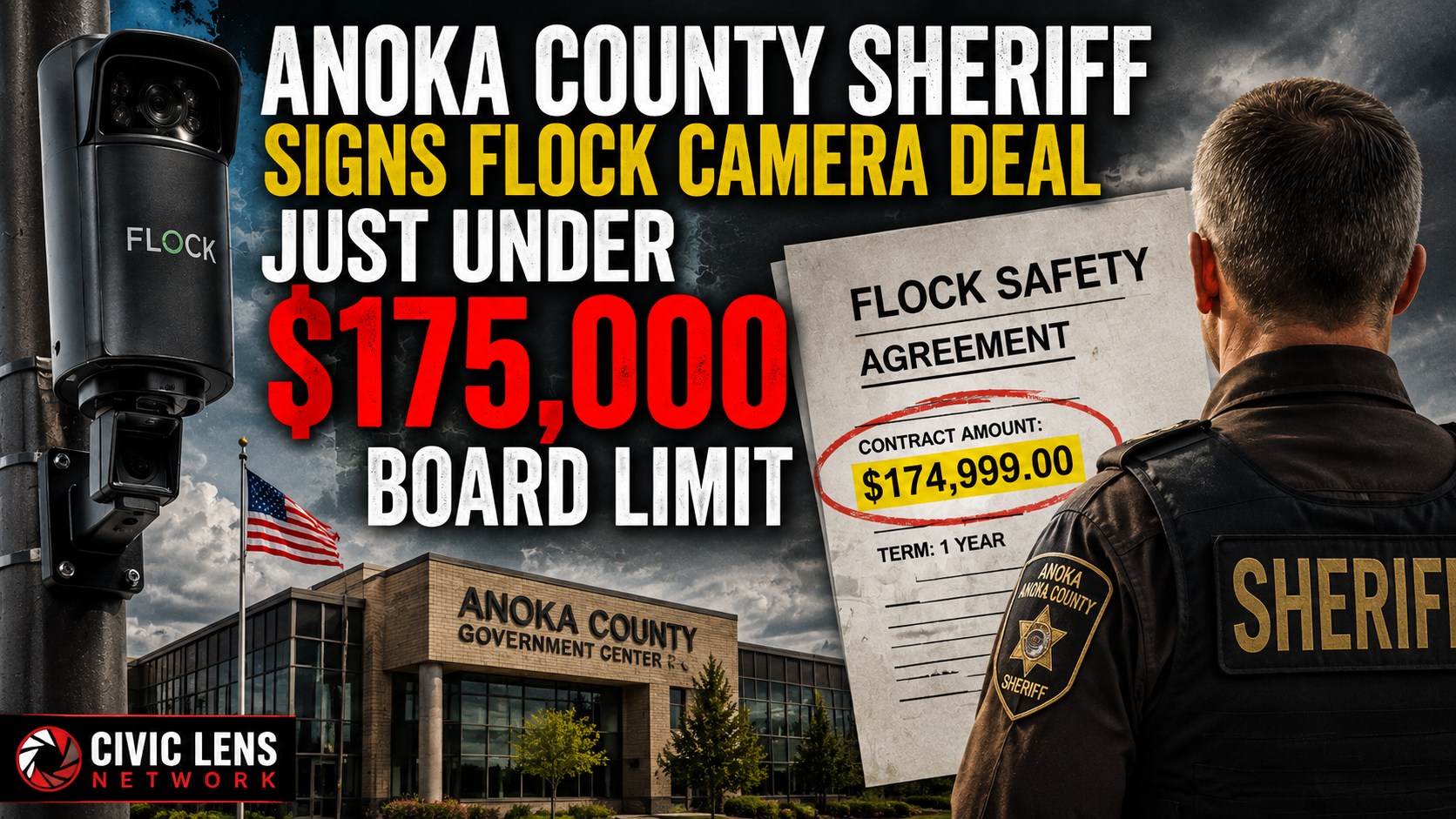
Anoka County Sheriff Brad Wise signed a one year Flock Safety contract on June 30 for automated license plate readers and drones. The price sat just under Anoka County’s $175,000 mark for County Board review, so the board never voted. Local outlets have reported the signed total as $174,500 or $174,999. County policy says agreements over $175,000 need board approval.
The final figure stayed below that line, and Wise executed the deal under the sheriff’s office authority. The pilot covers up to 75 license plate readers and about 10 drones. Spokesperson Tierney Peters said camera sites have not been chosen. Cities may refuse the equipment.
Funding is coming from the sheriff’s 2026 operating budget. Wise had earlier discussed a larger plan. That version was described as a two year, $245,000 proposal with as many as 200 cameras and 16 drones. It never received a formal board vote.
Wise said law enforcement chiefs had worked on a Flock plan since fall 2025 and first brought it to the board in January. Wise has said why the price changed. He told the Forest Lake Times that national politics had entered the debate over drones and plate readers.
“It became clear to me that the only way for this pilot to move forward with a test run was to work for a vendor to operate a contract that I could sign of under $175,000,” he said. He also said, “This was deliberately done to make sure there were no legal issues tied to the dollar amount.” Peters said Wise struck the lower cost deal “to avoid legal ambiguity and to allow the pilot to proceed under his established authority.”
She called the smaller project a practical test and said the office is following county rules. Wise later told local officials the spending limit is a matter of statute, not a personal rule, and that an elected sheriff has long made purchases under that authority. Critics describe the pricing as a way around public review. Fridley resident Aaron Klemz told Sahan Journal that Wise went back to Flock to shorten the term from two years to one and to land just below $175,000.
Klemz said the sheriff was using the figure to evade board supervision. Commissioner Mandy Meisner said she does not support how the decision was made. She said she was not invited to give input and learned of the contract after it was signed. She had wanted the project in the county’s Capital Improvement Plan so residents could speak and officials could write use rules first.
Commissioner Mike Gamache said the sheriff acted within his power and that he did not have a problem with the process. Flock cameras photograph passing vehicles, read plates, and check them against law enforcement lists. The sheriff’s office says images are kept 30 days, then deleted. Flock’s default storage period is seven days.
Agencies can change that setting. Wise said the office, not Flock, controls its data. The same tools have drawn fire across Minnesota and the country. Police say plate readers help find stolen cars, missing people, and suspects.
Privacy advocates argue the cameras log ordinary travel without a warrant and that shared databases can be searched far beyond a local case. A Star Tribune review found that dozens of agencies searched plate data from Twin Cities suburbs for immigration work between November and March. Flock says it has no contract with U.S. Immigration and Customs Enforcement.
Several Minnesota agencies have ended or paused Flock use, including Columbia Heights, Brooklyn Park, West St. Paul, Duluth, and the sheriffs in Sherburne and Isanti counties. Wise said Anoka County already had more than 75 plate readers and that the pilot will show whether extra cameras and faster drone launches are worth keeping. He said the office is not trying to build a surveillance state.
Open items include where new cameras will go, how data will be shared, what happens after the one year term, and whether a later expansion would return to the County Board.