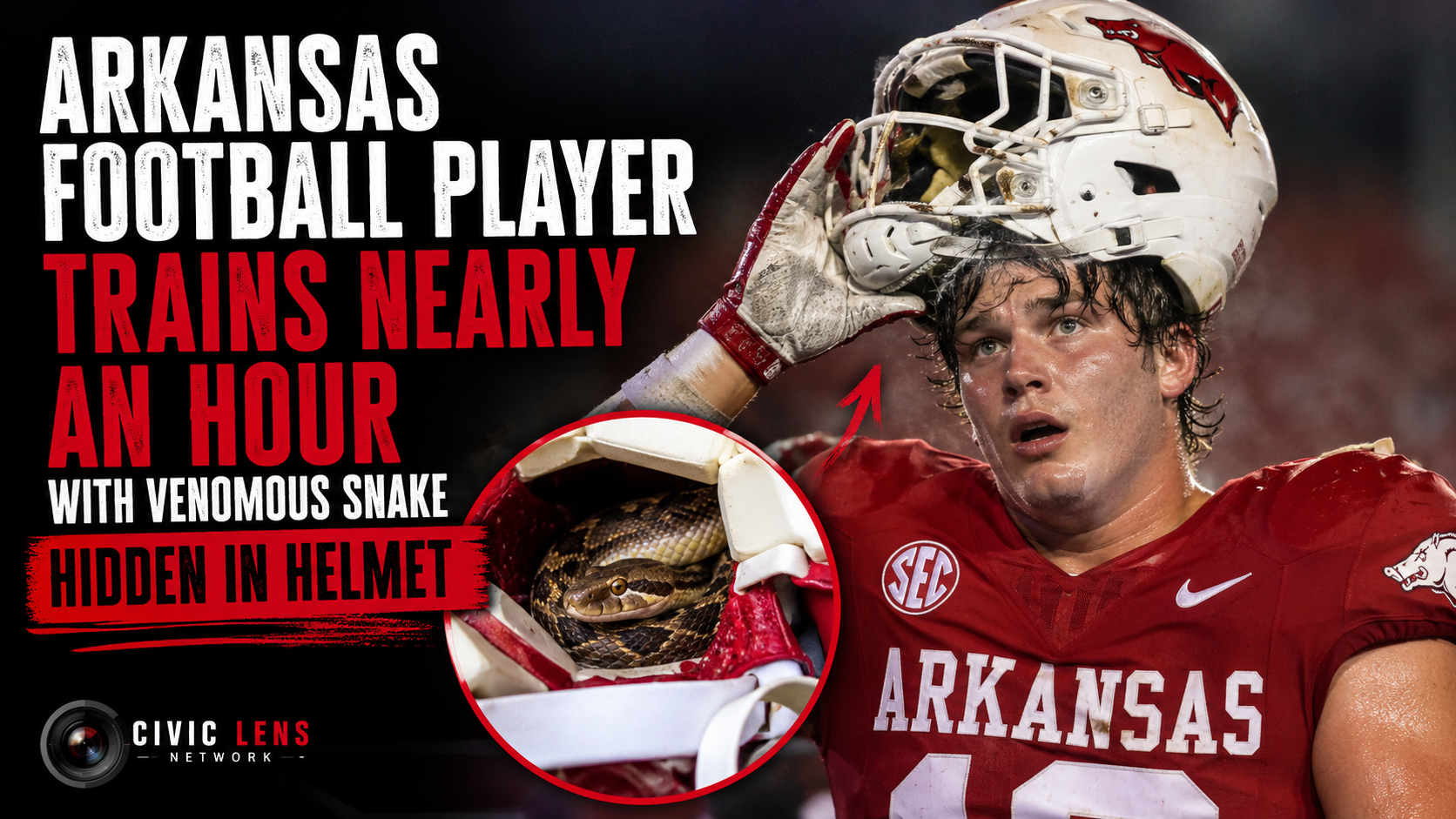
A high school football practice in Maumelle, Arkansas, took an unexpected turn earlier this month when one player spent almost a full hour with a venomous snake coiled inside his helmet. The student at Maumelle High School noticed something odd during drills but did not realize the full danger until coaches inspected his gear. Practice had already been underway for some time after warmups when the player felt unusual movement near the back of his head.
He removed the helmet and handed it to an assistant coach. What they found left the staff in shock. Nested behind the padding sat a roughly two-foot-long cottonmouth, also known as a water moccasin. The snake had somehow entered the dark space between the shell and the liner and stayed there while the athlete ran, blocked, and moved through regular drills.
Athletic Director Kirk Horton later described the moment as pure disbelief. In ten years of coaching and overseeing programs, he said the odds of seeing something like this felt lower than winning the lottery. The player had worn the helmet long enough that any sudden strike could have caused serious harm. Cottonmouths rank among the more dangerous snakes in Arkansas.
Their venom can damage blood vessels and break down tissue. Fatalities remain rare, yet the risk is real. Animal control officers arrived and faced a practical problem. The snake refused to leave the helmet on its own.
Officers placed the gear in water and forced the animal out with tongs before securing it. They identified the cottonmouth, then released it far from the school grounds in a wooded area. Everyone involved walked away unharmed. The player switched to a different helmet and finished practice.
How the snake got inside remains unclear. Helmets and other equipment often sit on the ground or in locker rooms during the day. Snakes seek cool, dark places, especially after feeding. Officials believe this one likely crawled in while the gear was left unattended.
The incident quickly prompted a simple but important reminder from coaches. Players now check helmets, shoes, gloves, and pads before putting them on. A quick look takes seconds and can prevent a far worse outcome. The story spread beyond Arkansas because it combines ordinary school sports with an almost unbelievable close call.
High school football already demands focus, physical effort, and attention to detail. Adding a live venomous snake turns routine equipment checks into a matter of real safety. Parents, coaches, and players across the region have shared the account as a cautionary tale for the start of the season. Cottonmouths are common near water sources in the southern United States.
They usually avoid people and strike only when cornered or surprised. In this case the snake stayed quiet for a long stretch of practice, giving the player time to notice the movement before any injury occurred. Animal services staff noted the snake appeared well-fed and simply looking for a place to rest. Local shelters and wildlife experts used the moment to stress basic outdoor awareness.
Equipment left outside or in open areas can attract insects, spiders, and larger animals. A few seconds of inspection before each use reduces those risks. Schools in similar climates may update their equipment protocols after hearing about Maumelle. The player himself has stayed out of the spotlight, but the coaching staff has treated the event as a learning opportunity rather than a punchline.
Practice continues as normal, yet the memory of that helmet lingers. What began as a standard afternoon of drills became a story that travels far beyond the practice field. It serves as a reminder that even familiar routines can hide unexpected threats, and that paying attention to small details can make the difference between a close call and a real emergency. For the Maumelle Hornets, the rest of the season will carry an extra layer of caution every time a helmet goes on.
The snake is gone, the player is fine, and the lesson remains clear. Check your gear. The thing inside might not be sweat or a loose pad.