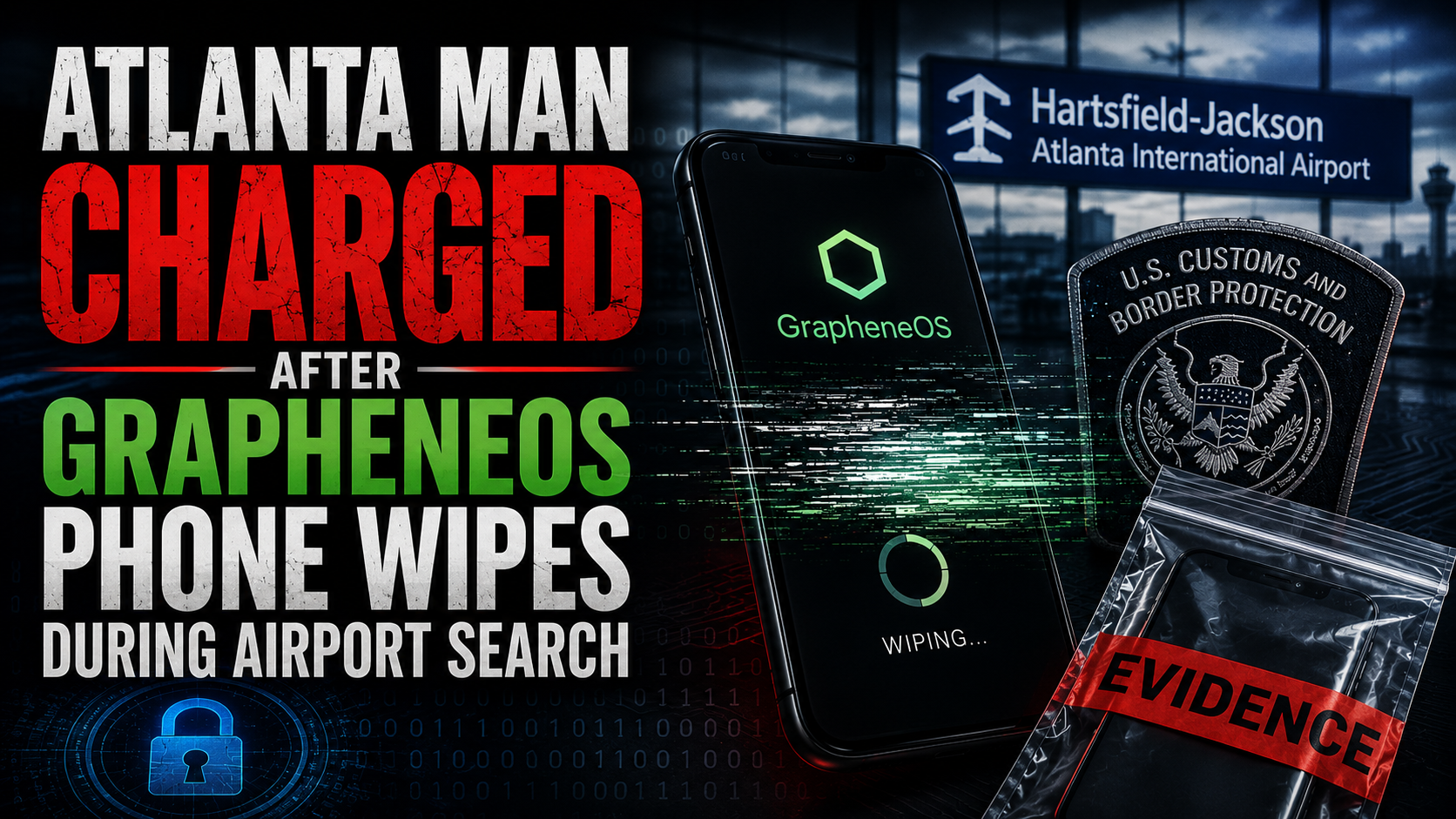
Federal prosecutors have charged Atlanta resident Samuel Tunick after his privacy-focused smartphone wiped itself during a U.S. border search at Hartsfield-Jackson Atlanta International Airport. On January 24, 2025, Tunick was returning from the Dominican Republic when Customs and Border Protection agents selected him for secondary inspection. Agents demanded he unlock his Google Pixel phone, which ran GrapheneOS—an open-source, security-hardened Android alternative. When a passcode was entered, the screen went blank, flashed, and the device restarted, erasing its data via GrapheneOS’s duress PIN feature.
This secondary code is designed to trigger an irreversible wipe instead of unlocking the phone in high-pressure situations. Agents seized the wiped device anyway and allowed Tunick to enter the country. Prosecutors charged him under a federal statute that criminalizes destroying property to prevent government seizure, arguing the wipe was intentional obstruction. Tunick has pleaded not guilty.
His attorneys contend the search was unlawful and pretextual—tied to his alleged ties to Atlanta’s anti-“Cop City” activism—and that he was denied a lawyer and proper rights advisements. They have moved to suppress the evidence. Privacy advocates and security experts call this the first known U.S. federal case targeting a built-in duress password, warning it could effectively criminalize common digital self-defense tools. The case remains ongoing.