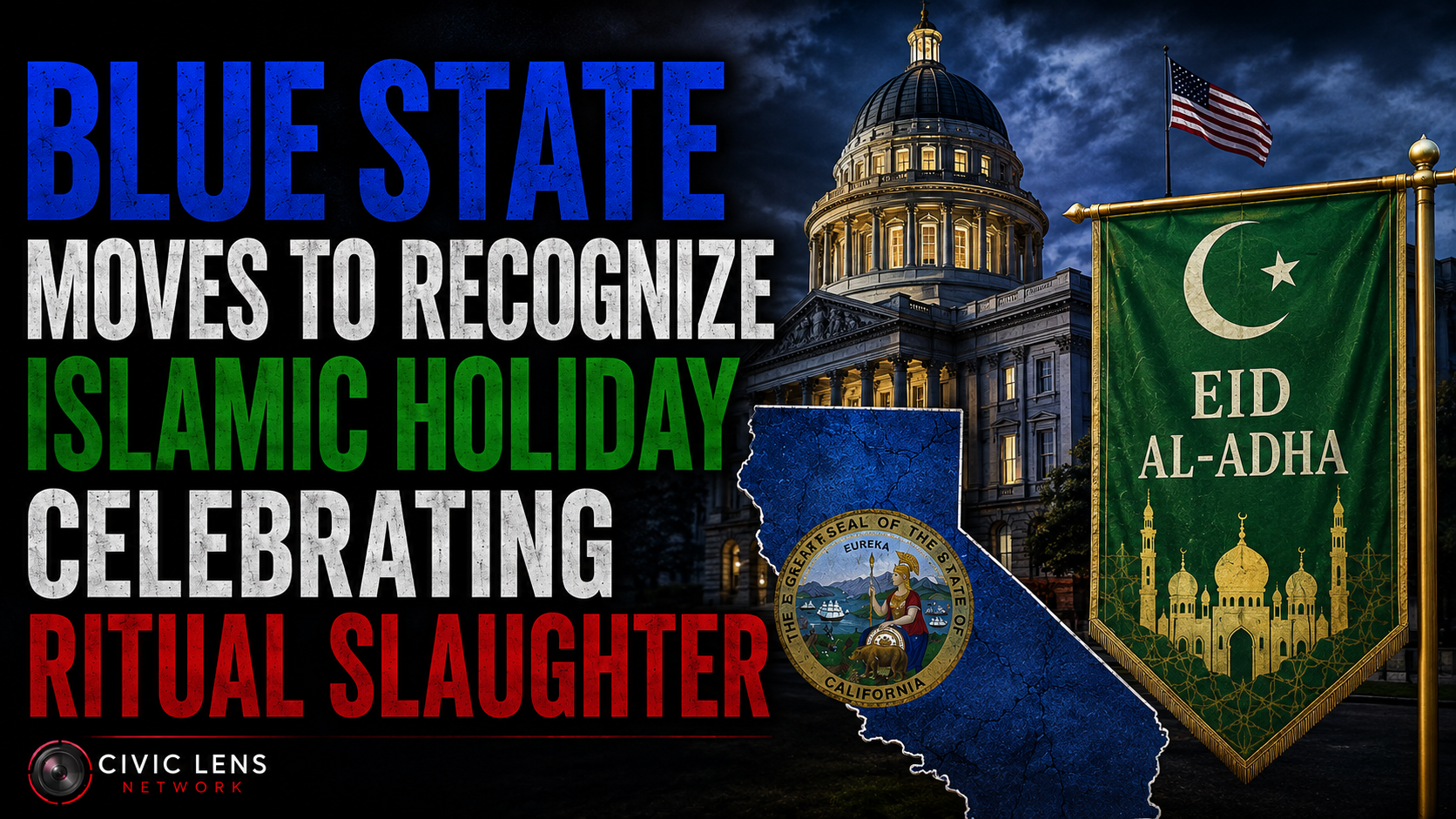
California is racing to put two Islamic holy days on the official state calendar, including Eid al Adha, the Festival of Sacrifice that has for centuries featured the ritual slaughter of livestock. Assembly Bill 2017, written by San Francisco Democrat Matt Haney and advanced with help from Senator Aisha Wahab, would add Eid al Fitr and Eid al Adha to the list of California state holidays. The Assembly already approved the measure 64 to 1 in May.
The Senate is expected to vote before the legislative session ends, sending the bill to Governor Gavin Newsom. The bill would let state workers use existing paid leave to take the days off. Public schools and community colleges could close for the observances under union agreements. Students who miss class to observe Eid would receive a mandatory excused absence.
Districts that close could hold exercises acknowledging and celebrating the meaning and importance of the days, and the State Board of Education would be authorized to produce a model curriculum for those exercises. Eid al Fitr marks the end of Ramadan. Eid al Adha commemorates Ibrahim’s willingness to sacrifice his son in obedience to God. Families that can afford it traditionally slaughter a sheep, goat, cow, or camel, then divide the meat among the household, relatives, and the poor.
That practice is not a side note. It is central to the holiday the state is preparing to honor. California already struggles to keep schools open and classrooms focused on reading and math. Yet lawmakers found time to elevate two movable lunar dates that shift every year and to invite schools to celebrate their religious meaning.
Christmas, Easter, and Good Friday do not receive the same statutory invitation for classroom celebration. The state can bless a model lesson that celebrates Eid while offering no comparable statute for the Christian holy days that still shape the lives of most Californians. Supporters say the measure fills a gap for Muslim families who should not have to choose between faith and work or school. Haney has cited roughly 500000 Muslim residents.
Other advocates put the number higher. Even at the larger estimate, Muslims remain a small share of a state that is still majority Christian. Washington became the first state to recognize both Eid holidays in 2025. That same state does not recognize Easter or Yom Kippur as state holidays.
California is now lining up to become the second. This is not an argument against private worship. Muslims already have the same First Amendment rights as everyone else. They can pray, fast, feast, and follow dietary law without a new line in the Government Code.
The question is whether the state should convert a minority religious calendar into official civic time and then invite public schools to celebrate the theology behind it. The slaughter question makes the double standard sharper. California politicians lecture ranchers and pose as guardians of animal welfare. In July the United States Department of Agriculture opened an inquiry into a Southern California halal ranch after video from an Eid al Adha event showed animals thrown down and cut in ways critics called inhumane.
Riverside County issued a cease and desist order. Operators disputed the claims and said the work followed religious rules. The point is not that every ritual killing is criminal. The point is that the same political class that treats ordinary American farming as a moral problem is eager to give statewide honor to a festival defined by sacrifice.
Once a holiday is on the state list, school boards, personnel offices, and curriculum writers treat it as settled. Dates that move with the moon create scheduling chaos. Optional closures become expected closures in districts with activist unions. A model curriculum becomes a script.
Parents who object are told they are intolerant for noticing that the state is not applying the same enthusiasm to Good Friday or Yom Kippur. Blue state leaders call this inclusion. It looks more like a preference. California already added Diwali and Lunar New Year to its growing roster of community specific holidays.
Each addition is sold as dignity. Together they rewrite the civic calendar away from shared American holidays and toward a patchwork of group claims. The oldest majority faiths are treated as background noise. The newest political constituency is treated as a priority.
If Newsom signs the bill, California will tell every student and every state employee that Eid belongs on the official map of public life. Families may still slaughter animals in accordance with religious custom. Schools may close. Lesson plans may celebrate the meaning.
Lawmakers will congratulate themselves for courage. The rest of the public should ask a simpler question. Why does a state that cannot keep the streets safe or the test scores rising believe its most urgent unfinished business is official recognition of a holiday of ritual sacrifice?