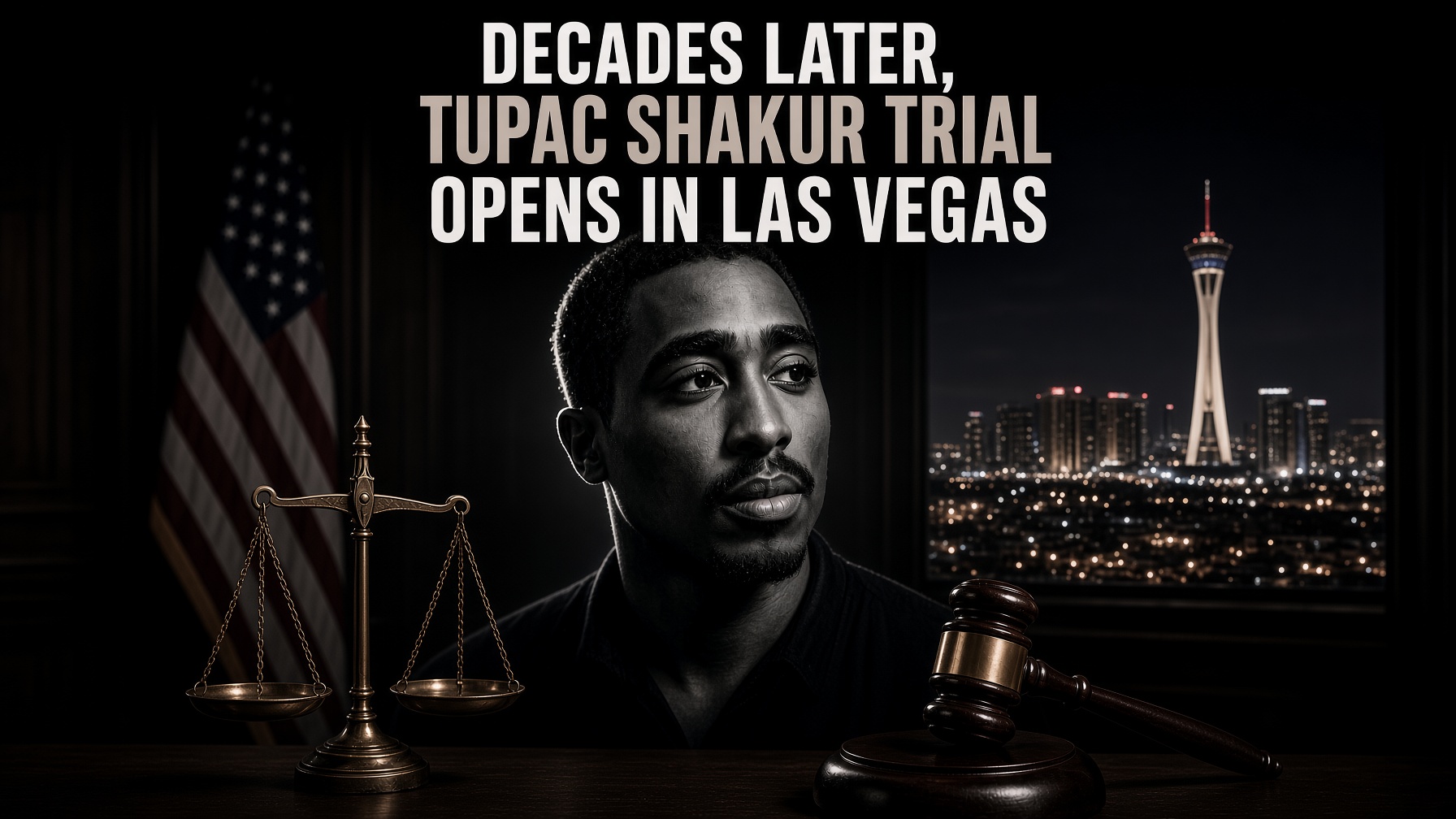
Nearly thirty years after one of hip-hop’s most shocking and enduring mysteries, the murder trial of the only person ever charged in Tupac Shakur’s death has finally opened in Las Vegas. On Monday, August 10, 2026, jury selection began in Clark County District Court for Duane “Keffe D” Davis, the former South Side Compton Crips leader accused of orchestrating the 1996 drive-by shooting that killed the 25-year-old rap icon.
Davis, now 63, faces a single count of murder with the use of a deadly weapon, enhanced by an allegation that the crime was intended to promote, further, or assist a criminal gang. He has pleaded not guilty and has remained in custody since his arrest in September 2023. If convicted, he faces life in prison without the possibility of parole. Prosecutors are not seeking the death penalty.
The case centers on events of September 7, 1996. Shakur and Death Row Records co-founder Marion “Suge” Knight were leaving a Mike Tyson boxing match at the MGM Grand when members of Shakur’s entourage confronted and beat Davis’s nephew, Orlando “Baby Lane” Anderson, inside the casino. Hours later, as Knight drove a black BMW near the Las Vegas Strip with Shakur in the passenger seat, a white Cadillac pulled alongside at a red light on Flamingo Road and Koval Lane. Gunfire erupted.
Shakur was struck multiple times and died six days later from his injuries. Knight survived with lesser wounds. Prosecutors allege Davis was the “shot caller” who organized the retaliation, provided the gun used in the attack, and was inside the Cadillac with Anderson and two other men, both now deceased. They do not claim Davis pulled the trigger himself.
Instead, they plan to prove he directed the plot born from longstanding tensions between the Crips and the Mob Piru Bloods associated with Death Row Records, layered atop the broader East Coast-West Coast rap rivalry of the era. What makes the case unusual is that much of the evidence against Davis comes from his own past statements.
In a 2008 police interview, media appearances, and his 2019 memoir Compton Street Legend, Davis described obtaining a handgun, tossing it into the back of the Cadillac, and being present during the shooting. Judge Carli Kierny has ruled those materials admissible, rejecting defense arguments that earlier agreements or the book’s fictionalized nature should keep them out. Defense attorneys plan to argue that Davis exaggerated or fabricated the accounts for money and attention, and that he has since recanted them.
The trial is expected to last four to six weeks. Potential witnesses include Suge Knight, who is currently serving a long prison sentence on an unrelated conviction. No physical evidence such as the murder weapon or clear surveillance footage has been publicly highlighted as central to the case. The other men alleged to have been in the Cadillac have all died, leaving Davis as the sole surviving figure from that vehicle.
For fans, family, and hip-hop historians, the proceedings represent a long-awaited reckoning with a cold case that fueled endless speculation, documentaries, and conspiracy theories. Shakur’s music and cultural impact only grew after his death, cementing his status as one of the genre’s most influential artists. Whether the trial delivers definitive answers or leaves lingering questions, it marks the first time a jury will weigh evidence in court over the killing that stunned the music world three decades ago.
The opening of jury selection brings the long-dormant investigation into a public courtroom at last, turning decades of street rumors and self-incriminating stories into formal testimony under oath.