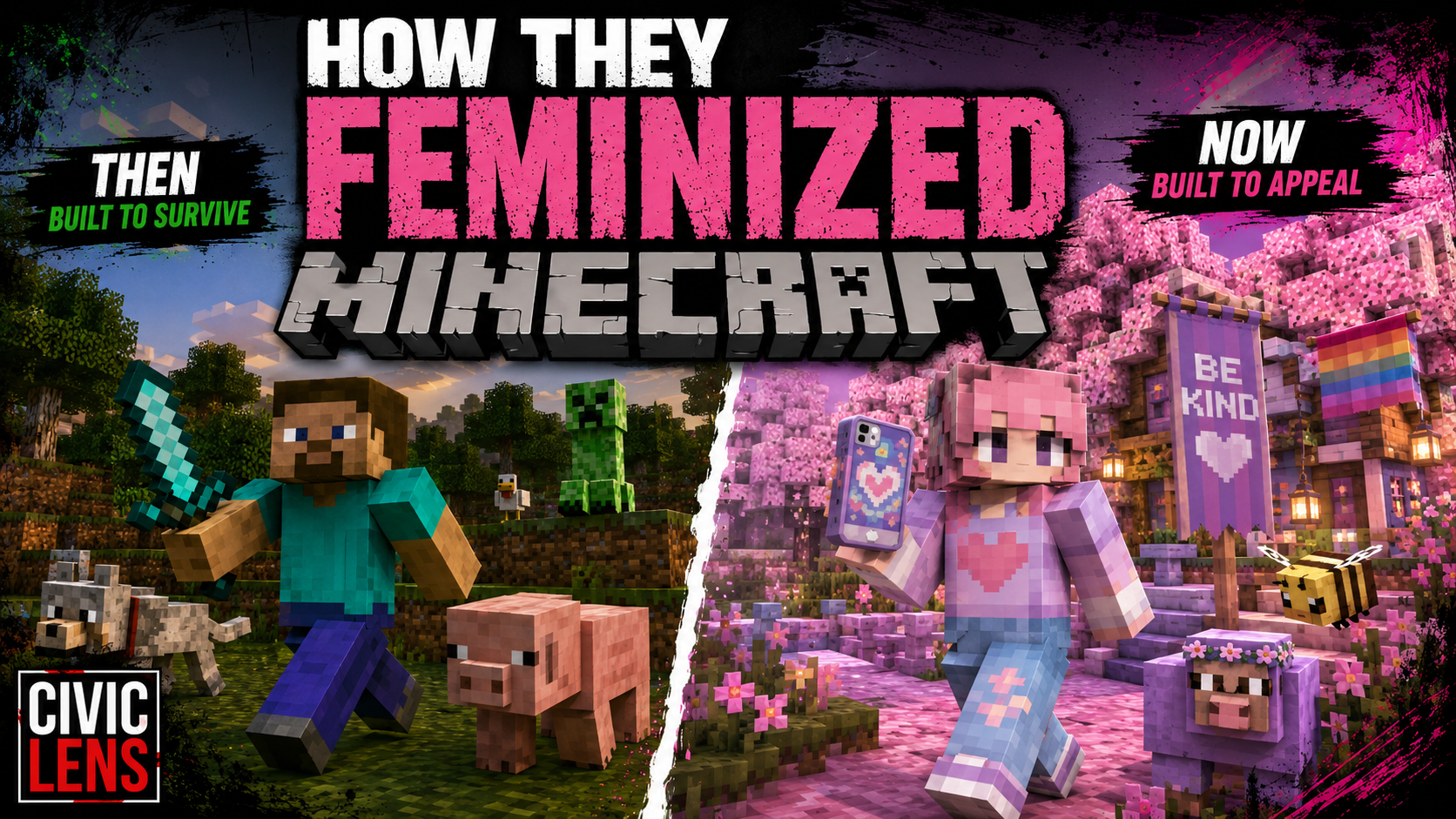
Minecraft started as a square man in a blue shirt punching trees. That figure was Steve. Creator Markus Persson said the model was meant to be a human, not a man, but the shoulders, beard stubble, and four pixel arms read male. Players treated him as one.
For years that was the face of the game. The first official shift was small and technical. In 2014, developer Jens Bergensten explained why the team tested a slimmer three pixel arm model. Broad Steve still looked masculine even with a girl skin.
Girls, he said, sometimes felt left out. They did not add a bust or a separate female mesh. They narrowed the arms and dropped the shoulders a little. That slimmer body became the Alex model.
Alex arrived with orange hair, a ponytail, and a thinner silhouette. Console players could pick her. The company line was representation without changing how the game played. After Microsoft bought Mojang, the defaults multiplied.
Steve and Alex were no longer the only official faces. In 2022 the game added six more: Noor, Sunny, Ari, Zuri, Efe, Kai, and Makena. Different skin tones, hair, clothes, and body cues. Some names are used for girls, some sit in the middle.
Mojang’s public stance stayed the same one it had used for years. There are no genders in Minecraft. The world should not force a player to pick one. At the same time the dressing room and Character Creator filled with dresses, makeup, capes, and fashion pieces you buy with Minecoins.
That store is where the look of the game changed fastest. Marketplace packs sell cottagecore outfits, pink countryside sets, flower crowns, puff sleeves, and “cozy teen” woods fashion. Tags on those packs repeat the same words: cute, pretty, forest, mushroom, decorate, roleplay. You can still load a world and fight the Wither.
You can also spend an evening dressing a slim avatar in a corset dress and planting cherry trees. The cherry grove, extra flowers, and later creature and furniture drops gave builders more pastel and domestic material than the old dirt and cobble loop. Community tools went further than Mojang ever did. Planet Minecraft hosts tens of thousands of girl skins.
Mods add breasts to the player model. Other packs turn mobs into anime girls. Resource packs recast menus in cherry pink and rewrite item names in a cute register. None of that is required.
A lot of it sells because a large share of players want it. Mojang has said more than forty percent of players are women. Whether that number is exact or not, the store behaves as if the girl and fashion audience is real money. Leadership and messaging completed the picture.
Mojang talks about a diverse studio as a source of ideas. Official channels run Pride posts and education worlds. The Good Trouble pack walks players through civil rights figures, including suffragist Emmeline Pankhurst, and official posts have told kids to start changing the world in Minecraft. Plenty of parents and longtime players call that politics in a children’s sandbox.
The company calls it inclusion. The old survival loop is still there. Diamonds, raids, and hardcore worlds did not vanish. What changed is the default face, the shop window, and the tone of the brand.
Steve is one option among nine. The slim model is the feminine read of a body that used to look like a laborer. The marketplace rewards soft clothes and cottage builds. Official copy sells belonging.
That is the feminization people argue about. It is not a secret patch that turns every creeper pink. It is years of models, storefronts, and studio language stacking until the game no longer looks like a boys’ workshop first.