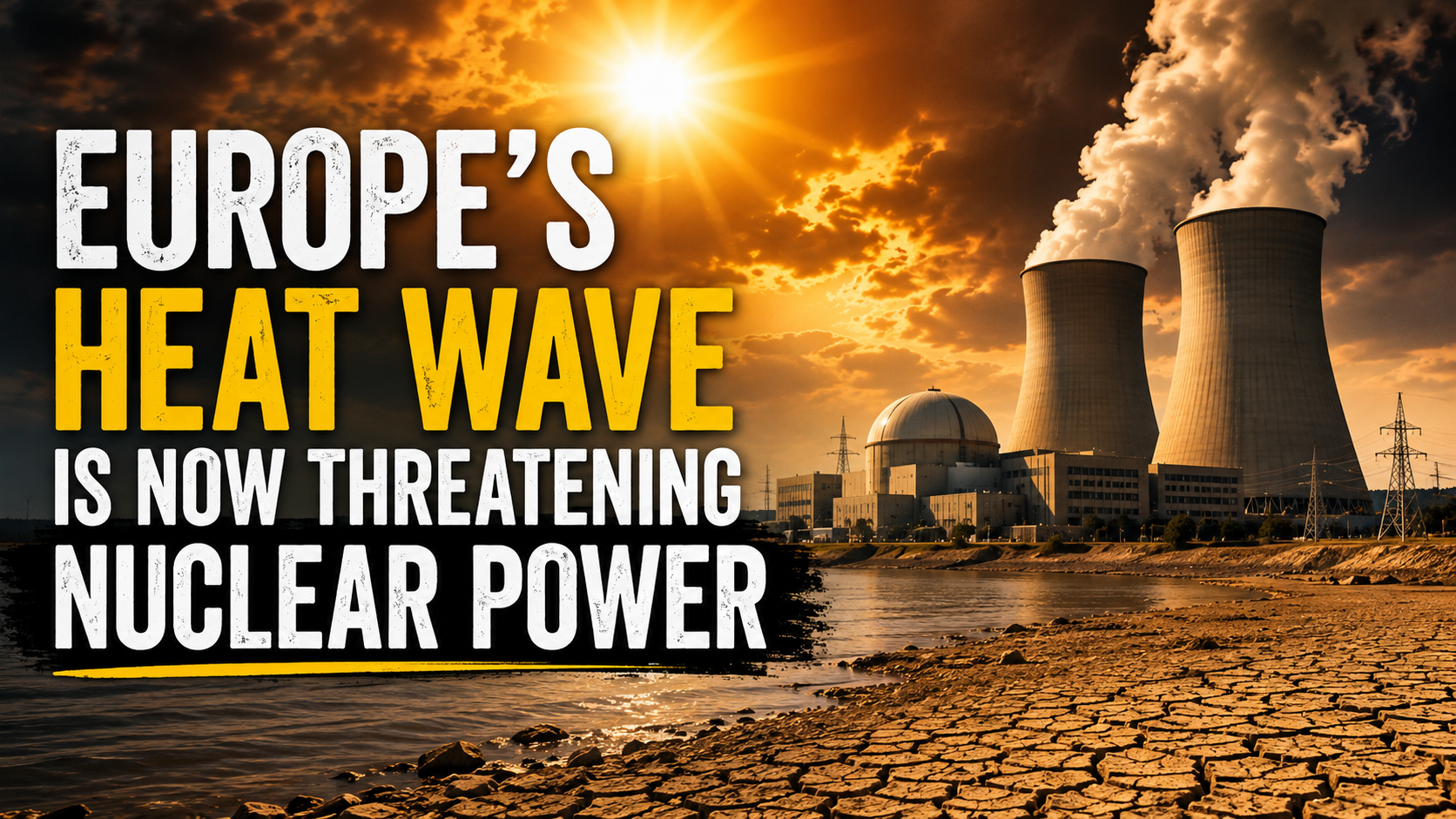
A punishing heat wave continues to bake large parts of Europe, driving temperatures well above seasonal norms and exposing a critical vulnerability in the continent’s energy system. Nuclear power plants that have long supplied reliable baseload electricity are being forced to cut output or shut down entirely because the rivers they depend on for cooling have grown too warm or too low. In France, where nuclear reactors generate nearly 70 percent of the nation’s electricity, the state utility has taken multiple units offline.
Reactors at plants along the Meuse, Moselle, Garonne, Rhône and Seine have been curtailed or stopped to comply with environmental rules that limit the temperature of water discharged back into rivers. Operators must protect aquatic ecosystems, and once river temperatures approach regulatory thresholds the plants simply cannot continue full operation. The result has been the temporary loss of several gigawatts of capacity at the very moment demand for air conditioning is surging. The problem is not confined to France.
Along the Danube, record low water levels have brought Hungary’s sole nuclear station to the brink of a full shutdown. Officials reported that water levels fell so far overnight that the plant came within millimetres of losing the cooling flow it needs. Neighbouring Romania has already taken reactors offline and even carried out controlled measures to redirect remaining river water toward its plant. Elsewhere in the region, other facilities have reduced power for the same reason.
These plants were designed decades ago under different climate assumptions. Most inland reactors draw vast quantities of water from nearby rivers, use it to condense steam after it has driven turbines, and return it warmer than it arrived. When ambient temperatures climb and drought reduces river flow, the cooling process becomes constrained. Environmental limits on how much heat can be added to already stressed waterways force operators to throttle production even as households and businesses switch on cooling systems.
The immediate consequences are visible in electricity markets. Wholesale prices have spiked in several countries as nuclear output falls and grids turn to gas fired generation or imports to fill the gap. Hydroelectric plants in the Alps and Nordic regions have also suffered from low water, compounding the shortfall. The combination of rising demand and constrained supply creates what energy analysts describe as a triple squeeze: higher cooling needs, less efficient thermal plants, and forced nuclear cutbacks.
Authorities insist that overall supply remains secure for now. Grid operators report that reserves and cross border flows are sufficient to meet current demand. Yet the repeated disruptions this summer raise longer term questions. Heat waves of this intensity and duration are becoming more frequent.
A nuclear fleet built for cooler river conditions must adapt if it is to remain a dependable source of low carbon power. Some plants already use cooling towers that reduce reliance on direct river discharge. Others may need similar upgrades or revised operating protocols. For the moment, however, the heat continues and the rivers remain under pressure.
Europe’s nuclear stations, once viewed as insulated from weather, are proving sensitive to the very climate shifts they were meant to help mitigate. The current episode is a clear reminder that reliable energy and a warming atmosphere are becoming increasingly difficult to reconcile.