Federal agents descended on multiple locations across Minnesota Thursday morning, October 29, executing search warrants at businesses connected to Medicaid-funded services as the state faces another wave of scrutiny over suspected fraud involving taxpayer money.
The operation involved the FBI, Internal Revenue Service criminal investigators, the Department of Health and Human Services Office of Inspector General, U.S. Postal Inspectors, Minnesota’s Bureau of Criminal Apprehension and the Minnesota Attorney General’s Medicaid Fraud Control Unit.
Investigators targeted several locations in the Twin Cities metropolitan area and Rochester, including businesses providing autism therapy and other services funded through Medicaid.
The raids represent the latest development in Minnesota’s widening battle against fraud in publicly funded programs, an issue that has brought increasing federal attention to the state and raised serious questions about whether government oversight has kept pace with the billions of dollars flowing through its social service systems.
Federal Agents Target Medicaid Service Providers
Two businesses specifically identified by Minnesota Attorney General Keith Ellison’s office were Iska Inc. in St. Louis Park and Bright Horizon Therapy in Edina.
Both provide services connected to Minnesota’s Medicaid system.
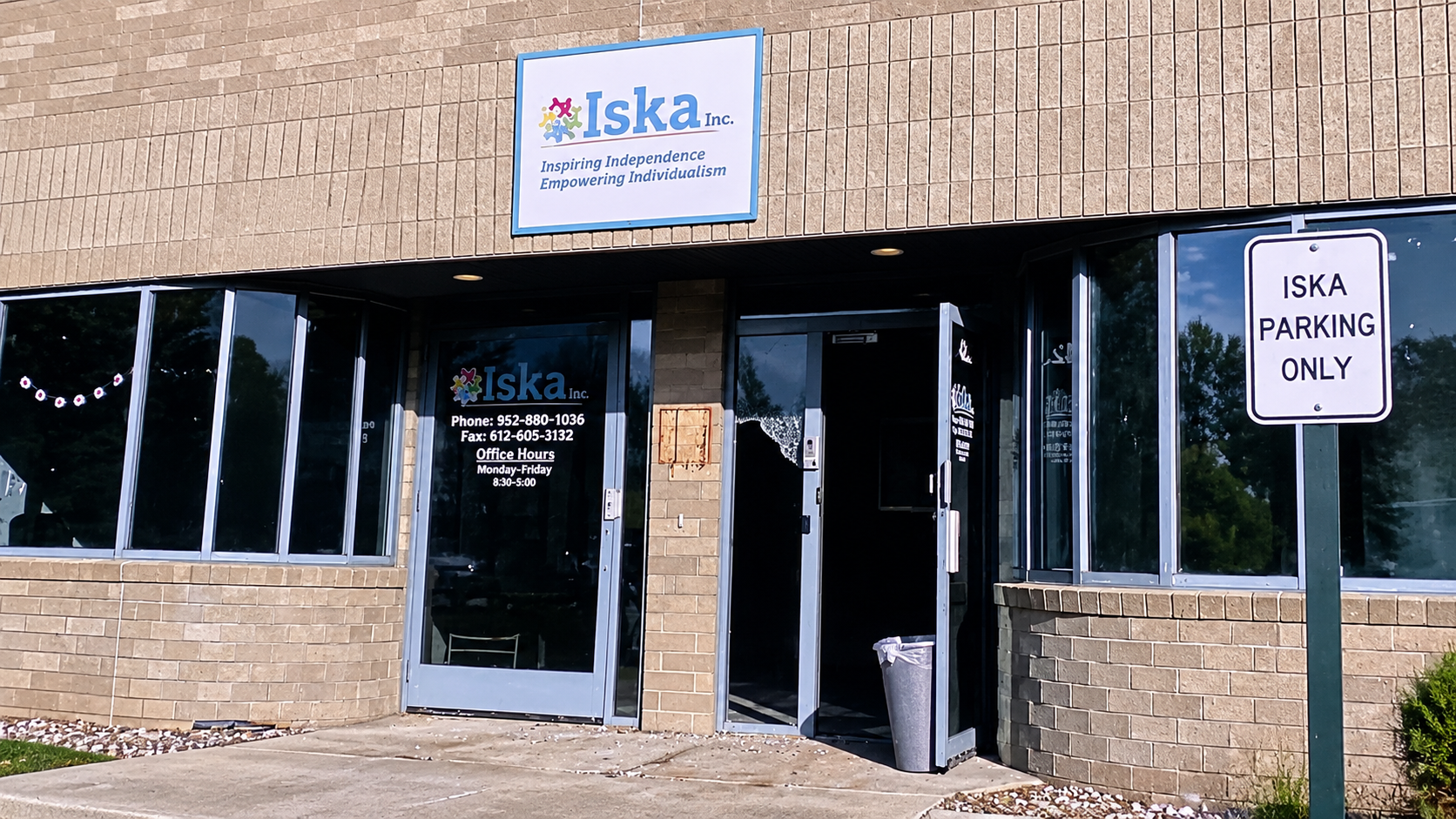
At Iska Inc., television crews captured the aftermath of the morning operation, including a shattered glass entrance and federal investigators working inside the building.
Employees arriving for work reportedly encountered law enforcement officers and watched investigators remove boxes from the premises.
Iska describes itself as an organization providing specialized therapy and social services to individuals with disabilities.
According to state payment records reviewed by the Minnesota Star Tribune, the company received more than $16.7 million in Medicaid funding between 2018 and 2025.
That figure alone does not establish wrongdoing. However, the amount illustrates the substantial public funding involved in the services now attracting federal scrutiny.
The FBI confirmed the operations were authorized by a court but declined to release details about the evidence investigators were seeking.
As of Thursday afternoon, no criminal charges or arrests had been publicly announced in connection with the newly reported searches.
Minnesota’s Fraud Problem Is No Longer Easy to Ignore
Thursday’s raids did not emerge in isolation.
Minnesota has spent years confronting allegations and proven cases of fraud involving government assistance programs, including child nutrition benefits, Medicaid-funded housing services and autism treatment programs.
The state’s Early Intensive Developmental and Behavioral Intervention program, designed to provide treatment and support for children with autism and their families, has become a particular focus.
The program expanded rapidly after its introduction around 2018, with increasing numbers of providers and growing Medicaid expenditures.
State officials eventually classified the program among 14 Medicaid-funded services considered at high risk for fraud.
That designation raises an uncomfortable question: How long were warning signs present before stronger enforcement measures were implemented?
The state has introduced additional safeguards, but criminal investigations and prosecutions have continued.
Federal authorities previously executed 22 search warrants across Minnesota on April 28 during another major operation targeting suspected fraud in publicly funded programs.
Five of those searches involved autism service providers and participation by the Minnesota Attorney General’s Medicaid Fraud Control Unit.
The latest raids demonstrate that investigators have not finished examining the network of businesses receiving government reimbursement for services.
The Political Battle Over Accountability
The timing of Thursday’s operation is particularly significant.
Vice President JD Vance is scheduled to appear in St. Cloud, Minnesota, on Friday alongside members of the White House Task Force to Eliminate Fraud.
The administration has announced that the visit will include a statement concerning its broader campaign against fraud.
Federal officials have not established whether Thursday’s raids are directly connected to the vice president’s scheduled announcement.
Nevertheless, the developments place Minnesota’s management of taxpayer-funded programs squarely in the national spotlight.
The Trump administration has made fraud enforcement a priority, and Minnesota has become one of the most prominent examples in that effort.
For state officials, the challenge is increasingly difficult to dismiss.
Governor Tim Walz’s administration and other Minnesota authorities have repeatedly emphasized their efforts to identify suspicious activity, refer cases to investigators and strengthen program oversight.
Those measures deserve examination against the larger record.
If investigators repeatedly uncover potential fraud in programs that were supposed to be monitored, taxpayers have every reason to demand an explanation of how the safeguards operated and why suspicious activity was not stopped sooner.
Political arguments over who deserves credit for enforcement operations cannot substitute for a full accounting of public money.
The Money Belongs to Taxpayers
At the center of these investigations is a fundamental responsibility of government: ensuring public funds reach the people and services for which they were intended.
Medicaid is financed through federal and state tax dollars. Its purpose is to provide medical care and necessary services to eligible individuals, including vulnerable families and people with disabilities.
When providers submit fraudulent claims, the consequences extend beyond financial losses.
Money diverted through dishonest billing is money unavailable for legitimate care. Fraud also damages confidence in providers operating lawfully and can trigger additional restrictions that make it harder for legitimate businesses to serve patients.
That makes rigorous enforcement essential.
Investigators must determine whether services were actually delivered, whether billing records accurately reflect the treatment provided and whether government reimbursements complied with program requirements.
Those are factual questions that must be resolved through evidence, financial records and the legal process.
Businesses receiving substantial public funding should expect meaningful scrutiny, particularly when operating in programs already identified as vulnerable to abuse.
A Growing Federal Investigation
The involvement of multiple federal and state agencies suggests investigators are examining financial and operational records across several jurisdictions.
The IRS Criminal Investigation division brings expertise in financial transactions and potential tax-related offenses.
The Department of Health and Human Services Office of Inspector General investigates fraud and misconduct affecting federal health programs.
The FBI handles federal criminal investigations, while state investigators can examine violations of Minnesota law and the misuse of state-administered benefits.
Their combined participation does not establish that every location searched committed a crime. It does, however, show that authorities are devoting significant investigative resources to the matter.
The searches in Rochester and the Twin Cities also indicate that Thursday’s activity was not limited to one office or one provider.
Authorities have not yet disclosed the full number of locations searched, the scope of the warrants or whether additional enforcement actions are expected.
Those details will be critical in determining how far the investigation extends.
Minnesota Deserves Answers
The latest raids should renew pressure for a thorough examination of Minnesota’s oversight of publicly funded services.
Taxpayers deserve to know how providers qualify for reimbursement, how suspicious claims are identified, what happens when agencies discover irregularities and whether officials act quickly enough to prevent additional losses.
They also deserve transparency about the results of these investigations.
Search warrants are investigative tools, not convictions. The businesses searched Thursday have not been established as guilty of criminal wrongdoing simply because federal agents entered their offices.
But that distinction does not diminish the broader public interest in the state’s history of fraud prosecutions and continuing enforcement activity.
Minnesota has already seen enough documented fraud to justify serious questions about accountability, oversight and the protection of taxpayer money.
Thursday’s coordinated operation adds another chapter to that story.
With federal agents collecting evidence, multiple agencies participating and the White House preparing a major fraud-related announcement in Minnesota, the pressure for answers is unlikely to disappear.
The central issue is no longer whether fraud in government-funded programs deserves national attention.
It is whether investigators and elected officials can establish how public money was misused, recover funds where possible, prosecute proven wrongdoing and prevent the same failures from happening again.
For Minnesota taxpayers, that accountability is long overdue.