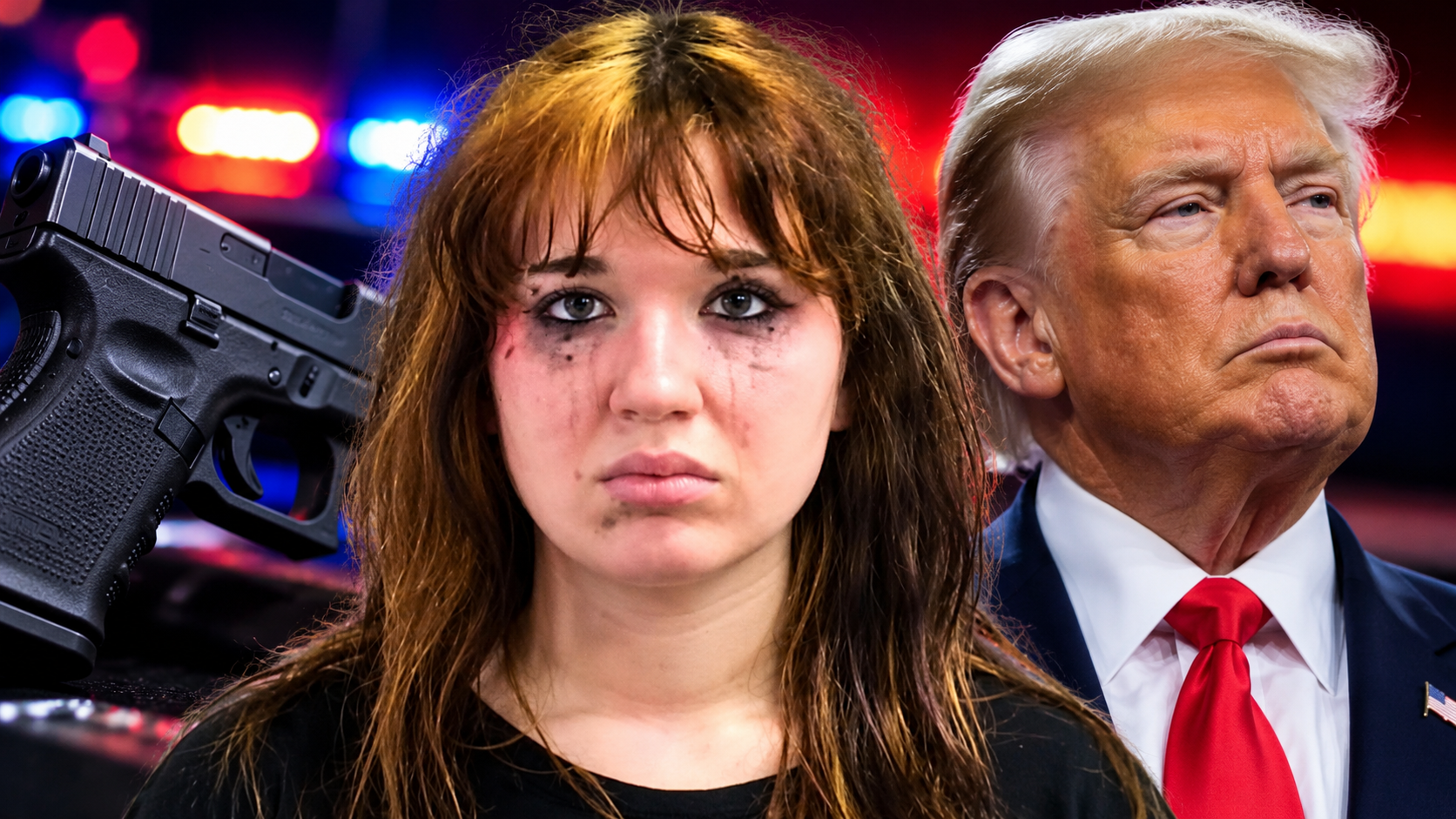
DAYTONA BEACH, Florida — A 21-year-old Florida woman is behind bars after authorities say she posted an explicit threat to shoot President Donald Trump just hours before his scheduled appearance at a campaign rally in Daytona Beach.
Allison Jeanne Albro, a Daytona Beach resident, was arrested Friday, October 30, 2026, after investigators connected her to an Instagram post threatening the president’s life. The threat triggered a response involving the Volusia County Sheriff’s Office, the FBI and the United States Secret Service.
When confronted by investigators, Albro reportedly admitted making the post but insisted she was only joking.
Authorities were not amused.
The Instagram Post That Triggered the Arrest
According to the Volusia County Sheriff’s Office, Albro posted a photograph of herself on Instagram Thursday night, October 29, accompanied by a message specifically referencing Trump’s upcoming appearance in Daytona Beach.
The message read:
“Going to the trump rally in my city tmr so I can shoot him with my glock! wish me luck guys!!”
The post immediately raised serious security concerns because it identified a specific target, a specific location and a specific date.
Trump was scheduled to appear at the Ocean Center in Daytona Beach at 7 p.m. Friday, October 30.
Investigators treated the statement as a potential assassination threat rather than dismissing it as political rhetoric.
Federal authorities alerted local law enforcement, and investigators identified Albro as the person allegedly responsible for the threatening message.
Secret Service and Sheriff’s Deputies Arrive at Her Home
Following the discovery of the post, members of the Volusia County Sheriff’s Office Domestic Security Unit and the United States Secret Service went to Albro’s residence.
During questioning, investigators say Albro acknowledged posting the threatening message.
She reportedly told authorities she had no intention of harming President Trump and claimed the entire statement was intended as a joke.
Albro also maintained that she did not possess a Glock handgun or any other firearm.
According to investigators, a consensual search of her residence uncovered no firearms, ammunition or related accessories.
Those findings did not prevent her arrest.
The investigation had already established that the threatening statement had been published online and directly referenced the president’s scheduled public appearance.
Albro was taken into custody and transported to the Volusia County Jail.
Two Criminal Charges Filed
Authorities charged Albro with written threats to kill or do bodily injury and unlawful use of a communications device.
Both are serious felony allegations under Florida law.
The written-threat charge concerns the alleged communication of a threat to kill or inflict bodily harm. The communications-device charge relates to the alleged use of an electronic device in connection with criminal conduct.
Prosecutors will ultimately have to establish that the statements and surrounding circumstances satisfy the applicable legal requirements.
According to court reporting, prosecutors also sought to keep Albro detained, arguing that she represented a danger to the community.
The case highlights a significant legal distinction between expressing political opposition and communicating a threat of violence against an identifiable person.
Americans have broad constitutional protections when criticizing elected officials, including the president. Those protections do not automatically extend to statements that legally qualify as true threats.
Whether Albro’s post meets that standard will be determined through the judicial process.
Sheriff Mike Chitwood Issues a Warning
Volusia County Sheriff Mike Chitwood publicly addressed the arrest and made clear that his department would not disregard threats directed at the president.
“We are not going to tolerate threats to assassinate the president,” Chitwood said.
The sheriff also warned others against making similar statements online, even if they later attempt to describe them as humor.
“I would strongly advise anyone else thinking of posting a ‘joke’ along these lines to think twice,” Chitwood stated.
His office emphasized that local authorities were coordinating with federal law enforcement to protect the president and everyone attending the Daytona Beach event.
The response demonstrates how quickly an online statement can escalate into a criminal investigation when authorities believe it presents a potential threat to a protected public official.
The Timing Raised Serious Security Concerns
The alleged threat came immediately before Trump’s scheduled appearance in Daytona Beach, where thousands of supporters were expected to gather for a campaign event ahead of the November 3 midterm elections.
The president was scheduled to speak at the Ocean Center, a major event venue in the city.
Presidential appearances require extensive security coordination involving federal, state and local agencies. Security personnel must evaluate potential threats, screen attendees and secure the surrounding area.
An online message specifically mentioning a firearm and a plan to target the president at an event the following day creates an obvious concern for investigators.
Even when a person later claims to have been joking, authorities must assess whether that explanation is credible and whether the individual has the means or intention to carry out the statement.
In Albro’s case, investigators reported finding no weapons at her residence.
There has been no publicly established evidence that she possessed a firearm or had developed an operational plan to attack the president.
Nevertheless, the alleged written threat itself became the basis for criminal charges.
Political Anger Does Not Excuse Threats of Violence
The arrest comes during a period of intense political division in the United States, when hostile rhetoric frequently spreads across social media platforms.
Criticizing President Trump, opposing his policies or expressing strong political disagreement is protected political expression.
Threatening to shoot him at a public event is an entirely different matter when the statement meets the legal definition of a criminal threat.
The distinction matters regardless of which political party controls the White House.
No president, Republican or Democrat, should have to face threats of assassination simply for appearing before the American public.
Nor should citizens attending a political rally have to wonder whether someone making threats online intends to follow through.
The potential consequences extend far beyond the president. An act of violence at a crowded political event could endanger law enforcement officers, event workers, journalists and ordinary Americans exercising their right to participate in the political process.
The seriousness of those risks explains why authorities investigate threats even when the person responsible later insists the words were not meant literally.
A Social Media Post With Real-World Consequences
Albro’s arrest serves as another example of how statements published on social media can result in immediate legal consequences.
What someone may consider an impulsive remark, an attempt at dark humor or an expression of political frustration can trigger an investigation when the message threatens a specific act of violence.
In this case, the alleged statement identified President Trump, referred to a firearm and connected the threat to an event scheduled for the following day.
Investigators responded before the president’s appearance.
The woman accused of making the statement was arrested, criminal charges were filed and the case entered the court system.
Albro has not been convicted, and her claim that the message was a joke remains part of the circumstances that prosecutors and the defense may address.
The ultimate outcome will depend on the evidence presented and the applicable law.
For now, the central facts remain clear: a Florida woman allegedly posted a message threatening to shoot the sitting president at a scheduled rally, law enforcement traced the statement to her, and she was arrested before the event.
What began as an Instagram post has become a criminal case with potentially serious consequences.