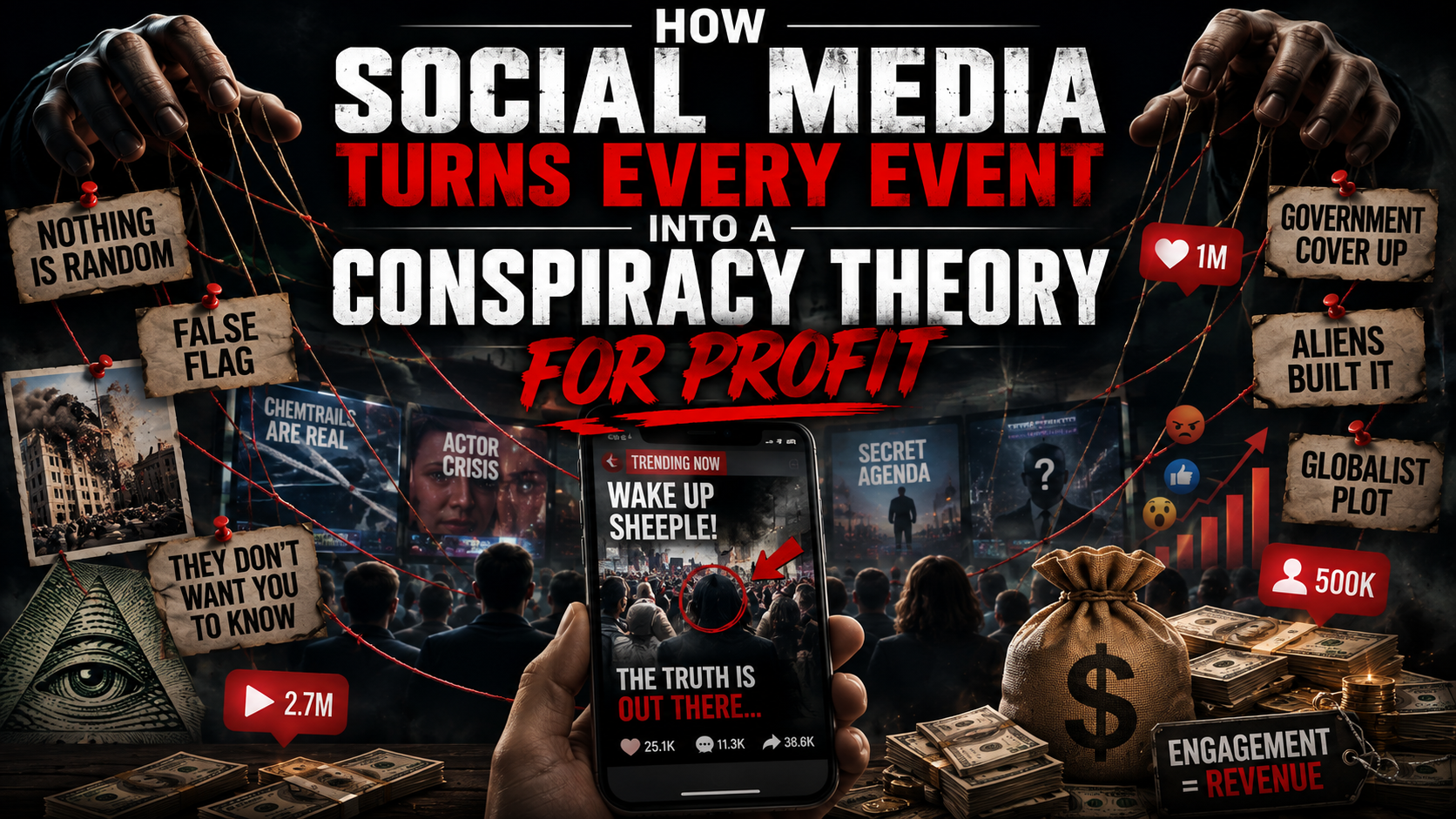
On platforms like TikTok the ordinary events of daily life transform into elaborate conspiracy theories almost overnight. A celebrity cancels a show and suddenly videos claim secret health crises or government silencing. A weather anomaly appears and creators insist it proves weather control experiments. A product recall surfaces and the narrative shifts to corporate cover ups involving shadowy elites.
This pattern repeats constantly because the system rewards it with attention and income. TikTok algorithms prioritize content that holds viewers longer and sparks reactions. Outrage and mystery achieve both far better than calm reporting. A straightforward news update might earn a few thousand views.
The same update reframed as evidence of a hidden plot can rack up millions. Creators learn this quickly. They study what performs and adjust their output accordingly. The platform surfaces videos that keep people scrolling so the most extreme interpretations rise to the top.
Monetization drives the cycle. TikTok pays creators through the Creativity Program when videos reach certain view thresholds. Brand deals and affiliate links add more revenue. Conspiracy content delivers those numbers reliably.
A single viral theory video can generate thousands of dollars in a day. Followers grow faster when the creator positions as a truth teller uncovering what mainstream sources hide. The incentive structure pushes more people to manufacture or amplify theories rather than stick to verified facts. The process starts with a real occurrence.
Someone notices an unusual detail in a public event. They film a short clip and add dramatic music and text overlays. The caption asks questions that imply deeper secrets. Viewers comment with their own expansions.
Others stitch the video and escalate the claims. Within hours a minor incident becomes a full narrative involving powerful groups coordinating in secret. No hard evidence appears yet the video spreads because doubt feels exciting and community forms around shared suspicion. Psychology plays a large role.
Humans seek patterns and explanations especially during uncertainty. Social media amplifies this tendency by connecting people who already lean toward distrust. Algorithms notice engagement on one theory video and recommend similar ones. The feed fills with confirming content creating an echo that makes the idea feel widespread and therefore more plausible.
Fear and curiosity keep users returning. Creators exploit this by releasing follow up videos that claim new revelations each time keeping the audience hooked for days or weeks. TikTok stands out because of its short form format and recommendation engine. A fifteen second clip can plant a seed that grows across the app.
Sound effects and filters make the presentation feel urgent and authentic. Duets and stitches allow rapid collaboration so theories evolve in public. Live streams let creators interact directly with viewers reinforcing the sense of exclusive insight. The low barrier to entry means almost anyone with a phone can join the trend and chase the same rewards.
Examples appear daily. During election seasons every debate moment or policy announcement gets reframed as proof of fraud or foreign interference. Public health announcements turn into claims of population control. Technology updates become evidence of surveillance grids.
Natural disasters prompt theories of deliberate engineering. Even celebrity relationships or fashion choices get pulled into larger plots about mind control or elite rituals. Each time the core event is real but the added layers of secrecy and intent are invented for effect. The money angle remains central.
Successful conspiracy creators build large followings that convert into merchandise sales live event tickets and paid communities. Some partner with supplement brands or alternative media outlets. Others simply cash out through platform funds and tips. The content itself costs little to produce yet the returns can exceed traditional jobs.
This economic reality attracts more participants. Aspiring influencers watch the metrics and conclude that ordinary commentary fails while sensational theories succeed. Critics point out the harm. False theories can damage reputations spread panic and distract from genuine problems.
Families argue over viral claims. Institutions face constant suspicion that makes public communication harder. Yet the platforms face little pressure to change because engagement numbers stay high. Advertisers still buy space next to the content.
The ecosystem sustains itself through the same forces that created it. Not every theory starts as pure invention. Some begin with legitimate questions about incomplete information. The problem arises when speculation hardens into certainty without proof and spreads for profit.
Creators rarely issue corrections when claims fall apart. The next trend already demands attention. Viewers move on leaving residual distrust behind. The pattern extends beyond TikTok to other networks but the short video style accelerates it.
Quick emotional hits outperform long form analysis. Algorithms across platforms favor the same metrics so the behavior migrates. Users who grow tired of one app find similar dynamics elsewhere. The incentive to turn events into conspiracies remains constant wherever attention equals income.
Solutions remain limited. Media literacy helps some people recognize the tactics. Platform adjustments to reduce amplification of unverified claims could slow the spread yet companies resist steps that lower engagement. Individual creators could choose restraint but the competitive environment penalizes those who do.
As long as the rewards favor drama over accuracy the conversion of every happening into a theory will continue. This dynamic reflects broader shifts in how information circulates. Traditional gatekeepers lost influence while anyone can broadcast. The upside includes more voices.
The downside includes industrial scale speculation packaged as revelation. Viewers hold power through their clicks and shares. Choosing slower more careful content over instant mystery reduces the fuel. Until that shift occurs the cycle persists generating both profit for a few and confusion for many.
The thorough reach of this phenomenon shows in its consistency. From politics to entertainment to science almost no domain escapes. A new scientific study gets twisted into proof of suppressed knowledge. A corporate merger becomes evidence of global cabals.
Even sports results inspire claims of fixed outcomes. The template stays the same: take the event, inject hidden motives, present with urgency, collect the views. TikTok perfected the delivery system through its design and the results speak through the endless stream of such videos. Creators refine techniques over time.
They use specific phrases that signal belonging to an in group. They reference other popular theories to build credibility by association. They time releases to coincide with real news cycles maximizing relevance. Analytics tools show exactly which angles perform so the next video incorporates those elements.
The process becomes professionalized even as the content claims outsider status. Audience demand completes the loop. Many users enjoy the entertainment value of a good mystery. Others find comfort in explanations that assign blame to distant forces rather than complex systems.
The emotional payoff of feeling informed against a deceptive world keeps them engaged. Monetization simply formalizes what the attention already provided. Looking ahead the trend shows no sign of fading. New tools like advanced editing software and AI assisted scripting will make production even easier.
Platforms will keep optimizing for retention. As long as the financial model rests on capturing and holding human focus the transformation of ordinary events into conspiracy narratives will remain a reliable path to visibility and earnings.