A single missing character in a police subpoena sent an innocent Canadian man to prison for eighteen months. Brandon Klayme of Halifax Nova Scotia became the victim of a wrongful conviction that started with an investigation far from his home. In 2018 authorities in Wisconsin began looking into reports that a twelve year old girl had exchanged messages photos and videos with an adult male on the Kik messaging service.
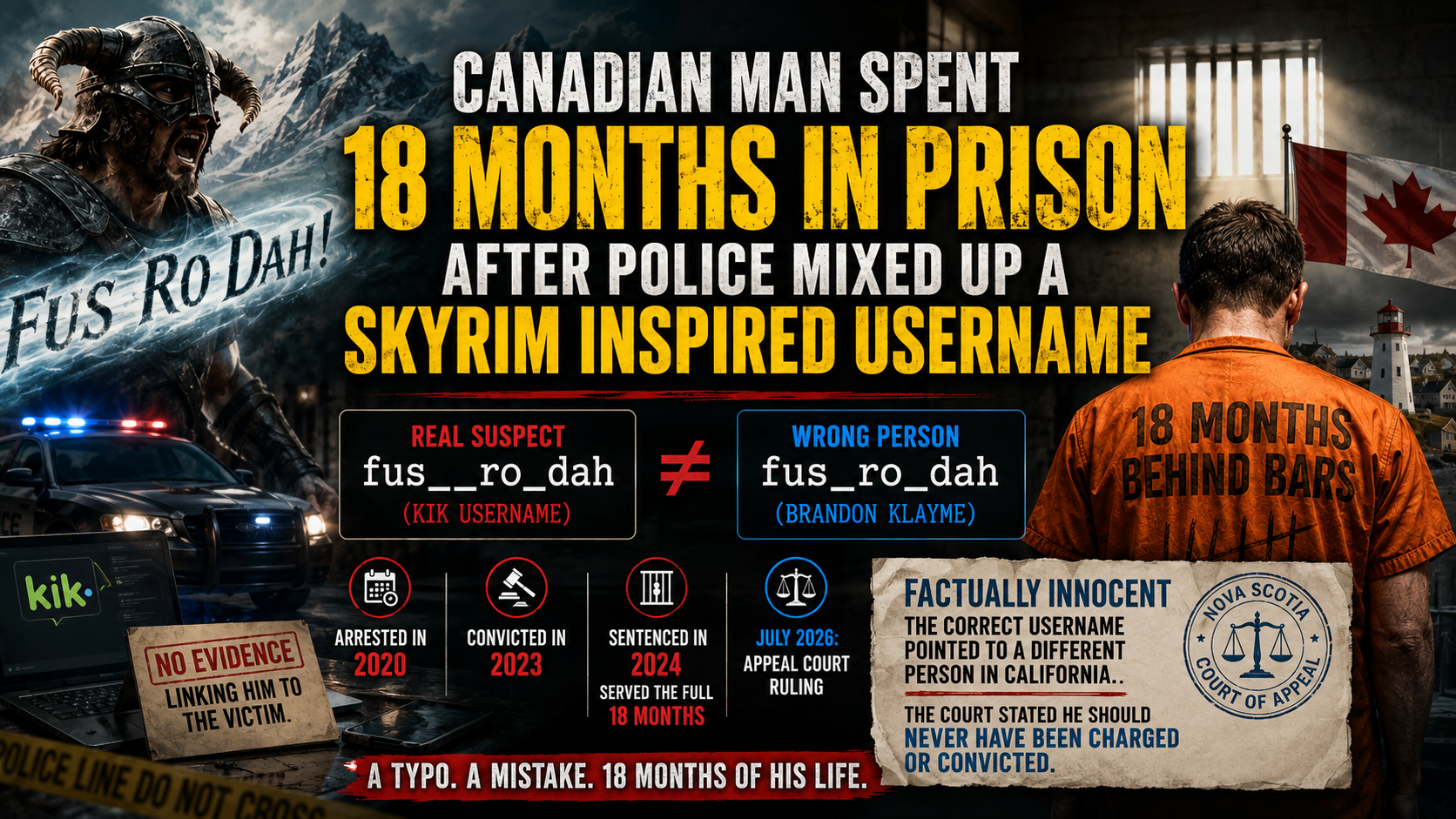
The suspect operated under the username fus__ro_dah a direct reference to the famous Unrelenting Force dragon shout from the video game The Elder Scrolls V Skyrim. When officers prepared the formal request for account records from Kik they typed the username as fus_ro_dah with only one underscore after the first syllable. That small typing error changed everything. Kik returned information linked to the nearly identical handle belonging to Klayme.
Investigators in Wisconsin shared the details with Canadian police. In February 2020 officers searched Klayme’s residence in Nova Scotia and seized his phones and computers. Detailed forensic review of the devices turned up no messages with the victim no prohibited images and no record that he had used Kik at all during the months in question. Even so Klayme faced charges of child luring making sexually explicit material available to a minor and possession of child pornography.
He insisted from the beginning that he was not involved. After a trial held in 2023 a court found him guilty. In 2024 he received a sentence of eighteen months in prison plus a period of probation. He completed the full prison term while continuing to protest his innocence.
The decisive breakthrough arrived only when his legal team prepared the appeal. Lawyer Zeb Brown examined the original Wisconsin subpoena and spotted the missing underscore. Further checks confirmed that the true username with two underscores belonged to a different person living in California. Once this fresh evidence was presented prosecutors withdrew their opposition.
On July 23 2026 the Nova Scotia Court of Appeal set aside every conviction and entered a complete acquittal. The judges stated clearly that Klayme was factually innocent of the offences and that he should never have been charged or convicted. The entire case had rested on the incorrect username attribution that began with one overlooked keystroke. The outcome restores Klayme’s formal legal status yet it cannot restore the eighteen months he spent behind bars or erase the personal hardship that followed the false accusations.
The case stands as a stark reminder that even the smallest clerical mistake in digital investigations can produce lasting harm when basic verification steps are overlooked.