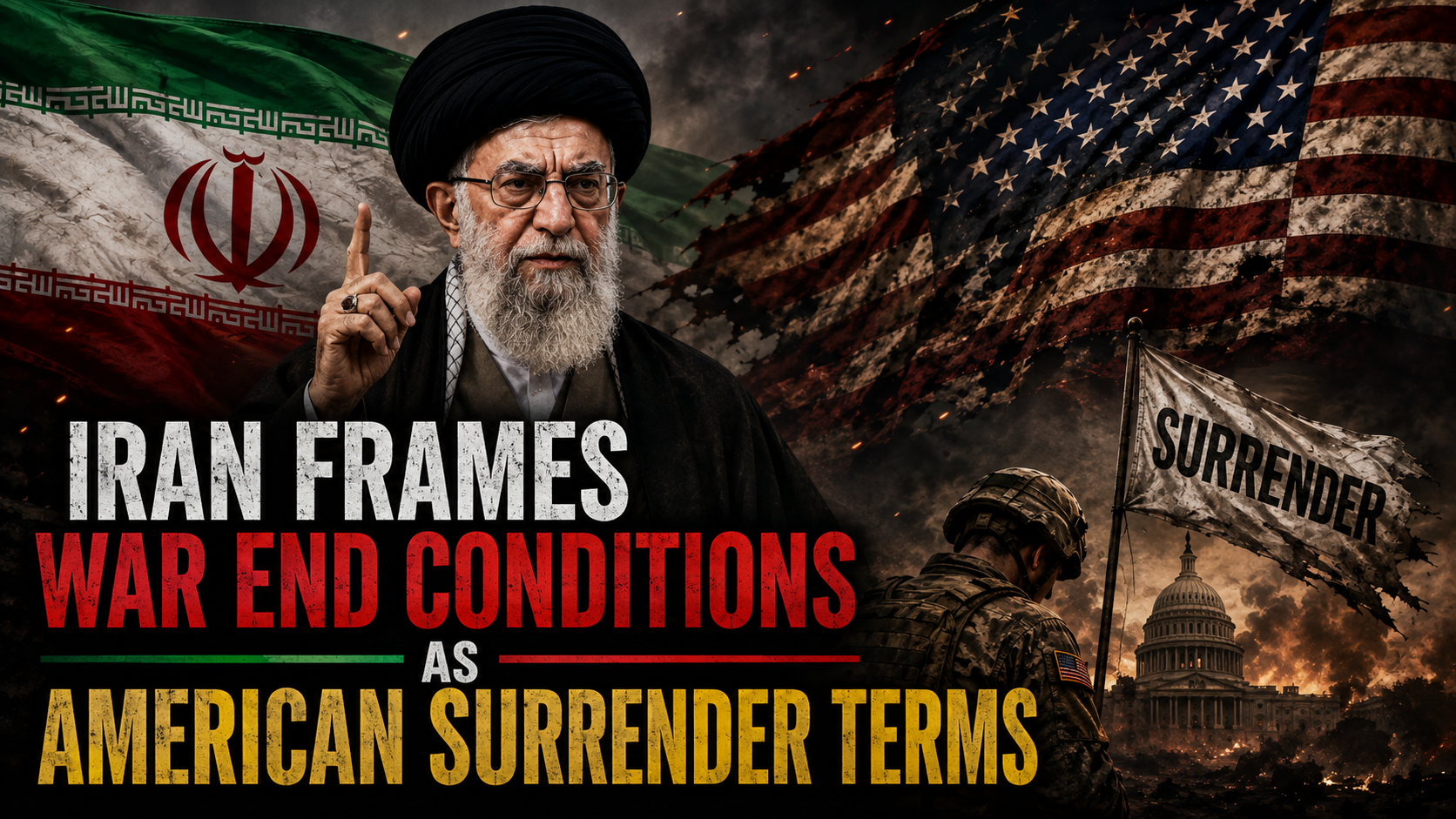
Iran has framed its conditions for ending the conflict with the United States as terms that amount to American surrender. In recent statements and media reports tied to the regime, Tehran outlined a series of demands it presents as necessary before any resolution, including the reopening of the Strait of Hormuz. An Iranian newspaper closely linked to the leadership listed requirements such as a full withdrawal of United States forces from the region and the dismantling of American bases in West Asia.
Other points called for an end to strikes against Iran and its allies, the lifting of all United Nations and United States sanctions, the release of frozen Iranian assets, and formal recognition of the United States and Israel as aggressors along with payment of compensation. Control over maritime transit through the Strait of Hormuz also featured prominently, along with an official declaration ending the war on terms favorable to Tehran.
More recently, Iranian sources described a set of nine conditions for restoring traffic through the vital waterway. These included hundreds of billions of dollars in compensation for war damage, removal of the naval blockade, a ban on American and Israeli vessels, and the right for Iran to impose fees or tolls on cargo. Regime-aligned voices labeled the emerging arrangements an American surrender document, arguing that the proposals demonstrated Iran’s resilience and bargaining strength rather than any concession by Tehran.
Iranian officials have repeatedly rejected calls from Washington for their own unconditional surrender. President Masoud Pezeshkian stated that enemies should take the wish for Iranian capitulation to their graves. Military spokesmen insisted the country would never submit and claimed United States leaders had effectively yielded by seeking mediation through regional partners. The Islamic Revolutionary Guard Corps echoed this view, asserting that neither the United States nor Israel had forced Iran to its knees and that any agreements reflected Tehran’s negotiating power.
These positions form part of a consistent narrative in which Iran portrays itself as dictating the terms. Demands for American troop withdrawals, massive financial reparations, unrestricted asset access, and sovereign control over key shipping lanes are presented not as ordinary bargaining points but as the price of United States acceptance of defeat. Iranian commentary treats compliance with such terms as proof that pressure failed and that Washington has been compelled to adjust. The language of surrender remains one-sided in Iranian statements.
While Tehran refuses any formal submission of its own, it uses the same terminology to describe the outcome it seeks from the other side. The list of conditions continues to emphasize complete regional military disengagement by the United States, economic restoration for Iran, and recognition of Iranian authority over strategic waterways. This approach keeps the public messaging focused on strength and refusal to yield while shifting the burden of concession onto American policy.