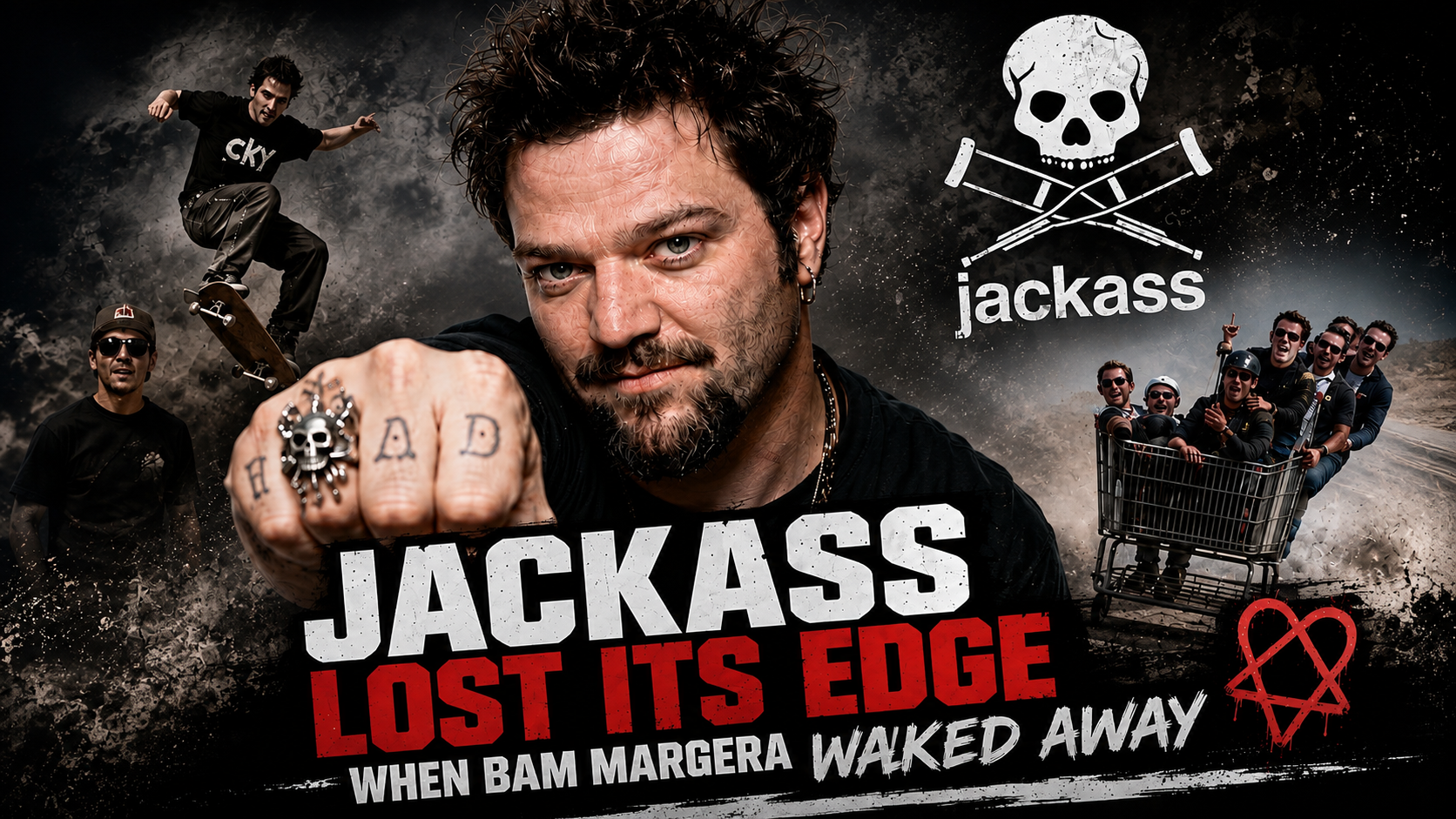
The Jackass movies without Bam Margera have lacked a vital chaotic spark that defined the franchise’s best eras, even as later entries earned critical praise. Jackass Forever (2022) and the 2026 final installment Jackass: Best and Last delivered stunts, camaraderie, and laughs, but they feel incomplete without Margera’s distinctive energy, Philly accent, heartagram ethos, and willingness to turn personal relationships into sustained mayhem.
Bam Margera’s Role in Building Jackass Brandon Cole Bam Margera (born September 28, 1979, in West Chester, Pennsylvania) was never just another cast member. As a teenager he and his friends filmed raw skateboarding, pranks, and destruction that became the CKY (Camp Kill Yourself) video series. Those homemade tapes caught the eye of Jeff Tremaine and helped shape the MTV Jackass show that premiered in 2000.
Margera and close friend Ryan Dunn brought a specific suburban Pennsylvania anarchic flavor that blended with Johnny Knoxville’s gonzo instincts and the rest of the crew. Margera appeared prominently in the original series and the first three theatrical films Jackass: The Movie (2002), Jackass Number Two (2006), and Jackass 3D (2010) plus the accompanying .5 home video releases.
He was often the one testing family patience (especially with parents Phil and April), escalating pranks into multi episode sagas, or injecting a slightly darker, more personal edge. His own spin off Viva La Bam (2003 to 2005/2006) expanded the formula by turning his house, town, and relationships into a continuous playground of missions, construction, travel chaos, and destruction. That show cemented him as more than a sidekick. He was a creator and ringleader in his own right.
He also directed features like Haggard and pursued music, radio, and skateboarding sponsorships (including early Nike involvement). Margera’s on screen persona mixed cocky showmanship, vulnerability, and genuine recklessness. He made the absurd feel lived in. When the crew later aged into middle aged men still willing to take hits, the absence of that particular flavor became noticeable.
Personal Struggles and Departure Ryan Dunn’s death in a 2011 car accident hit Margera especially hard. The two had been best friends and frequent collaborators. Grief, substance issues, legal troubles, family conflicts, and public meltdowns followed over the subsequent years. He entered rehab multiple times, appeared on Family Therapy with Dr.
Jenn, and dealt with custody matters involving his son. For Jackass Forever, production required a wellness agreement involving sobriety monitoring, testing, and related conditions. Margera filmed at least one sequence (the marching band treadmill bit that appears briefly in the finished film) before being terminated in 2020 after a positive test involving Adderall, which he has said he used for ADHD. He later sued Paramount, Knoxville, Tremaine, and others, alleging coercion into the agreement while in rehab and wrongful termination.
The suit and public fallout created lasting distance. Steve O and others framed the decision as an intervention style attempt to force accountability after prior efforts failed. Margera has described it as damaging and has said the rift is permanent enough that money alone would not bring him back for new material. In Jackass: Best and Last he appears only via archival footage after declining new participation.
He has spoken in recent years about achieving sobriety, returning to skating, and focusing on personal life, including a new marriage. Why the Later Films Feel Diminished Without Him Jackass Forever received strong reviews (around 86 percent on Rotten Tomatoes) and was widely called a successful, even poignant, reunion that introduced newer cast members while the original group pushed physical limits as older men. Critics noted the chemistry that remained and the bittersweet awareness of time and loss (especially Dunn).
Jackass: Best and Last (2026), positioned as a final mix of new and archival material, also earned solid critic scores but drew some descriptions as underwhelming, more clip reel than pure escalation, and reliant on nostalgia. From a fan perspective that values the original chemistry, the absence matters. Margera supplied a specific brand of sustained, personal chaos and a visual identity signature (the heartagram, the attitude) that the newer performers and remaining core group do not fully replicate.
The films still deliver pain, creativity, and friendship, yet they lack the particular West Chester wild card energy that made earlier installments feel like an unfiltered friend group document rather than a polished franchise product with replacements. Reviews and fan commentary have repeatedly noted the hole left by both Dunn and Margera. The franchise has always been about a specific group of people willing to hurt themselves for each other’s amusement and the camera.
Removing one of the central architects changes the texture even when the stunts remain inventive and the surviving chemistry holds. Later entries prove the formula can still work and even win critical respect it once lacked, but they do not fully recapture the anarchic, half homemade spirit that Bam Margera helped invent and embody. For many longtime viewers, that missing piece is why the post Margera (and post Dunn) era, whatever its merits, has not felt as essential.