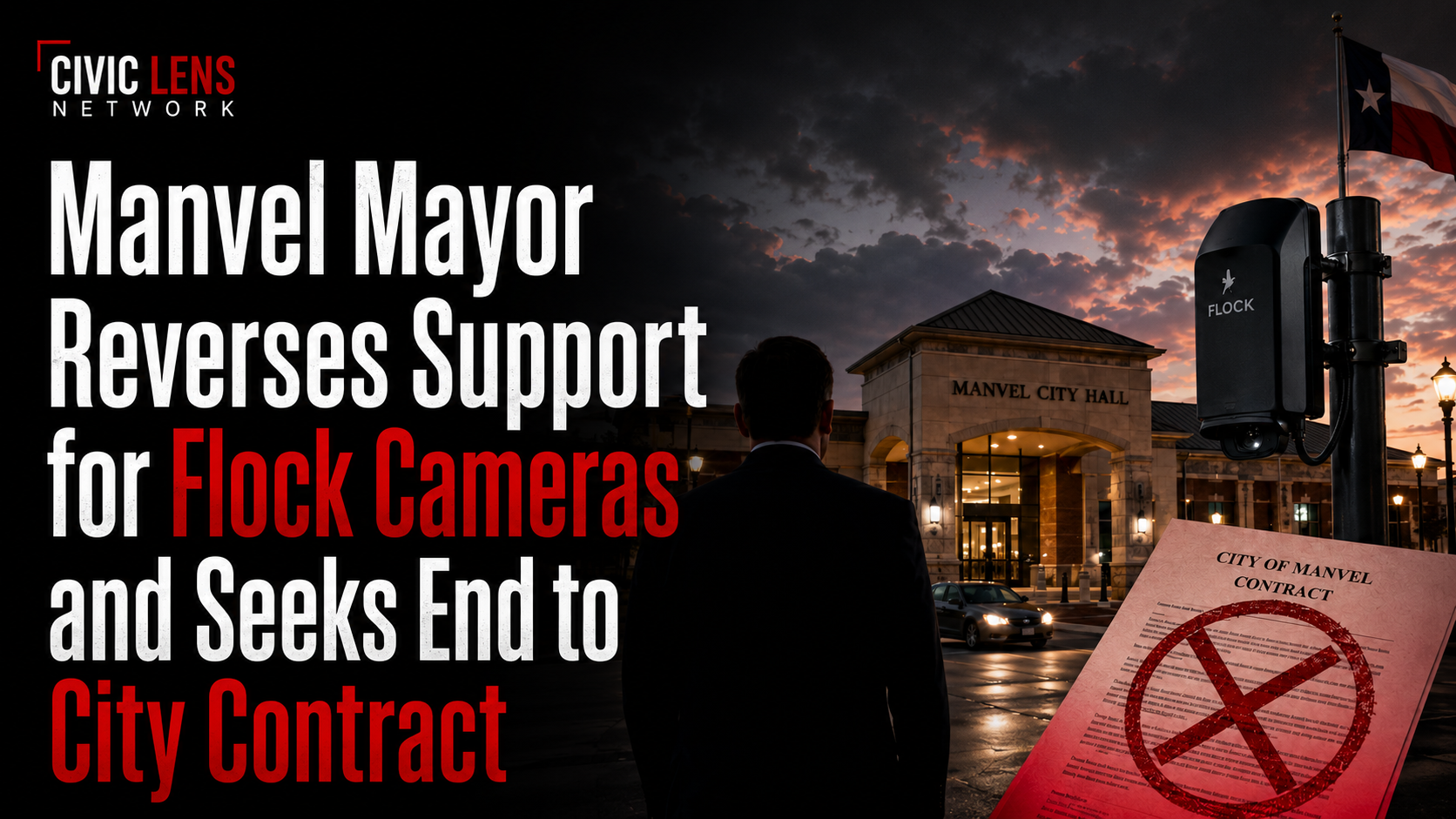
Manvel Mayor Dan Davis has reversed his earlier support for Flock Safety cameras and is now asking the city to end its contract with the company. Davis voted for the agreement in 2024 because he wanted officers to have tools that could help identify stolen vehicles and missing persons. He says new information about how the system works changed his mind. The city signed a four year contract worth $137,000 for 21 cameras that photograph passing vehicles and record license plates and other vehicle details.
Davis now says the contract language is too vague on how data can be used and shared. He also points to Flock’s wider data system, including an artificial intelligence platform called Nova. Even if Manvel does not use Nova, he warned that other agencies could still draw on information collected in the city. Davis has also raised cybersecurity concerns and said he did not get satisfactory answers when he questioned a Flock representative about known hardware vulnerabilities.
The representative said he would have to get back to him. Davis called that response concerning. He has been careful to draw a line. He supports the Manvel Police Department and does not oppose license plate readers as a category.
His objection is to Flock as a vendor, the way it aggregates information, and the network those cameras feed. “Public safety is essential, but so are privacy, local control and public trust,” he said. “Knowing what I know today, I would not cast the same vote.” Resident reaction appears to lean the same way.
Davis asked the public for input and later said more than 60 percent of the feedback he received favored ending the contract. A Facebook poll he posted showed 66 percent choosing to stop the cameras and 21 percent choosing to keep them. Cost is part of the argument as well. Davis said the city is already working with a tight budget and that the money now going to Flock could be spent on other public safety and infrastructure needs.
Council member Garrett Knox, who was not on the council when the cameras were approved, has said he would support removal if that is what residents want. The issue is scheduled for public discussion at the September 8 city council meeting. Davis cannot cancel the contract on his own. A council vote would be required to terminate the agreement and take the cameras down.
The debate in Manvel fits a wider pattern across Texas and other states. Cities have been reviewing automated license plate reader programs after questions about outside agencies searching local data, uneven contract terms, and how long images and plate records are stored. Governor Greg Abbott recently directed state agencies to pause funding for Flock cameras while those questions are examined. Davis has framed his shift as a matter of leadership rather than a rejection of policing technology.
He said good leadership means reconsidering a decision when new facts appear. In 2024 the pitch was a local tool for local cases. In 2026 he sees a larger data ecosystem that Manvel cannot fully control once the cameras are live. Supporters of the cameras argue they help recover stolen cars and locate suspects quickly.
Davis has not disputed that license plate readers can be useful. He argues the city should not lock itself into a vendor whose platform, sharing practices, and security answers leave too many open questions. Whether the rest of the council agrees will be decided in public next month. Until then, the cameras remain in place and the $137,000 contract remains active.
Davis has made his position clear. He wants Manvel out.