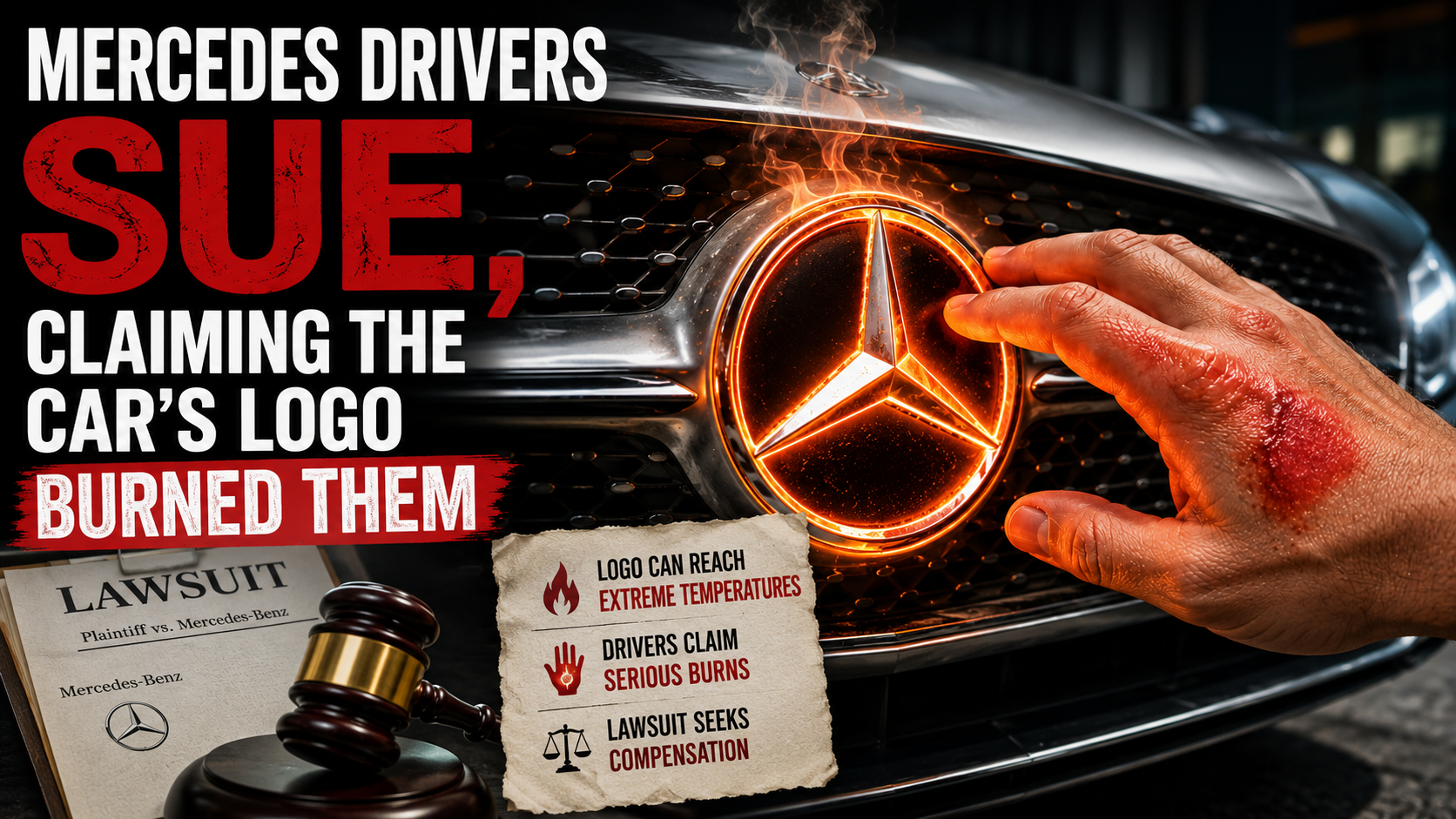
Two California drivers have filed a class action lawsuit against Mercedes Benz USA alleging that the raised metallic AMG logo on the front seats of certain vehicles becomes dangerously hot in the sun and causes burns that leave the brand mark etched into their skin. The suit was filed on August 5 2026 in the United States District Court for the Central District of California.
Plaintiffs Gabriel Lahijani of Los Angeles and Karendeep Karina Bath of Chatsworth claim the design places the emblem in a position reasonably expected to contact an occupant’s upper back neck or shoulder during normal entry into the car. According to the complaint the problem arises under ordinary California conditions. When an affected vehicle sits parked in direct sunlight the metal badge absorbs and retains heat. Brief contact with bare skin can then produce a thermal burn.
The filing describes this as a dangerous and undisclosed design defect. No adequate warning of the hazard appears on the badge or elsewhere in the vehicle according to the plaintiffs. Lahijani leased a new 2026 Mercedes AMG E Class from an authorized dealership in Los Angeles. On May 31 2026 after the car had been parked in the sun he entered the vehicle wearing a tank top on his way to the gym.
His left upper back briefly touched the raised AMG logo on the driver’s seat. He experienced immediate severe pain and sustained a burn that visibly carried the distinctive AMG design. He sought urgent care treatment and received a diagnosis of a second degree burn. A board certified dermatologist later documented first and second degree burns with crusting and deflated bullae.
The physician described the injury as AMG inscribed attributed it to the interior car logo plaque photographed it and advised Lahijani about wound care likely discoloration and possible scarring. Approximately six weeks later Bath experienced a similar injury. After parking her Mercedes AMG vehicle on Ventura Boulevard in Los Angeles she returned while wearing a sleeveless top and entered the driver’s seat. Her shoulder immediately contacted the logo producing a burning sensation.
In the following days a mark in the shape of the AMG logo darkened and became visible on her skin consistent with a thermal contact burn the lawsuit states. Bath has also shared videos online showing the mark and warning other AMG owners about the potential hazard. The complaint asserts four primary claims design defect failure to warn negligence and breach of implied warranty under California’s Song Beverly Consumer Warranty Act.
Plaintiffs argue Mercedes Benz knew or should have known of the thermal burn risk yet placed the vehicles into commerce without adequate disclosure. They seek compensation for medical expenses pain suffering and emotional distress. In addition they request an order requiring Mercedes to pay for removal or modification of the metallic logos from all affected vehicles so other owners do not face the same risk.
The exact range of models equipped with the raised metallic AMG seat badge remains unclear from public reports though the suit focuses on certain Mercedes AMG vehicles with sport seats featuring the emblem in the upper portion of the seatback. The 2026 E Class is specifically mentioned in connection with Lahijani’s experience. Luxury performance branding often includes metal accents intended to convey premium quality yet metal conducts heat far more readily than fabric or plastic alternatives.
In hot climates such as Southern California interior surfaces routinely reach high temperatures when vehicles sit outdoors. The lawsuit highlights that no federal safety standard currently limits how hot interior trim components may become under sun exposure leaving design choices largely to manufacturers. Mercedes Benz has not issued a detailed public response to the allegations in available reports as of early August 2026.
The company faces the prospect of defending the design choice in court while the case proceeds as a proposed class action that could encompass other owners who experienced similar contact burns. Class certification will depend on whether the court finds common questions of law and fact predominate and whether the named plaintiffs adequately represent a broader group. Beyond the individual injuries the case raises broader questions about interior design priorities in high end vehicles.
Performance brands emphasize distinctive visual cues including embossed or metal logos on seats steering wheels and other surfaces. When those elements sit in locations of potential skin contact and consist of heat conducting materials the risk of thermal injury increases especially for drivers who wear lighter clothing in warm weather. The plaintiffs maintain that safer alternative materials or repositioning of the badge would eliminate the hazard without sacrificing brand identity. Medical documentation in the suit provides concrete support for the claims.
Second degree burns involve damage to both the epidermis and part of the dermis often resulting in blistering pain and potential scarring. The dermatologist’s description of the injury as AMG inscribed underscores the distinctive pattern left by the emblem. Such patterned burns leave little ambiguity about the source of the heat source according to the filing. As the litigation advances discovery may reveal internal testing data design records and any prior complaints received by the manufacturer.
Plaintiffs will likely seek evidence that Mercedes anticipated or should have anticipated the heating behavior of the metal badge under foreseeable sun exposure. Defendants typically argue that product use instructions assume reasonable care by owners and that extreme heat conditions fall outside normal expectations. California consumer protection laws however impose strict standards on manufacturers regarding defects that render products unsafe for ordinary use. The lawsuit arrives at a moment when luxury automakers continue refining cabin experiences with premium materials and distinctive branding.
Owners of high performance vehicles often accept certain tradeoffs associated with sport oriented design yet unexpected physical injury from a logo crosses into different territory. Whether the court ultimately finds the design defective or orders corrective measures will depend on evidence presented in the months ahead. For now the two California drivers have placed the issue firmly in the public and judicial record seeking both personal recovery and broader relief for others who may encounter the same heated emblem.
The case illustrates how a small design detail can generate significant legal consequences when it intersects with real world conditions of use. Metal logos that look striking under showroom lighting can behave differently after hours under a summer sun. Plaintiffs contend that manufacturers bear responsibility for anticipating those conditions and designing accordingly. The outcome may influence how other brands approach similar decorative elements on seats and interior surfaces going forward.