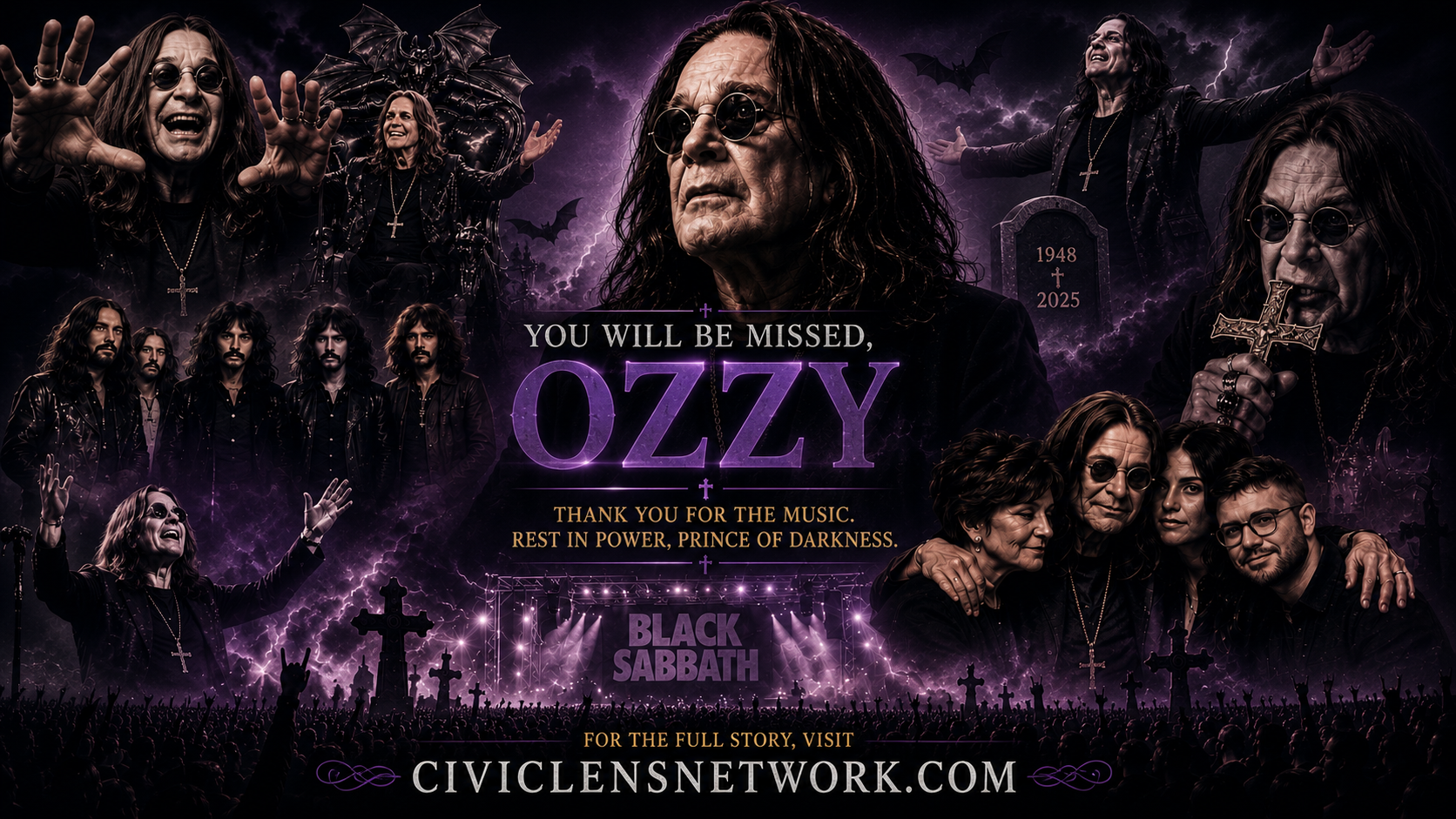
One year has passed since Ozzy Osbourne left us on the morning of July 22, 2025. The man known as the Prince of Darkness was 76 when his heart finally gave out at home in Buckinghamshire, England. He had spent a lifetime testing the limits of body and spirit, and in the end the toll of Parkinson’s, old injuries, and decades of hard living caught up with him. Yet the music he left behind still feels loud and alive.
John Michael Osbourne was born on December 3, 1948, in the working-class Aston district of Birmingham. He was one of six children in a household where money was tight and opportunities scarce. School never suited him. Dyslexia made reading a struggle, and he left early to take whatever jobs he could find, including time in a slaughterhouse.
A short stretch in prison for burglary might have pointed him toward a harder path, but music pulled him in another direction. In 1968 he joined forces with guitarist Tony Iommi, bassist Geezer Butler, and drummer Bill Ward. They called themselves Earth at first, then settled on Black Sabbath after spotting a Boris Karloff film poster. The name stuck, and so did the sound.
Their self-titled debut album arrived in 1970 and startled listeners with its down-tuned riffs, occult imagery, and Ozzy’s raw, haunted voice. Paranoid followed the same year and delivered the anthems that still define heavy metal: War Pigs, Iron Man, and the title track itself. Master of Reality, Volume 4, and Sabbath Bloody Sabbath kept the momentum going through the decade. Critics often dismissed them, but fans understood.
Black Sabbath had invented a new language for rock, one that spoke of darkness, power, and working-class frustration. Ozzy stood at the center of it, equal parts showman and survivor. By the late 1970s the excesses that fueled the music began to tear the band apart. In 1979 the other members fired him.
Many thought that was the end. Instead it became the beginning of something even larger. With the help of Sharon Arden, who soon became both his manager and his wife, Ozzy launched a solo career. Blizzard of Ozz, released in 1980 with the brilliant young guitarist Randy Rhoads, produced Crazy Train and Mr.
Crowley. Diary of a Madman followed a year later. Those two records alone sold millions and established Ozzy as a solo force who could fill arenas on his own terms. The years that followed were filled with triumphs and chaos in equal measure.
There were more multi-platinum albums, the infamous bat-biting incident that became rock folklore, and a long partnership with guitarist Zakk Wylde. In 1982 Ozzy and Sharon married on July 4. They raised three children together, Aimee, Kelly, and Jack, while Ozzy also stayed connected to the children from his first marriage.
The family later invited cameras into their home for The Osbournes, the MTV reality series that turned the Prince of Darkness into an unlikely household name and showed a softer, funnier side of the man behind the myth. Ozzfest, the touring festival Sharon created, became a defining stage for metal across the 1990s and 2000s. Recognition came late but steadily. Black Sabbath entered the Rock and Roll Hall of Fame in 2006.
Ozzy received a solo induction in 2024, with Jack Black calling him the greatest frontman in rock history. He collected five Grammy Awards over the years, including Best Metal Performance honors and a Best Rock Album win for Patient Number 9 in 2023. He earned a star on the Hollywood Walk of Fame and sold more than 100 million albums worldwide between his work with Sabbath and his solo catalog. Even as health problems mounted, Parkinson’s among them, Ozzy kept creating.
He reunited with the original Sabbath lineup more than once and always seemed determined to deliver one more show. That final performance arrived on July 5, 2025, at Villa Park in Birmingham. Surrounded by the musicians he had inspired, he closed the circle in the city where it all began. One year later the riffs still echo.
The stories still circulate. And the voice that once howled about iron men and crazy trains continues to find new listeners. Ozzy Osbourne did not simply sing the soundtrack of heavy metal. He lived it, survived it, and somehow made it human.
The darkness feels a little quieter without him, but the music he left behind refuses to fade.