Perez Hilton has long occupied a unique and often polarizing place in American pop culture. Born Mario Armando Lavandeira Jr. on March 23, 1978, in Miami, Florida, to Cuban immigrant parents, he grew up in neighborhoods including Little Havana and Westchester. He attended the all boys Catholic Belen Jesuit Preparatory School and later studied drama at New York University, graduating in 2000.
After early jobs in media relations for organizations supporting gay rights and freelance writing for various publications, he moved to Los Angeles with acting ambitions that did not fully materialize. In September 2004, while working from a coffee shop, he launched a blog originally called PageSixSixSix.com.
Legal pressure from the New York Post over the name led to a rebranding as PerezHilton.com, a playful twist on the then ubiquitous socialite Paris Hilton, with Perez representing his outsider Latino and gay identity and Hilton nodding to mainstream Hollywood glamour. The site quickly exploded in popularity during the mid 2000s, a period when traditional celebrity magazines had not yet fully embraced the internet for real time news.
Hilton specialized in rapid fire gossip, often pairing paparazzi photos with crude handwritten doodles, sarcastic nicknames, and pointed commentary. At its peak the blog drew millions of daily page views and became known as one of Hollywood’s most hated websites, a label Hilton himself leaned into for branding. He covered the ups and downs of stars with relentless focus, updating multiple times a day during high profile incidents involving figures such as Lindsay Lohan, Britney Spears, and others.
The style mixed entertainment with what many viewed as cruelty. He posted upskirt images, mocked physical appearances and personal struggles, and at times outed individuals he believed were closeted. Legal challenges followed, including copyright lawsuits from photo agencies and actions related to leaked material. Celebrities and observers criticized the approach as mean spirited and invasive.
Actress Mila Kunis later described it as creating ugly news that spread filth and encouraged meanness in others. Over time Hilton’s public persona evolved. He appeared on television in various capacities, including hosting and competing on shows, wrote books, launched YouTube channels, and maintained a presence across social media. In his 2020 memoir he reflected on regrets, acknowledging that he had been super petty and cruel at times and that he never needed to operate that way.
He issued public apologies for past behavior, including specific instances involving stars, and spoke about changing his approach after realizing the impact of his words. The rise of broader social media platforms diluted the singular power of early blogs like his, and traffic patterns shifted, yet he continued producing content as a media personality. On the personal side, Hilton became a single father through gestational surrogacy.
His son Mario Armando Lavandeira III was born in 2013, followed by daughters Mia Alma in 2015 and Mayte Amor in 2017. All three share the same egg donor and are genetically related to him. He has spoken about parenthood transforming his life, describing it as both exhausting and deeply fulfilling, and has shared family moments through videos and posts. His mother has been part of the household at various points.
Hilton lived for years in Los Angeles before relocating to Las Vegas. In 2026 he announced a permanent move back to Miami, citing spiritual guidance, the desire to raise his children near extended family and old friends, and the need for a fresh start after health challenges. Those health challenges marked a difficult stretch earlier in 2026. Hilton was hospitalized for three weeks after developing complications from the flu, including a perforated stomach ulcer that led to sepsis.
He later required emergency surgery for a massive blood clot in his leg. During and after these episodes he spoke openly about near death experiences, expressing gratitude and describing a spiritual awakening. He said God presented himself during the hospital stay, leading him to greater faith, Bible reading, church attendance, and a focus on family, peace, and positive manifestation.
He apologized again for past selfishness driven by views, attention, and money, stating that he carried shame and regret and had reached out to make amends with many people. He emphasized doing things differently and filling his heart with gratitude, love, and repentance. Around the time of the Miami move he admitted to feeling overwhelmed and falling into a bit of a spiral, stopping some of the routines that supported his wellbeing before recommitting to the gym, church, and spiritual practices.
In June 2026 the family settled in Miami. Hilton posted about returning to familiar spots such as Versailles restaurant in Little Havana and expressed excitement about the change feeling right for him, his children, and his mother. He listed his Las Vegas home and framed the relocation as heaven sent. For a period he appeared focused on rebuilding and sharing more reflective, family oriented content.
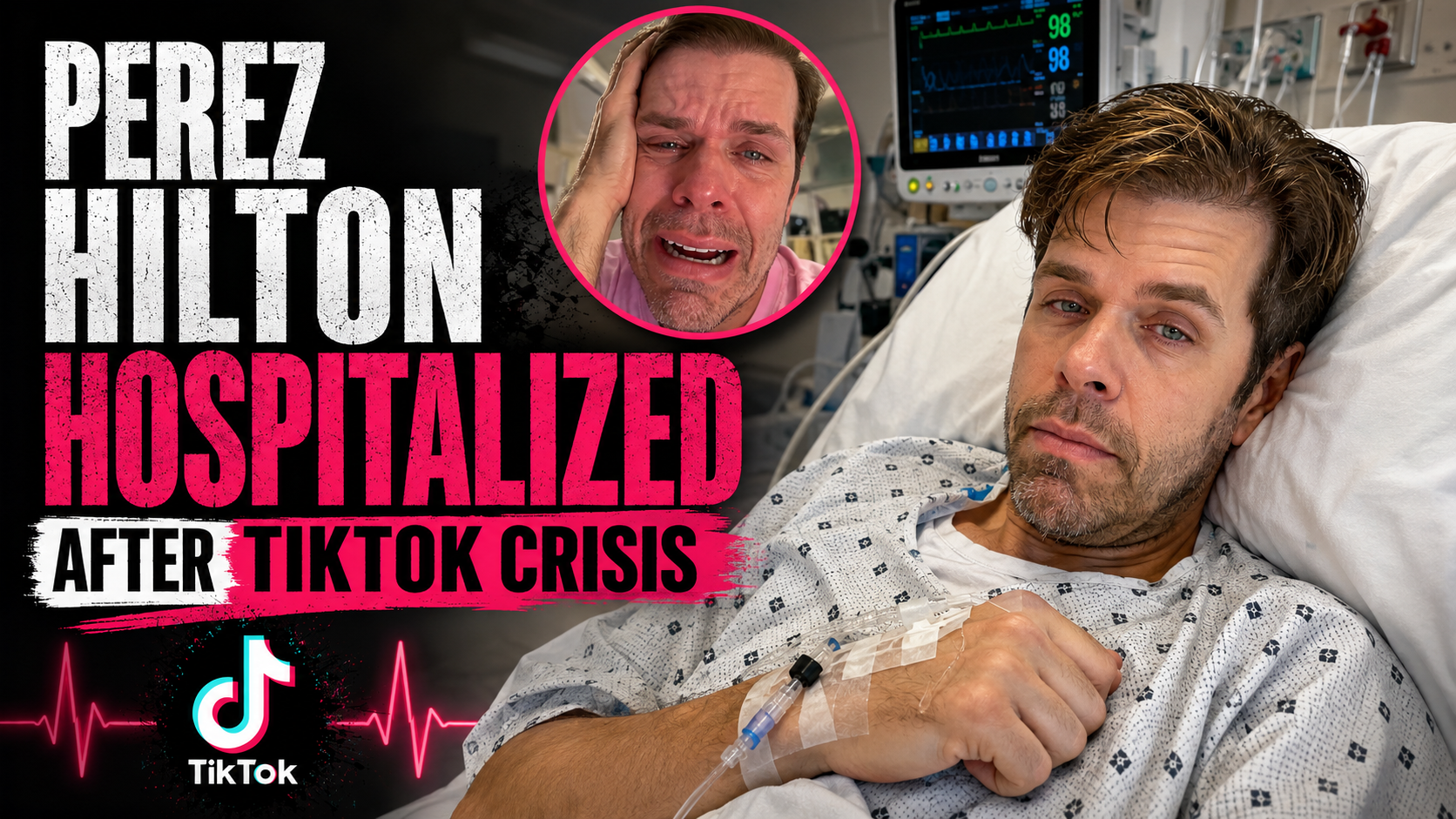
That relative calm was interrupted in early August 2026. On the night of August 4, viewers of a TikTok livestream from Hilton’s Miami home became alarmed by what they saw. Multiple people contacted authorities to report concerns about an individual livestreaming acts of self harm. The Miami Dade County Sheriff’s Office dispatched deputies.
Officers spoke with family members at the scene and confirmed that Hilton was alone inside the residence. Following protocols that prioritize de escalation, time, distance, and communication in mental health crisis situations, deputies monitored the situation. Hilton was safely recovered and transported by Miami Dade Fire Rescue to a local hospital for medical attention. The Crisis Response Unit and licensed mental health professionals provided support and resources to the family.
His representatives stated they were aware of the concerning content circulating online, had been unable to make direct contact despite efforts, and that their primary concern remained his health and wellbeing along with that of his family. They declined further speculation until more information was confirmed. The livestream was removed and his TikTok account was suspended. As of the latest reports, Hilton is receiving medical care.
Details on his precise condition have not been extensively shared by authorities or his team. The incident has drawn widespread attention, coming after his public discussions of health struggles, spiritual shifts, and the stresses of relocating with young children. Family members including his mother and the three children were not inside the home during the livestream and are safe. Friends and observers have noted the contrast with his earlier years of aggressive celebrity coverage and the more introspective tone he had adopted more recently.
Hilton’s story reflects broader changes in media and celebrity culture. He emerged at a moment when the internet democratized gossip and accelerated the cycle of fame and scrutiny. His early success demonstrated both the hunger for unfiltered celebrity content and the potential costs of delivering it without restraint. Later chapters show a person grappling with the consequences of that approach while navigating fatherhood, serious illness, relocation, and personal faith.
The events of August 2026 place him once again at the center of public attention, this time as the subject of concern rather than the commentator. Authorities and his representatives have stressed support for him and his family during this period. Public figures who once faced intense coverage from his platform have in some cases moved on or offered their own perspectives over the years, while others continue to view the early blog era as a low point in how celebrities were treated online.
Throughout his career Hilton has remained a visible presence, adapting from pure blogging to multiplatform content creation, television appearances, and personal storytelling. His children appear frequently in positive family oriented material he has shared, and he has described the bond of parenthood as something that brings people together. The recent hospitalization follows a year already defined by medical emergencies and major life transitions. Supporters and critics alike have watched the trajectory from the height of mid 2000s notoriety through periods of apology and reinvention.
At 48 years old, with three young children and a return to his hometown, the focus now centers on his recovery and the support systems around him. The full picture of what led to the livestream remains incomplete in public reporting. What is clear is that emergency responders acted on multiple citizen reports, secured the scene with attention to mental health protocols, and ensured medical transport. Hilton’s management has prioritized privacy and wellbeing.
In the broader arc of his public life, the episode adds another complex layer to a narrative that has always mixed ambition, controversy, resilience, and reinvention. From the coffee shop origins of a hobby blog that helped shape digital celebrity coverage to the present moment of hospitalization and family support in Miami, Perez Hilton’s path continues to unfold under the same intense public gaze he once directed outward.