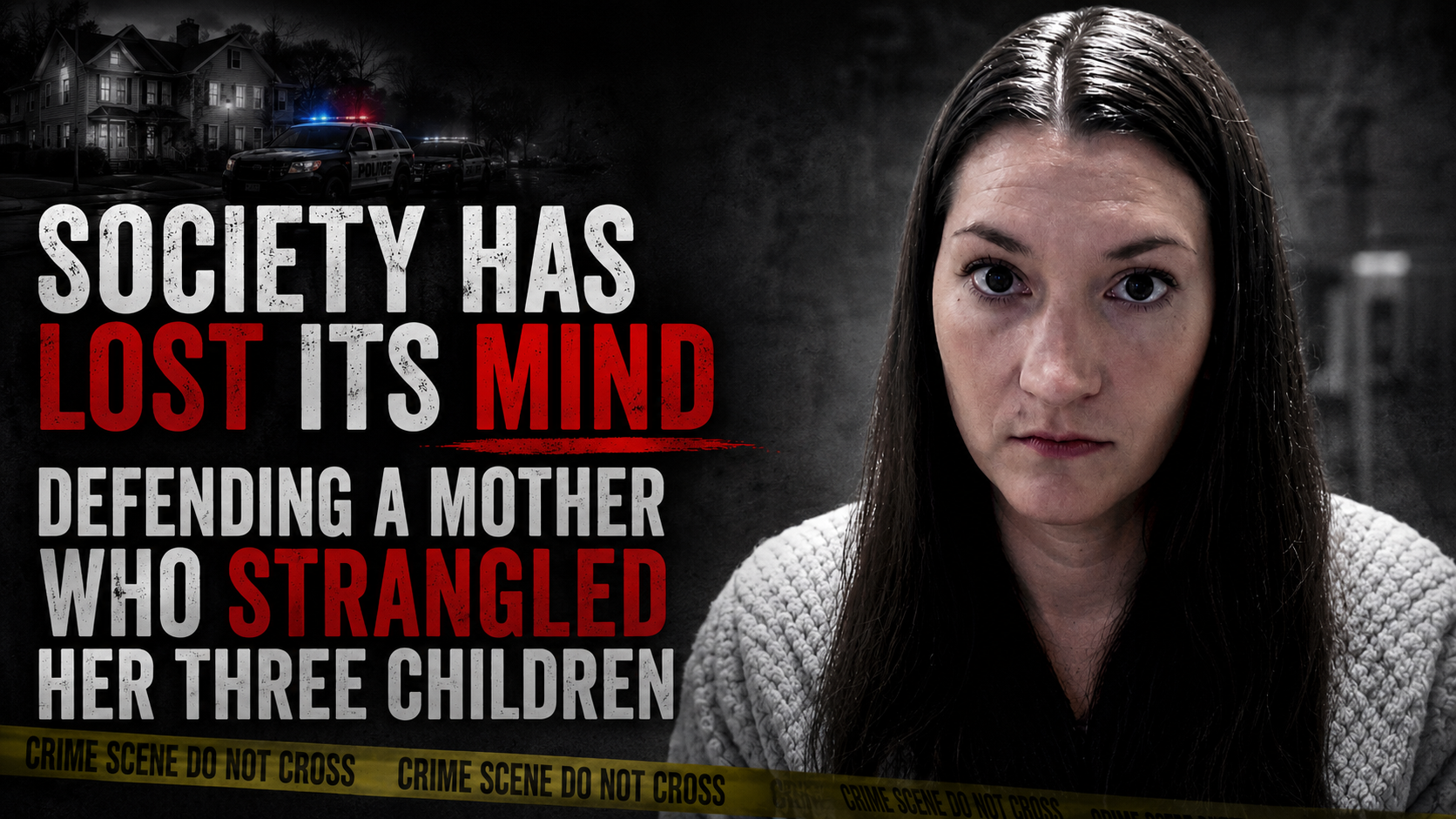
In January 2023, Lindsay Clancy sent her husband out for takeout and medicine. While he was gone, she took their three children down to the basement of their Duxbury, Massachusetts home. She wrapped exercise bands around the necks of five-year-old Cora, three-year-old Dawson, and eight-month-old Callan and strangled them to death. Then she cut her wrists and neck and jumped from a second-story window.
Two of the children were pronounced dead that night. The baby clung to life for a few more days before dying. Clancy survived, now paralyzed from the waist down. She admits she killed them.
Her defense does not deny the acts. Instead, they argue she was not criminally responsible because of postpartum psychosis and a long list of psychiatric medications. Prosecutors say the killings were deliberate. She planned the errands to clear the house.
She carried out the strangulations methodically. She then made a phone call to her husband that raised no alarms before finishing her suicide attempt. That is the core of the case now unfolding in a Plymouth courtroom. What is more shocking than the crime itself is the public reaction.
Hundreds of women have shown up outside the courthouse wearing pink shirts with slogans like “She Needed Help” and “Peace for Lindsay.” They form heart signs with their hands. Some bring their own children. Online, people declare “we are all Lindsay Clancy.”
A GoFundMe for her parents has raised nearly a million dollars. Supporters insist the mental health system failed her, that she begged for help, and that any mother could end up in the same place. This is insane. Three children are dead.
Their father discovered their bodies after finding his wife bleeding in the yard. He screamed on the 911 call as he realized what she had done. Those children will never grow up, never go to school, never have families of their own. Yet large parts of the conversation treat Clancy as the primary victim.
The focus shifts to medication lists, hospital stays, and the rarity of postpartum psychosis. The dead children become background details in a story about a woman who needed more support. Mental illness is real. Postpartum psychosis exists and can be catastrophic.
Clancy had sought treatment. She was prescribed multiple medications. She spent time in a psychiatric facility and was discharged weeks before the killings. Her husband later testified that she seemed improved, which is why he felt comfortable leaving the children with her that day.
None of that erases the fact that she killed them. None of it turns the act into something society should rally around with pink clothing and slogans of solidarity. Personal responsibility still matters. Most mothers who experience postpartum depression or anxiety do not strangle their children.
The vast majority of women who face sleep deprivation, hormonal shifts, and intrusive thoughts never cross that line. Treating this case as proof that “it could be any of us” lowers the bar for accountability and insults every mother who fights through the same struggles without harming her kids. It also risks normalizing the idea that extreme violence against children can be explained away if the right diagnosis appears. Justice requires distinguishing between illness and evil, between explanation and excuse.
Courts have an insanity defense for a reason. Juries must weigh expert testimony about psychosis against evidence of planning and awareness. That process belongs in the courtroom. It does not require street rallies that turn a triple child killing into a cause.
It does not require online choruses claiming identification with the killer. And it does not require fundraising that frames the parents of the accused as the ones most in need of support while the children’s graves stay quiet. Critics of the support movement point out the double standard. When fathers commit similar acts, public reaction is usually swift and harsh.
When a mother does it and cites postpartum issues, sympathy floods in. Some of that difference reflects genuine medical realities unique to childbirth. Much of it reflects a cultural habit of centering women’s feelings even when the victims are children. The result is a conversation that softens the horror of the crime to protect the narrative of systemic failure.
Clancy’s lawyers argue she heard voices commanding her to kill the children so she could kill herself. She told a hospital chaplain later that she believed she had saved them. Those claims will be tested by forensic experts on both sides. The jury will decide whether she lacked criminal responsibility.
Whatever the verdict, the public response already reveals something broken. When people gather to cheer a defense attorney as a fighter for women’s rights in a case about three dead children, priorities have inverted. The children are the point. Cora, Dawson, and Callan had names, faces, and futures.
Their mother took those away in a span of minutes while her husband ran a simple errand. No amount of pink shirts or mental health awareness campaigns can restore what was lost. Defending the killer as a symbol of failed care turns tragedy into theater. It tells future parents that the ultimate betrayal of a child’s trust can be met with understanding rather than condemnation.
Society can improve maternal mental health care without treating child killers as martyrs. It can acknowledge the severity of postpartum psychosis without pretending every mother stands one bad prescription away from murder. It can demand better medical oversight of medications without rewriting the basic moral fact that strangling your own children is an unforgivable act. The trial will end.
The jury will return a verdict. Clancy will either go to prison for life or be committed to a mental facility. The children will remain dead. What lingers is the spectacle of grown adults lining up to take her side.
That spectacle is not compassion. It is a refusal to look the horror in the face. Three little kids are gone because their mother decided they had to die with her. Everything else is secondary.
Treating it as anything less is the real insanity.