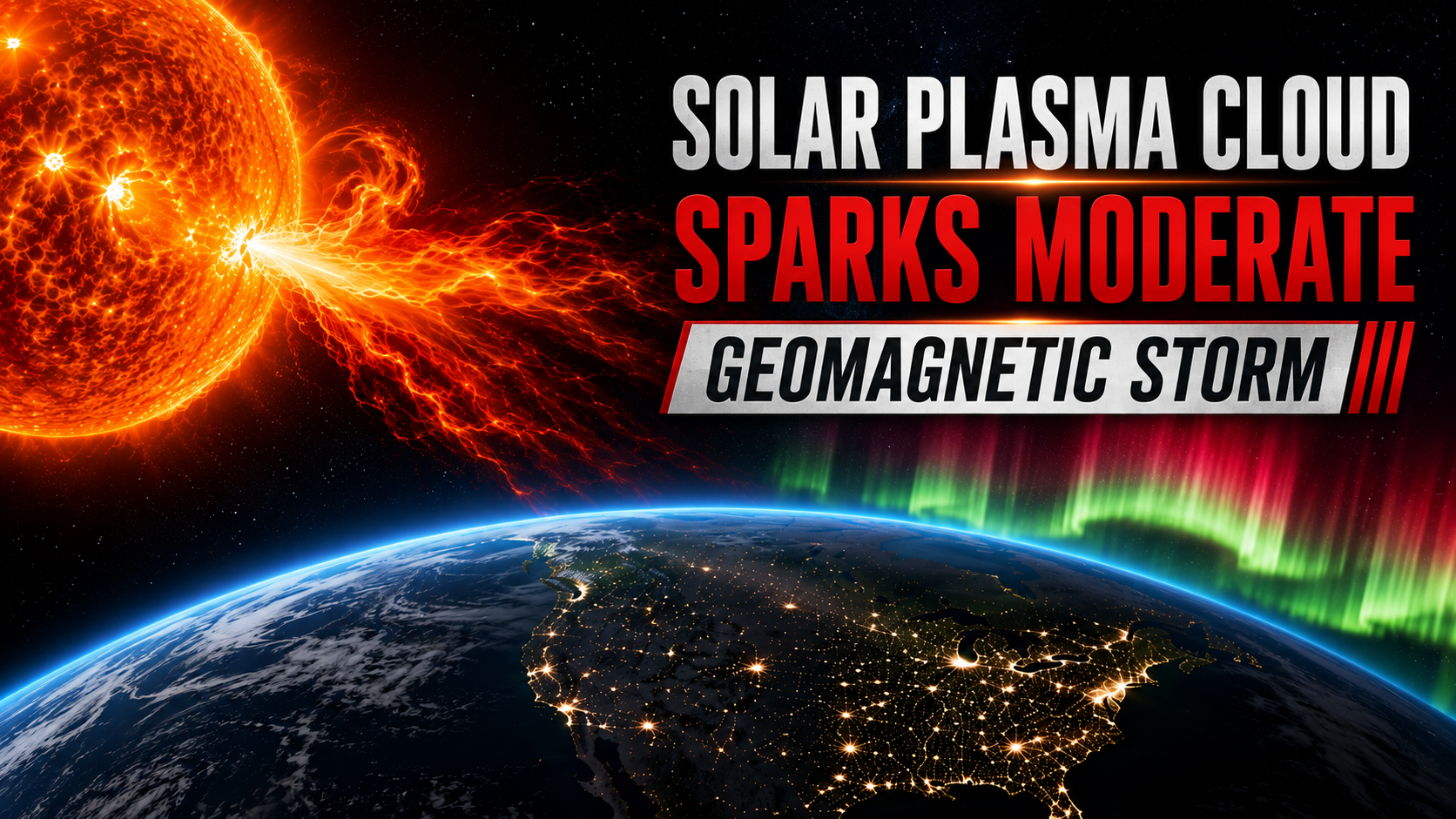
A cloud of solar plasma slammed into Earths magnetic field on Sunday August 2 2026 triggering the first geomagnetic storm of the month. The disturbance reached moderate intensity and briefly pushed the planetary Kp index near 6. Scientists had tracked the material since it left the sun on July 30 after a long duration M1.9 flare erupted from active region 4492 near the western limb. The flare lasted several hours and coincided with a filament eruption.
Together they hurled a partial halo coronal mass ejection into space. Models showed the bulk of the plasma would miss Earth yet a substantial flank still headed our way. High energy protons arrived first on the night of July 30 creating a minor radiation storm. The slower denser plasma cloud followed and reached the L1 monitoring point around midday Sunday.
Once the cloud grazed the magnetosphere solar wind speed density and magnetic field strength all rose. The interplanetary field turned southward for stretches allowing energy to couple efficiently into Earths system. Russian researchers at the Institute for Space Research described the event as a glancing blow that still carried enough punch to stir the upper atmosphere. American forecasters at NOAA had issued a G1 to G2 watch days earlier and observations confirmed those levels arrived on schedule.
Aurora watchers in northern latitudes enjoyed an expanded display. Curtains of green and red light reached farther south than usual offering possible views across the northern United States and southern Canada. Power grid operators at high latitudes noted minor voltage fluctuations while shortwave radio users reported patchy blackouts. Low Earth orbit satellites experienced slightly increased atmospheric drag as the thermosphere heated and expanded.
None of these effects rose to the level of serious disruption. The storm is expected to ease through Monday August 3 as the plasma cloud continues past Earth. Residual active conditions may linger before the geomagnetic field returns to quiet levels by Tuesday. Solar activity overall remains modest with only a modest chance of additional M class flares in the coming days.
This event fits a pattern of elevated solar behavior throughout 2026. An earlier strong storm in early July had already delivered auroras as far south as New Mexico after a more direct hit. Another intense disturbance struck in January. Scientists continue to study how these successive plasma clouds alter the ionosphere and radiation environment around our planet.
Real time monitors keep watch for the next ejection because the sun still holds several active regions capable of launching fresh material toward Earth.