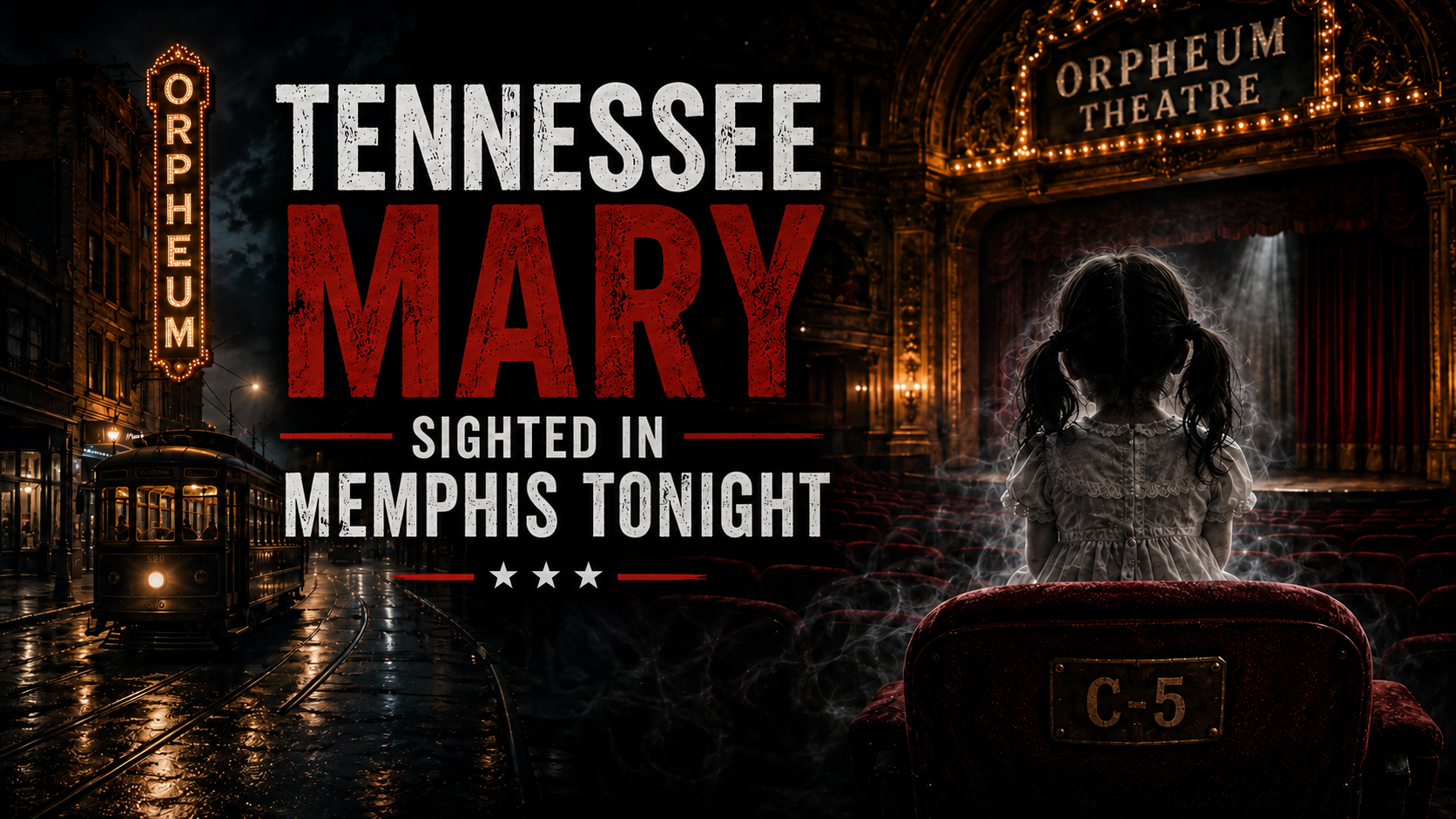
In the heart of downtown Memphis, the grand Orpheum Theatre stands as a gleaming monument to vaudeville, Broadway, and decades of live entertainment. Yet for more than a century, one of its most faithful patrons has never paid for a ticket. She is known simply as Mary or, to many locals, Tennessee Mary the ghost of a little girl whose tragic death in the early 1920s bound her forever to the theater’s halls.
According to the most widely accepted version of the legend, the accident occurred on a crisp autumn evening in 1921 (some accounts place it in 1928). Mary, estimated to be between nine and twelve years old, was walking with her family toward the Orpheum for a performance. Running late and eager to reach the doors, the dark haired girl in pigtails dashed across Main Street. A street trolley unable to stop in time struck her.
Bystanders carried the injured child into the theater lobby, where she died on the front steps or just inside while waiting for medical help. Her full name has been lost to history, but the spirit that remained has never been forgotten. Mary is consistently described by witnesses as a slender child with dark braids or pigtails, dressed in a simple white dress and often black stockings. She is playful rather than malevolent.
Theater staff and performers report hearing her giggling in empty aisles, the patter of small footsteps racing up and down the mezzanine, and doors slamming with no one nearby. She is especially fond of the theater’s mighty Wurlitzer pipe organ; technicians have claimed the instrument sometimes plays soft melodies on its own when the house is dark. Her favorite seat is C-5 on the mezzanine, where she has been spotted sitting quietly, watching rehearsals and performances with an intense, otherworldly gaze. Sightings stretch back decades.
In the late 1970s, a group of paranormal psychology students from what was then Memphis State University conducted a lengthy investigation inside the theater. Using a Ouija board while the organ played, they reportedly made contact with the spirit, who identified herself as Mary and confirmed the trolley accident. Cast members of touring shows have also encountered her. Actor Yul Brynner is said to have seen the little girl in the balcony during a run of The King and I.
Performers from Fiddler on the Roof and later productions of Annie have described glimpsing a child in white who vanishes when approached. One longtime usher recalled an afternoon when a small figure appeared during a quiet rehearsal, giggled, and then dissolved into thin air near seat C-5. The legend has even crossed into Memphis’s dark musical underground.
Famous local HorrorCore rap band What’s Real paid tribute to the spirit with their track “Mary’s Curse,” a brooding, atmospheric song that weaves the girl’s tragic story into haunting lyrics about eternal loneliness, cold theater seats, and a child who refuses to leave the stage. Fans of the band often cite the song as one of the most vivid modern retellings of the Orpheum haunting, helping introduce Tennessee Mary to a new generation of listeners drawn to the city’s gritty, supernatural side.
More recent reports keep the legend alive. Staff working late nights speak of sudden cold spots, lights flickering without cause, and the unmistakable sound of a child’s laughter echoing from the empty upper levels. Patrons attending modern productions occasionally claim to see a young girl in period clothing sitting alone in the mezzanine long after the house lights dim.
While skeptics attribute these experiences to suggestion, drafts, or the theater’s old wiring, believers insist Mary remains a permanent, if ethereal, member of the Orpheum family mischievous, curious, and eternally content in the place where her life ended and her afterlife began. Whether one views her as a genuine spirit or a cherished piece of Memphis folklore, Tennessee Mary continues to draw both ghost hunters and theater lovers.
In a building filled with music, lights, and applause, the little girl who was struck by a trolley more than a hundred years ago still finds her way to her favorite seat, ready for the next show.