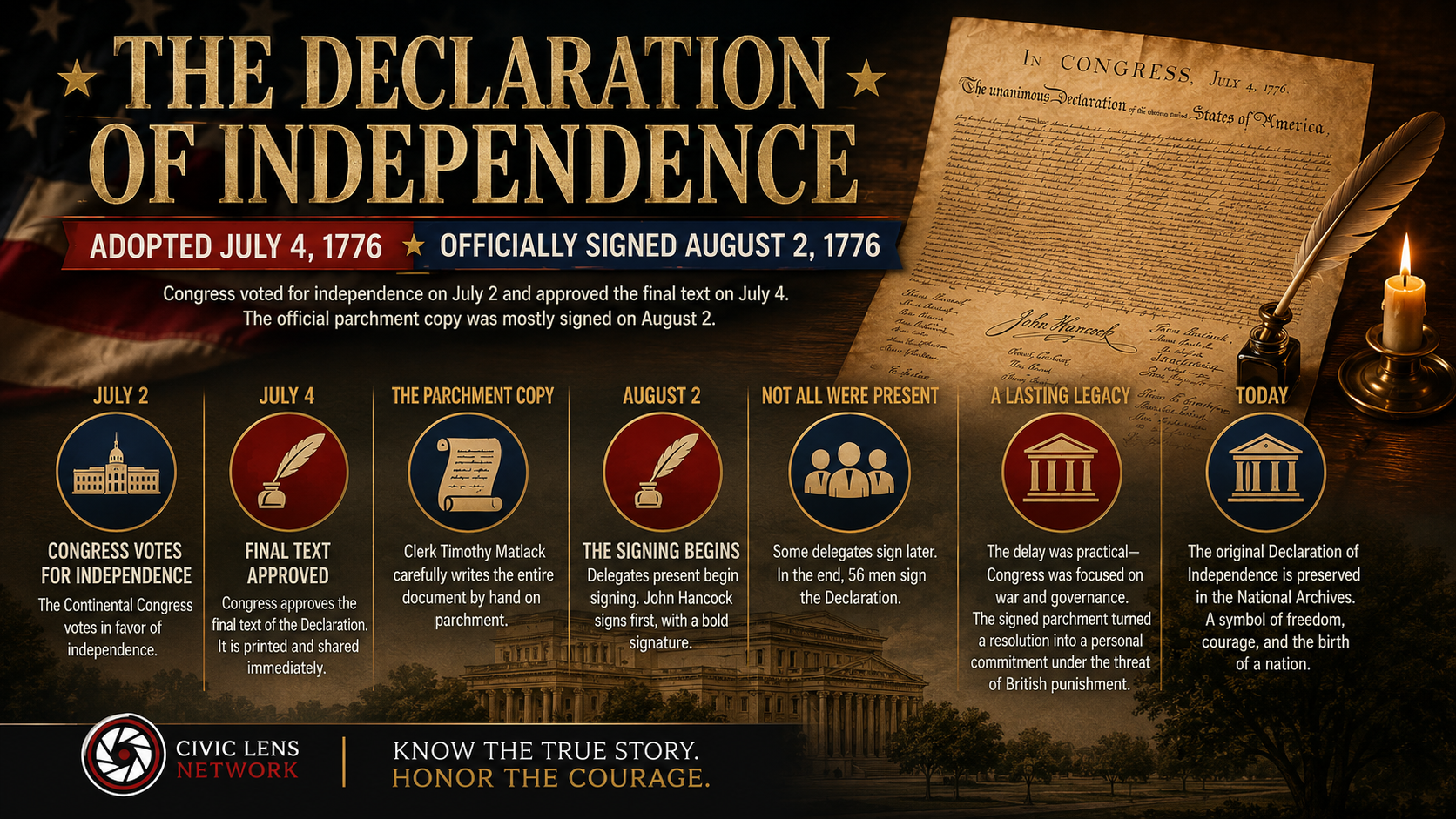
The Declaration of Independence carries the date of July 4 1776 yet the official parchment version that survives today received most of its signatures on August 2 of that same year. This distinction between adoption and formal signing remains one of the quieter facts of the American founding. On July 2 the Continental Congress voted for independence from Britain.
Two days later on July 4 the delegates approved the final wording of the document drafted mainly by Thomas Jefferson with revisions from the committee and the full Congress. That approved text was printed and distributed at once so the colonies and the world would know the decision. The date of July 4 stuck in the public mind and became the national anniversary. The parchment copy required more time.
Timothy Matlack a skilled clerk in the Pennsylvania government was given the task of writing out the entire text in careful large script on a single large sheet of parchment. The work took nearly a month. Only when the engrossed copy was ready could the delegates place their names upon it in a permanent and solemn manner. On August 2 1776 the members of Congress who were present gathered and began to sign.
John Hancock as president of Congress signed first with his famously large and bold hand. Other delegates followed in roughly geographic order from north to south. Not every man who had voted for independence was in Philadelphia that day. Some arrived later and added their signatures in the weeks and months that followed.
A few who supported the cause never signed the parchment at all. In total fifty six names appear on the document though the process stretched beyond a single afternoon. The delay between adoption and signing carried practical reasons. Congress remained busy with the daily work of war and government.
Members traveled between Philadelphia and their home colonies. The engrossed parchment itself had to be prepared with care so that it would endure. Once signed the document was entrusted to the care of the secretary of Congress and later moved with the government as it fled British advances. The August 2 signing transformed an adopted resolution into a personal and collective commitment.
Each signature represented a deliberate act under the threat of British retaliation. The men who put their names to the parchment knew the risk. The finished document became the physical embodiment of the decision for independence rather than merely a printed broadside. Today the original engrossed Declaration rests in the National Archives under controlled light and atmosphere.
Visitors see the faded ink and the familiar signatures and often assume the entire process unfolded on the Fourth of July. The true sequence shows a more measured pace. Congress declared independence in early July then took the additional weeks needed to create and authenticate the lasting official record on August 2. That second date marks the moment when the words became a signed and binding instrument of a new nation.